

Key Takeaways
Option A
Dealer Financing
The all-in-one option arranged at the point of sale.
Best for: Buyers who want a streamlined process and are open to comparing the dealer's rate against their own research.
Option B
Bank or Credit Union Loan
Pre-arranged financing that puts borrowing terms in your hands first.
Best for: Buyers who want to separate the financing negotiation from the vehicle negotiation and walk in with a firm rate.
If you want maximum control over borrowing costs
Bank or Credit Union Loan
Securing financing independently lets you know your exact rate before you sit down at the dealership, removing one variable from the negotiation.
If you're purchasing a new vehicle with a manufacturer incentive rate
Dealer Financing
Automakers occasionally offer subsidized rates through captive lenders that are difficult or impossible to match through outside banks.
If you're a first-time buyer with a limited credit history
Dealer Financing
Dealership finance offices work with multiple lenders simultaneously and may find an approval that a single bank declines.
If you want to keep the vehicle price and financing negotiation separate
Bank or Credit Union Loan
Walking in with a pre-approval lets you negotiate the out-the-door vehicle price on its own merits without bundling it with loan terms.
How Dealer Financing Works
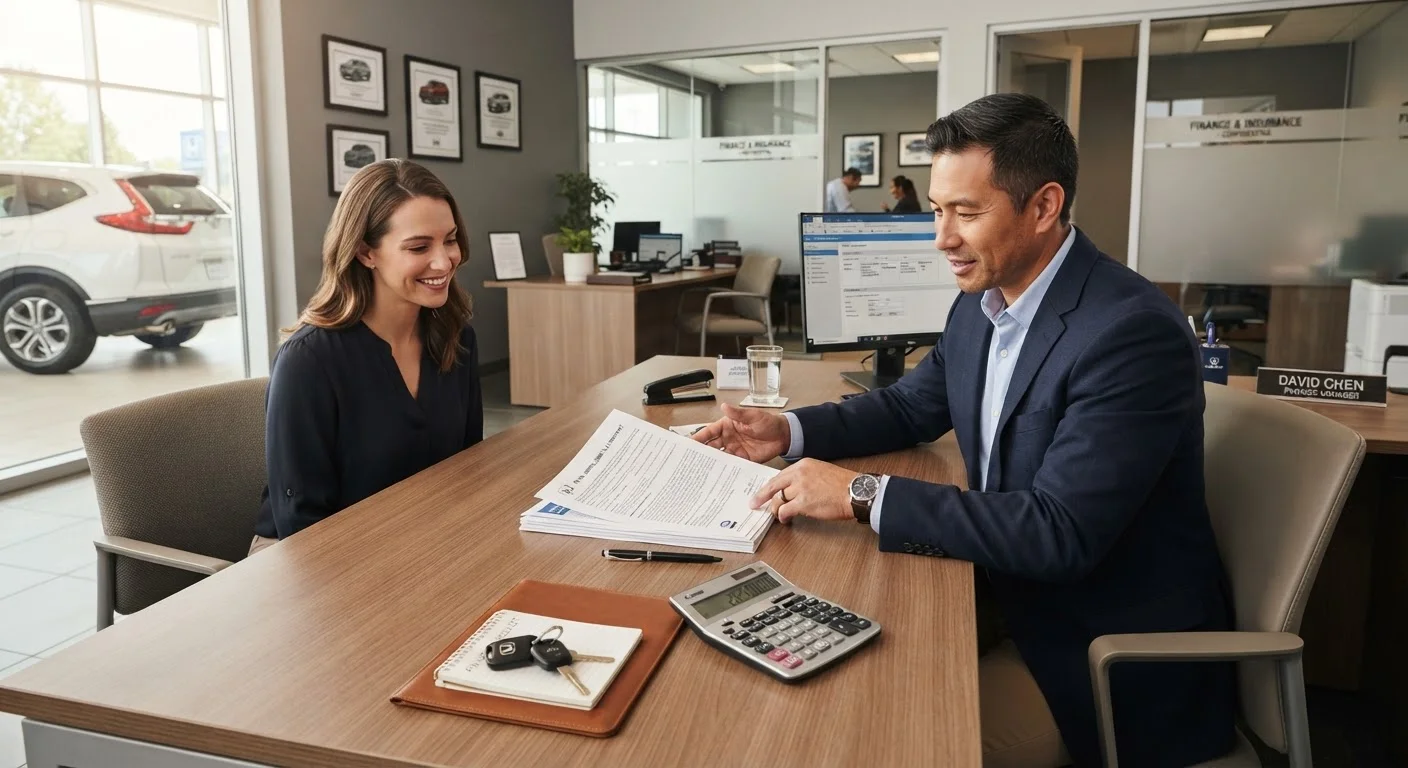
When you finance through a dealership, you're not actually borrowing directly from the dealer. The dealership acts as an intermediary, submitting your credit application to a network of banks, captive lenders (financing arms owned by automakers), and other financial institutions. The finance and insurance (F&I) office then presents you with the offer - or sometimes a choice of offers.
One important detail to understand: dealers are often permitted to mark up the interest rate above what the lender actually requires. This markup - sometimes called a dealer reserve - is a source of profit for the dealership. The lender approves you at, say, 6.5% APR, but the dealer presents a rate of 8%. You'd pay the higher rate while the dealer collects the difference. Not all dealers do this, and regulations governing the practice vary, but it's worth knowing the mechanism exists. For a plain-language explanation of how APR factors into the total cost of a loan, see our Car Buying Jargon, Decoded.
The genuine advantage of dealer financing is convenience - it's handled in the same visit as your vehicle selection - and the occasional access to manufacturer-subsidized rates. Automakers sometimes offer 0% or below-market APR on specific models to move inventory, rates that outside lenders simply can't match.
| Criterion | Dealer Financing | Bank / Credit Union Loan |
|---|---|---|
| When it's arranged | At the dealership, day of purchase | Before visiting the dealership |
| Rate transparency | Rate may include dealer markup | Rate is disclosed upfront to borrower |
| Number of lenders considered | Multiple, via dealer's lender network | One institution per application |
| Manufacturer incentive rates | Available on qualifying models | Not available |
| Negotiating leverage | Loan terms negotiated at same time as price | Rate locked; focus stays on vehicle price |
| Convenience | High - single visit, one process | Requires separate application in advance |
| Credit union option | Rarely included in dealer network | Directly available to members |
How a Bank or Credit Union Loan Works
A direct loan from a bank or credit union is arranged before you set foot in the dealership. You apply, the lender reviews your credit profile and income, and if approved, you receive a pre-approval letter or a check-like draft specifying the maximum amount you can borrow and the interest rate you've been offered.
This pre-approval does several things for you. First, it sets a concrete benchmark - you know your rate, and you can ask the dealer to beat it. Second, it lets you focus the vehicle negotiation on price rather than monthly payments, which is where dealership negotiation tactics often redirect buyers' attention. Third, credit unions in particular are member-owned nonprofits that sometimes offer more competitive rates than commercial banks.
The main drawback is extra legwork. You'll need to apply separately, and if your pre-approval expires before you complete the purchase, you may need to reapply. Some lenders also restrict which vehicles or vehicle ages qualify for their rates.
~80%
New-car buyers who finance through the dealership
Consumer Financial Protection Bureau data has consistently shown the majority of financed new-vehicle purchases are arranged through dealership F&I offices.
0.5-2%
Typical dealer rate markup range
Industry analyses suggest dealer reserve markups commonly range from half a percentage point to two points above the lender's buy rate, though this varies by lender agreement.
Side-by-Side: What Actually Differs
Both routes ultimately connect you to a lender and result in a loan with a principal, interest rate, and repayment term. The differences lie in timing, transparency, and who holds negotiating leverage at the point of signing.
With dealer financing, everything happens in one place - but you may not know what rate the lender originally approved you at. With a direct loan, you know your rate upfront, though you surrender the convenience of a single transaction. Neither approach is inherently superior; the better one depends on your credit profile, the vehicle you're purchasing, and how much time you're willing to invest before visiting a dealership.
Before signing anything, review our questions worth asking before signing a car finance agreement - they apply equally whether you're using dealer financing or a direct loan.
Credit Inquiries and Rate Shopping
Applying to multiple lenders within a short window - typically 14 to 45 days depending on the scoring model - is generally treated as a single inquiry for auto loan purposes under most credit scoring models. This means shopping around for the best rate has less impact on your credit score than many buyers fear. Check with the specific scoring model your lender uses for precise details.
Making a Decision That Works for You
The most practical approach for many buyers is to do both: obtain a pre-approval from a bank or credit union before visiting the dealership, then allow the F&I office to try to beat it. If the dealer comes in lower, use that rate. If not, you already have a confirmed offer in hand.
This strategy also helps you keep the negotiation focused. Because you've separated the financing question from the vehicle price question, you're less likely to get drawn into a monthly-payment conversation that obscures the true cost. For a broader look at the full car-buying process, including what to research before you visit, see what first-time car buyers need to know.
Whatever route you choose, the core principle is the same: understand the terms fully before you sign. The total amount repayable, the loan term, and any early-exit penalties matter more than the monthly payment figure alone. This article provides general financial information for educational purposes and does not constitute personalised financial or credit advice. Consult a qualified financial professional for guidance tailored to your circumstances.