

Key Takeaways
Why the Crate Concept Works - and When It Doesn't
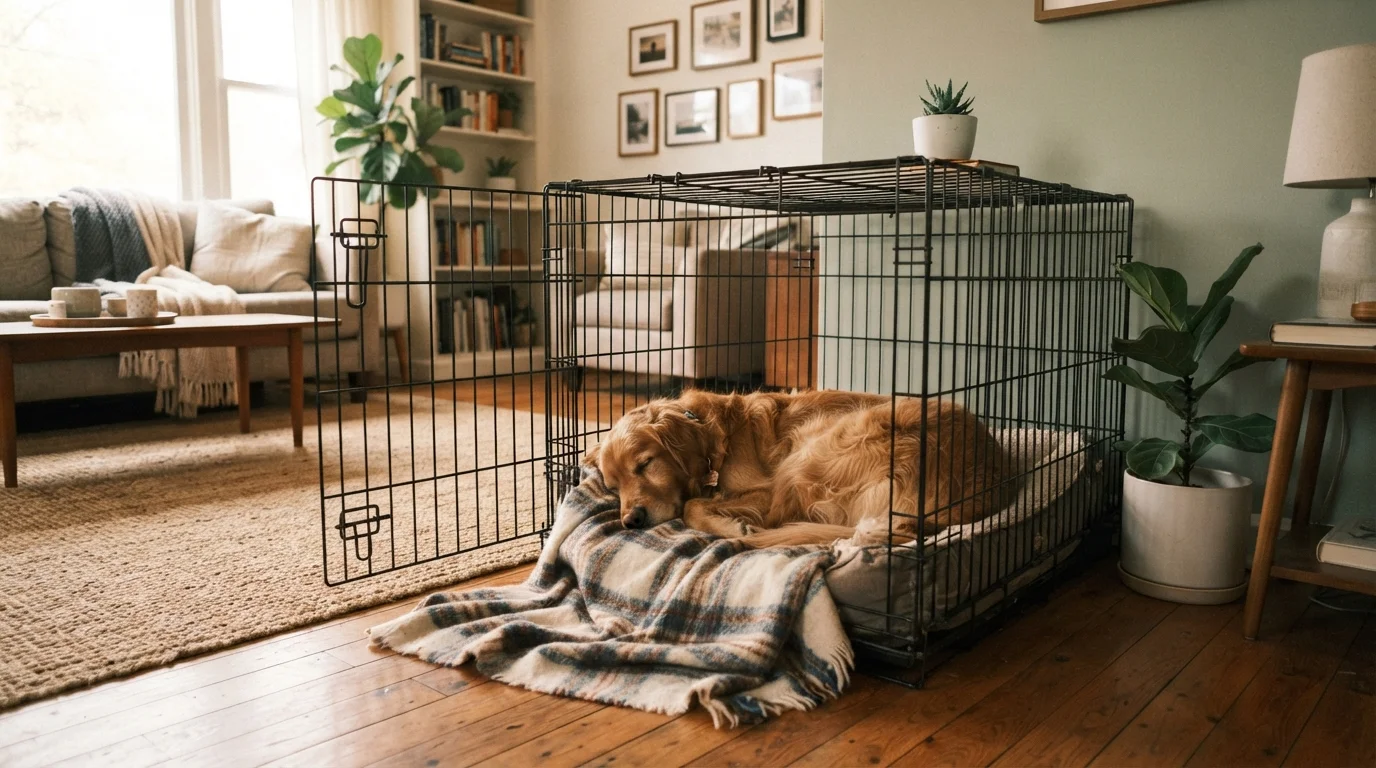
Dogs are den animals by nature. In the wild, canids seek out small, enclosed spaces to rest and feel safe. A properly introduced crate taps into that instinct, giving your dog a predictable retreat from household chaos, children, or other pets. When training is done well, most dogs voluntarily seek out their crate even when the door is left open.
The concept breaks down when the crate is used as a timeout or punishment space, when it's introduced too quickly, or when a dog is left inside far longer than is appropriate for their age and bladder capacity. Understanding both sides of this sets realistic expectations before you begin.
Never Use the Crate as Punishment
Sending your dog to the crate when they misbehave teaches them to associate it with negative emotions, which directly undermines every positive step you've built. The crate must remain a neutral-to-positive space at all times. Address unwanted behavior through redirection and consistent training, not confinement as a consequence.
Crate training also isn't universally appropriate. Dogs with severe separation anxiety, certain physical limitations, or trauma histories may need alternative management strategies - always loop in your veterinarian if you have concerns about whether crating is the right fit.
What You'll Need Before You Start
What you will need
Dog crate (wire, plastic, or soft-sided)
Provides the enclosed, den-like space central to the training process.
Crate mat or soft bedding
Makes the interior comfortable and inviting for the dog.
High-value treats
Used to create positive associations with entering and resting in the crate.
Food-stuffed chew toy (e.g., rubber Kong-style toy)
Provides mental enrichment and keeps the dog calmly occupied inside the crate.
Pheromone spray or calming diffuser
Can reduce anxiety for dogs that find the crate particularly stressful at first.
Step-by-Step: Introducing the Crate
The steps below follow a gradual, force-free approach recommended by veterinary behaviorists. Work through them at your dog's pace - some dogs progress through all six steps in a week; others need three or four weeks. Both timelines are completely normal.
Choose the right crate size and type
The crate should be large enough for your dog to stand up fully, turn around, and lie down stretched out - but not so large that a puppy can use one corner as a bathroom. Most wire crates include a divider panel that lets you adjust the usable space as a puppy grows.
Wire crates offer good ventilation and visibility; plastic travel crates feel more den-like; soft-sided crates suit calm, already-trained dogs. Match the crate type to your dog's temperament and your household routine.
Place the crate in the right location
Position the crate in a room where your family spends time - a living room or bedroom corner works well. Dogs are social animals; isolation in a garage or basement increases anxiety and slows training. At night, placing the crate near your bed helps puppies feel secure and lets you hear when they need a bathroom break.
Avoid spots near heating vents, drafts, or direct sunlight, all of which can make the space uncomfortable.
Make the interior inviting before any training begins
Before asking your dog to enter, set up the crate so it's genuinely appealing. Add a washable mat or blanket with a familiar scent. Leave the door open and drop a few treats just inside the threshold - let the dog investigate entirely on its own terms. Do not push, lure aggressively, or close the door at this stage.
Build positive associations with short, rewarded entries
Once your dog enters the crate willingly to retrieve treats, begin using a consistent verbal cue - "crate" or "bed" - paired with tossing a treat inside. Each time the dog walks in, reward immediately and let them walk back out freely. Repeat five to ten times per session, two or three sessions per day.
Progress only when the dog enters confidently and without hesitation. Rushing this step is the single most common reason crate training fails.
Introduce the closed door gradually
Once your dog enters reliably, begin closing the door for just a few seconds while they eat a treat, then open it before they show any sign of stress. Over several sessions, extend closed-door time incrementally - a few seconds, then 30 seconds, then a minute, then five minutes. Stay nearby and visible during early closed-door sessions.
Build up to longer durations and alone time
Gradually increase crate time while you remain in the room, then begin leaving the room briefly, and eventually leave the home for short periods. Build duration over days or weeks - not hours. Puppies under 6 months should not be crated for more than 3-4 hours at a stretch during the day, as they cannot hold their bladder longer than that.
Adult dogs can typically manage 4-5 hours with proper exercise beforehand, but extended daily crating beyond that is not appropriate as a permanent routine.
Consistency Speeds Everything Up
Use the same verbal cue, the same entry routine, and the same reward every session. Dogs learn patterns quickly when the rules are predictable. Inconsistent responses - sometimes rewarding, sometimes not - slow progress significantly and can create confusion or anxiety around the crate.
Common Pitfalls and How to Avoid Them
Even well-intentioned owners run into predictable obstacles. Here are the most common and how to course-correct:
- Moving too fast: The most frequent mistake. If your dog is reluctant, anxious, or vocal, step back one stage and spend more time there.
- Rewarding whining: Opening the door while a dog is crying teaches them that crying works. Wait for even a brief pause before opening - but don't leave a distressed dog in the crate for extended periods either. The goal is to never reach that point through slow, careful progression.
- Skipping daytime practice: Dogs that only experience the crate at night associate it with darkness and separation. Regular short sessions during the day normalize it as a regular, pleasant part of life.
- Bedding that gets chewed: Some dogs, especially puppies, will shred soft bedding and risk ingesting it. Remove bedding if your dog chews it, and reintroduce it once they're past the destructive phase.
Separation Anxiety Requires Professional Support
If your dog panics - not just whines briefly - when left alone in the crate, this may indicate separation anxiety rather than simple crate reluctance. Symptoms include intense vocalization, destructive behavior, drooling, or self-injury. Crate training alone will not resolve separation anxiety. Consult your veterinarian or a certified applied animal behaviorist for a proper assessment and behavior modification plan.
This article provides general educational information about dog training and is not a substitute for individualized guidance from a veterinary professional or certified animal behaviorist.