

Key Takeaways
Our Verdict
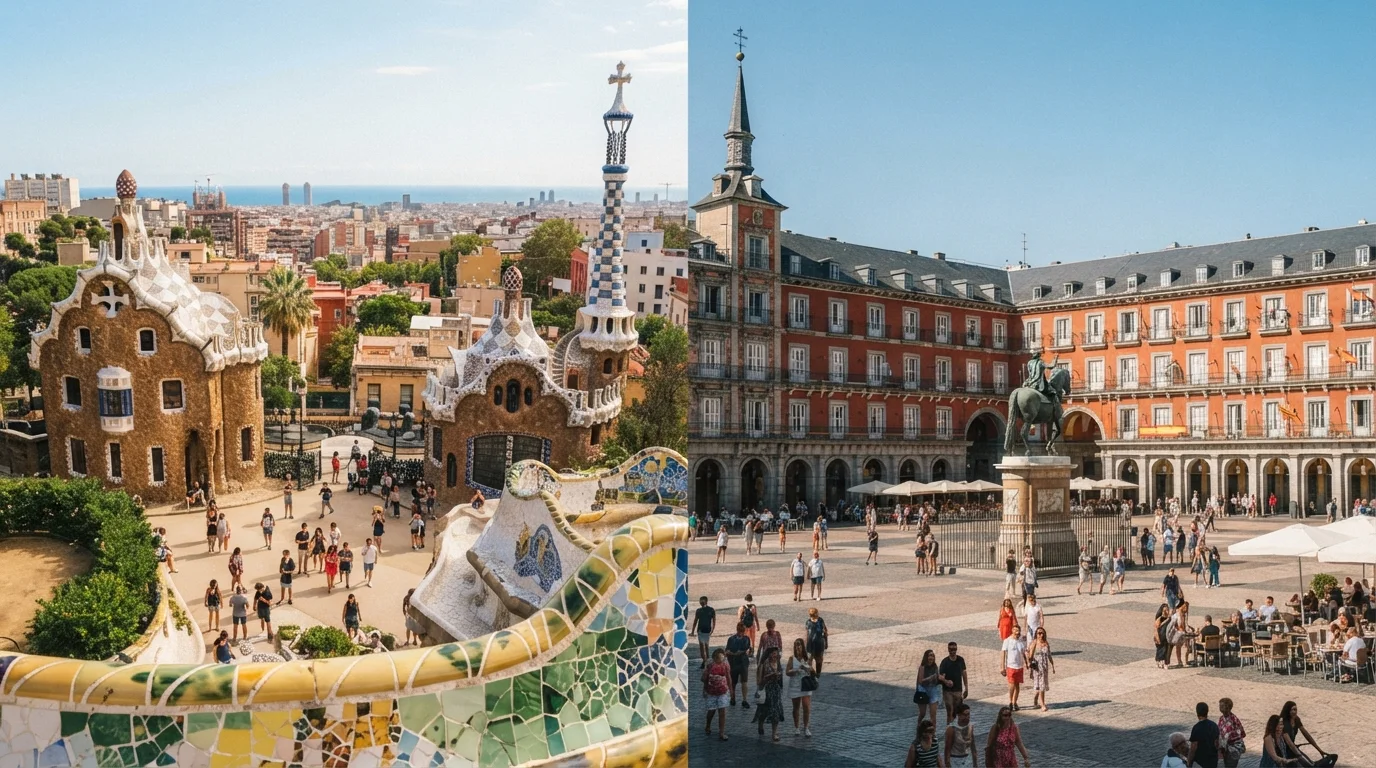
Barcelona and Madrid are both exceptional, but they reward different types of travelers. Barcelona suits those who want coast, cutting-edge architecture, and a seaside pace, while Madrid is the city for art lovers, late-night dining devotees, and travelers who want to feel deep inside Spanish culture without the tourist crowds of the waterfront. Neither is objectively better - the right pick simply depends on what you want to feel when you step outside your hotel.
| Best for | Recommended |
|---|---|
| Travelers who want beach access alongside city exploration | Barcelona |
| Art and museum enthusiasts seeking world-class collections | Madrid |
| First-time visitors wanting an immersive, traditionally Spanish experience | Madrid |
| Architecture lovers and fans of Gaudí's unique style | Barcelona |
Two Cities, Two Very Different Vibes
Spain's two largest cities are only about 400 miles apart, yet stepping into each one feels like entering a different world. Barcelona, the capital of Catalonia, wears its Mediterranean personality proudly - the sea is always nearby, the architecture is wildly expressive, and the city moves at a pace that somehow mixes relaxed beach culture with cutting-edge design. Madrid, sitting at the geographic center of the Iberian Peninsula, is the country's political and cultural capital - a city of grand boulevards, legendary art museums, and a nightlife culture so embedded in daily life that restaurants don't fill up until 10 p.m.
Before you book, it helps to ask yourself one honest question: What kind of trip do I actually want? The answer will point you toward one city pretty quickly.
| Barcelona | Madrid | |
|---|---|---|
| Coastline & beaches | Yes - city beaches within the metro area | No beach access; landlocked city |
| Signature attractions | Gaudí architecture, Gothic Quarter | Prado, Reina Sofía, Retiro Park |
| Summer climate | Warm and humid, sea breeze helps | Very hot and dry, intense heat |
| Food scene character | Seafood-forward, international, tourist-facing | Traditional tapas bars, deeply local |
| Nightlife | Lively, especially in El Born and Gràcia | World-famous; late-night culture is core |
| Crowd levels | Very high at tourist sights year-round | Busy but generally less overwhelming |
| Language layer | Catalan and Spanish both spoken | Primarily Spanish (Castilian) |
What Barcelona Does Best
Barcelona's calling card is its extraordinary built environment. Antoni Gaudí's works - the Sagrada Família, Park Güell, Casa Batlló - are unlike anything else in Europe, and they anchor an entire neighborhood of Catalan Modernista buildings that make wandering feel like a scavenger hunt for beautiful things. The Gothic Quarter layers Roman ruins, medieval streets, and buzzing tapas bars into a compact, walkable core.
Then there's the coast. Barcelona has real beaches right at the edge of the city, which is genuinely rare for a major European metropolis. That beach access shapes everything from the food (more seafood-forward) to the atmosphere (lighter, more international). If sunshine and the possibility of a swim after a museum afternoon appeal to you, Barcelona has a clear edge.
Book Major Sights Early in Barcelona
The Sagrada Família and Park Güell both require timed-entry tickets that often sell out weeks ahead, especially between May and September. Securing these online before you travel will save significant frustration on the ground. Madrid's major museums also benefit from advance booking during peak periods, though availability tends to be more flexible.
One thing to plan around: Barcelona is one of Europe's most visited cities, and that shows. Crowds at major sights can be intense, especially in summer. Booking tickets for the Sagrada Família and other major attractions well in advance is strongly recommended.
What Madrid Does Best
Madrid's greatest strength is its museums. The Prado, the Reina Sofía, and the Thyssen-Bornemisza form one of the most concentrated collections of Western art anywhere on Earth - and they're all within walking distance of each other. For travelers who could spend a full day in front of Velázquez, Goya, and Picasso's Guernica, Madrid is essentially unmissable.
The city also delivers an experience that feels more rooted in everyday Spanish life. Madrid's tapas culture - where small bites often come free with a drink in traditional bars - is genuinely different from Barcelona's more tourist-facing food scene. Neighborhoods like Malasaña, Lavapiés, and Chueca each have a distinct personality and are worth getting lost in. Nightlife, too, is a real Madrid institution; the city is famous across Europe for how late and how enthusiastically locals go out.
Weather is worth noting: Madrid sits at altitude (about 2,100 feet above sea level), which means summers are intensely hot and dry, and winters can be surprisingly cold. Shoulder seasons - spring and fall - are generally considered the most comfortable times to visit.
Planning Logistics: Can You Do Both?
If your itinerary allows it, seeing both cities is genuinely worth considering. Spain's high-speed rail network (AVE) connects Madrid and Barcelona in roughly 2.5 hours, making a two-city trip feasible for stays of a week or longer. You don't need to choose if you have the time.
For shorter trips - say, four or five days - focusing on one city tends to feel more satisfying than splitting your time and spending energy on transit. Depth usually beats breadth when you're working with limited days.
Flight access is comparable: both cities have major international airports with broad connections from the US. Prices and routes vary, so checking both when you plan is worthwhile. Within each city, both Madrid and Barcelona have solid public transit systems - metro, bus, and bike-share - that make getting around without a car easy and affordable.
Travel conditions, entry requirements, and local regulations can change. Always verify current information with official Spanish tourism sources and your government's travel advisory pages before your trip.