

Key Takeaways
Option A
Brake Pads
The consumable friction layer that wears down with every stop.
Best for: Monitoring as your primary, most frequently replaced brake component - typically every 30,000-70,000 miles depending on driving habits.
Option B
Brake Discs (Rotors)
The metal surface pads clamp against - built to last longer but not indefinitely.
Best for: Inspection when symptoms persist after pad replacement, or when vibration and pulling occur even under light braking.
If you hear a high-pitched squeal when first applying the brakes
Brake Pads
Most modern pads include a built-in wear indicator - a small metal tab that contacts the disc and squeals to alert you. This is almost always a pad issue.
If you feel a pulsing or vibration through the brake pedal or steering wheel
Brake Discs (Rotors)
Pedal pulsation is a classic sign of disc thickness variation or warping - conditions that fresh pads alone will not resolve.
If you hear a harsh grinding or metal-scraping sound under braking
Brake Pads
Grinding usually means pad material is exhausted and the metal backing plate is contacting the disc. Both pads and potentially the disc will need inspection immediately.
If your vehicle pulls noticeably to one side during braking
Brake Discs (Rotors)
Uneven disc wear or a seized caliper on one side creates unbalanced braking force - a disc and caliper inspection is the correct starting point.
If you're scheduling routine preventive maintenance
Brake Pads
Pads are the first line of wear. Regular pad checks protect the discs from damage and keep replacement costs lower over the vehicle's lifetime.
How the Two Components Work Together
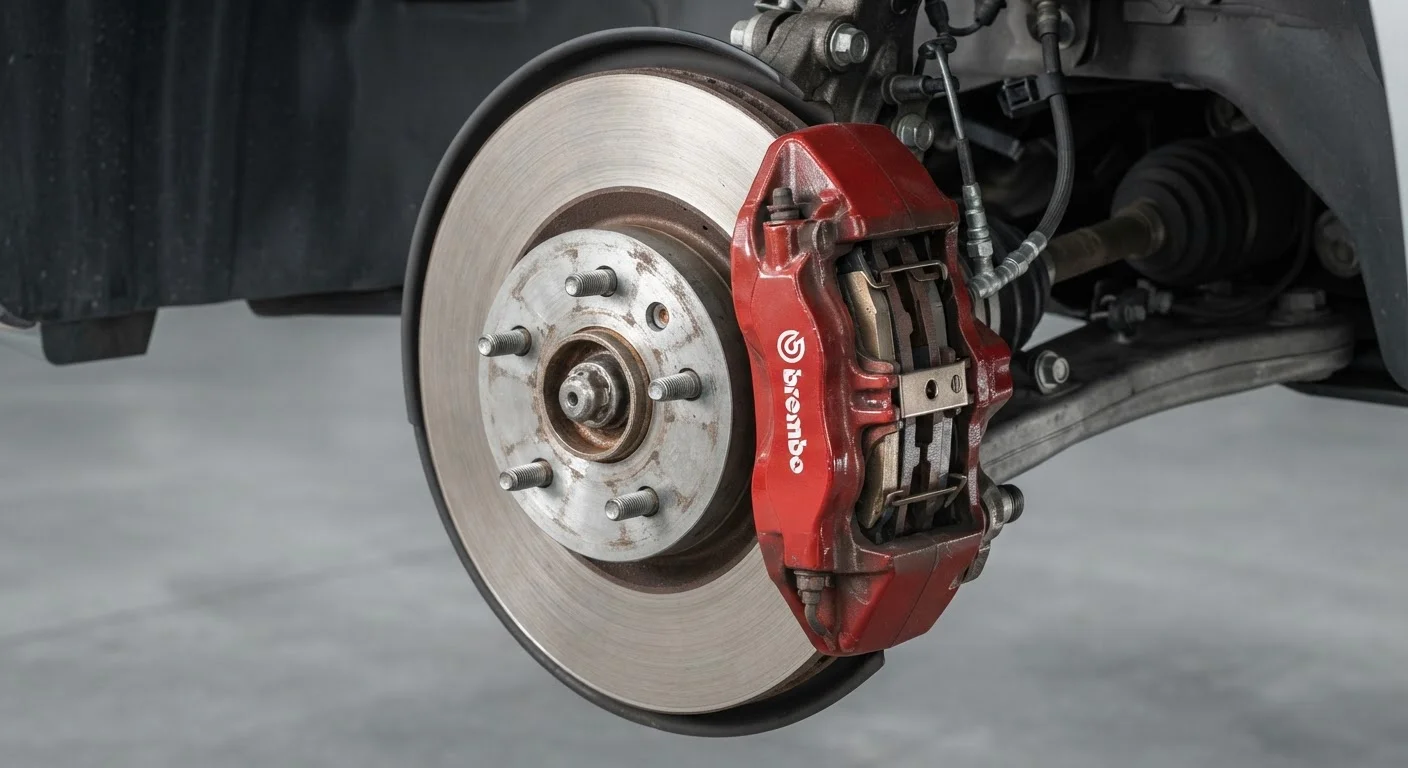
Your braking system is built around friction. When you press the brake pedal, hydraulic pressure forces the brake caliper to squeeze the brake pads against the brake disc (also called a rotor) - a flat metal disc that rotates with the wheel. That friction converts kinetic energy into heat, slowing the car.
Pads are designed to be the sacrificial component: softer friction material bonded to a metal backing plate, intended to wear down over time so the disc is protected. Discs are made of cast iron or, in some performance vehicles, composite materials. They're built to last significantly longer than pads, but they're not immune to wear, warping, or surface damage.
Understanding that both components wear - just at different rates and in different ways - is the first step to reading brake symptoms accurately. See the full guide to interpreting car noises and sensations for a broader look at what your vehicle is trying to tell you.
Symptom-by-Symptom Breakdown
Different brake problems produce distinct signals. Here's how to interpret the most common ones:
- High-pitched squeal (intermittent, especially when cold): Almost always the wear indicator tab on your brake pads making first contact with the disc. This is your warning - pads are approaching minimum thickness.
- Constant squealing under light braking: Could indicate glazed pads (hardened by overheating) or light surface rust on the disc after the car has sat overnight. If it clears after a few stops, surface rust is likely. If it persists, have the pads inspected.
- Grinding or harsh metal scraping: The pad material has worn through completely. The metal backing plate is now contacting the disc directly. This damages the disc surface and requires urgent attention - the longer you wait, the more expensive the repair.
- Pedal pulsation or vibration: The disc has developed uneven thickness (sometimes called disc thickness variation, or DTV) or has warped from heat cycles. This is a disc problem. New pads on a warped disc will immediately exhibit the same symptom.
- Vehicle pulling left or right under braking: Suggests uneven braking force - one side may have a seized caliper, uneven pad wear, or a compromised disc. Requires a proper inspection, not a simple pad swap.
- Spongy or longer pedal travel: More likely a hydraulic issue (air in the lines or low fluid) than a pad or disc problem, though severely worn pads can contribute to pedal drop.
| Criterion | Brake Pads | Brake Discs (Rotors) |
|---|---|---|
| Primary function | Friction material that grips the disc | Rotating metal surface pads clamp against |
| Typical replacement interval | 30,000-70,000 miles | 70,000+ miles (varies) |
| Key wear symptom | Squealing wear-indicator noise | Pedal pulsation or vibration |
| Urgency of grinding noise | Pads fully depleted - act immediately | Disc surface being scored - inspect urgently |
| Measurement method | Pad thickness gauge (min ~2-3mm) | Micrometer for thickness; dial gauge for runout |
| Replaced more frequently | Yes - the consumable component | No - longer service life |
| Can cause pulling to one side | Yes, if unevenly worn | Yes, if one disc is compromised |
Lifespan, Replacement Intervals, and What to Expect
Brake pad life varies considerably depending on driving style, traffic conditions, and pad compound. City driving with frequent stop-and-go traffic accelerates wear compared to highway miles. As a general reference, many drivers replace pads somewhere between 30,000 and 70,000 miles - but always rely on measured thickness rather than mileage alone. Minimum pad thickness is typically around 2-3mm, though specifications vary by vehicle.
Brake discs last considerably longer - often 70,000 miles or more - but must be measured for minimum thickness (called the discard thickness, stamped on the disc itself) and inspected for scoring, deep grooves, or heat cracks. A disc that's been grooved by metal-on-metal contact from exhausted pads may need replacement even if its overall lifespan hasn't been reached.
It's worth noting that neglecting pad replacement doesn't just cost you a pair of pads - it can turn a $150-$250 pad job into a $400-$700+ disc-and-pad replacement. The consequences of skipping routine maintenance illustrates precisely this kind of compounding cost.
~$700+
Estimated cost when pads damage discs
Industry estimates suggest combined pad-and-disc replacement can cost two to three times more than a timely pad-only service when damage is allowed to progress.
2-3 mm
Typical minimum brake pad thickness
Most vehicle manufacturers specify pad replacement when friction material reaches approximately 2-3mm; the exact figure varies by make and model.
For guidance on whether brake work is something you can approach yourself or should leave to a professional, the DIY vs. garage guide lays out a clear framework.
When to Act - and Who Should Do the Work
Any brake symptom that persists beyond a few stops warrants a professional inspection. Brakes are a safety-critical system, and guessing incorrectly - replacing pads when the disc is the problem, for example - wastes money and leaves the underlying issue unresolved.
A qualified mechanic will measure pad thickness with a gauge and disc thickness with a micrometer, check for runout (disc wobble) with a dial indicator, inspect caliper operation, and examine brake lines and fluid condition. This full picture is what an accurate diagnosis requires.
If you do hear a grinding noise, don't delay. Driving on metal-to-metal contact risks scoring the disc beyond resurfacing, compromising braking performance, and - in severe cases - damaging the wheel bearing or caliper. Pull over safely and arrange inspection before driving further where possible.
Keeping your braking system in good shape is part of a broader maintenance mindset that includes tyre care, both of which directly affect your ability to respond to sudden hazards like skids or aquaplaning.
Disc Resurfacing vs. Replacement
Minor disc surface scoring can sometimes be corrected by resurfacing (also called machining or skimming), which removes a thin layer to restore a flat, even contact surface. However, a disc can only be resurfaced if it remains above the manufacturer's minimum discard thickness after machining. Always have a technician measure the disc before assuming resurfacing is an option - a disc that's already near minimum thickness must be replaced outright.