

Key Takeaways
MSRP (Sticker Price)
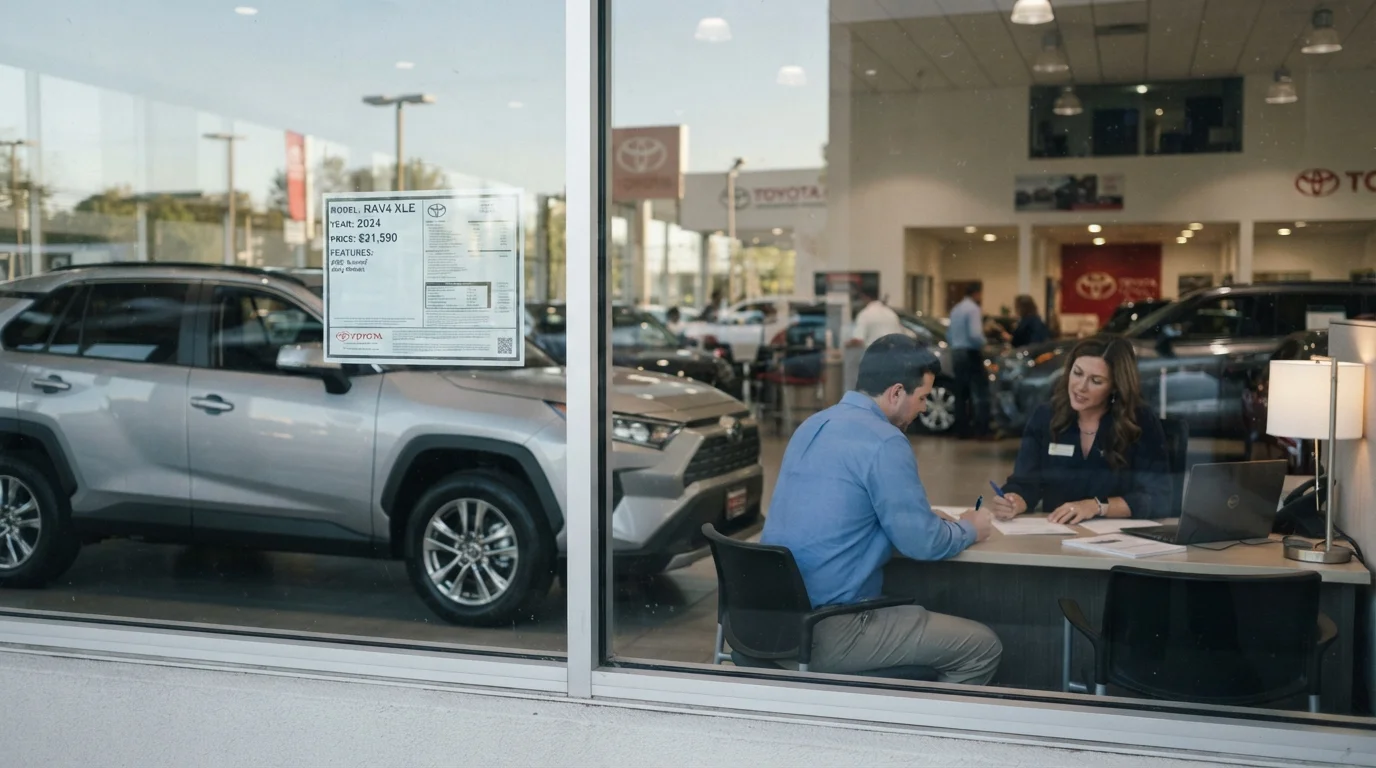
MSRP stands for Manufacturer's Suggested Retail Price - the price a carmaker recommends dealers charge for a vehicle. It appears on the window sticker required by federal law and covers the base vehicle plus any factory-installed options. The key word is 'suggested': dealers are not required to sell at that number, and the final amount you pay is shaped by taxes, fees, incentives, and negotiation.
The Monroney label (the official window sticker) must display the MSRP and itemized options per the Automobile Information Disclosure Act of 1958. It does not include dealer-added accessories, documentation fees, or government charges.
What the Sticker Actually Tells You
Walk into any dealership and the window sticker - formally called the Monroney label - greets you with a price. That figure covers the base vehicle price plus factory-installed packages and options. What it does not cover is nearly everything the government will charge you, the fees the dealer adds, or any adjustments made for local market demand.
Think of MSRP as the starting line of a race that ends somewhere quite different. Understanding what changes between that sticker and your final contract is the clearest way to avoid surprises at signing. For a plain-language breakdown of the terminology you'll encounter throughout this process, see our Car Buying Jargon, Decoded.
$1,000-$3,000+
Typical range of taxes and fees added at signing
Figures vary widely by state; high-tax states like California and Texas can push this significantly higher on mid-range vehicles.
$150-$900
Average documentation fee range across U.S. dealers
Some states cap doc fees by law; others leave them entirely to dealer discretion, making them worth scrutinizing.
The Fees That Are Added On Top
Several charges are added to the negotiated vehicle price before you get to your actual total. Here is what each one means:
- Sales tax: Calculated as a percentage of the purchase price (or sometimes the post-rebate price, depending on your state). This is non-negotiable and set by state and local law.
- Title and registration fees: Government charges to transfer ownership into your name and register the car with your state's DMV. Amounts vary significantly by state.
- Documentation fee (doc fee): A dealer charge for processing paperwork. Most states allow dealers to set their own doc fees; a few cap the amount. This fee is often listed as fixed, but it is worth asking whether it can be reduced.
- Dealer prep or delivery fee: Sometimes charged for washing, fueling, and inspecting the vehicle before handoff. Not all dealers charge this, and it is sometimes negotiable.
None of these appear on the manufacturer's window sticker, yet together they can add several hundred to several thousand dollars to your total. Always ask for an itemized out-the-door quote before agreeing to anything.
Always Ask for the Out-the-Door Price
Before comparing offers from different dealers, ask each one for a complete out-the-door quote in writing. This total - vehicle price, taxes, registration, and all fees - is the only apples-to-apples number. Comparing just the negotiated vehicle prices while fees differ between dealers can lead you to the wrong choice.
Adjustments That Can Push the Price Higher - or Lower
Beyond set fees, two categories of adjustments can move the price in either direction.
What Can Add to the Price
Dealer add-ons are accessories or services installed by the dealership - things like window tinting, paint protection film, nitrogen-filled tires, or extended warranties. These are often presented as already installed and non-removable, but many are negotiable or can be declined. Our guide to where car buyers quietly lose money covers these add-ons in detail.
Market adjustments are markups added above MSRP when a vehicle is in high demand. They are legal, disclosed on an addendum sticker, and sometimes negotiable - particularly as inventory levels shift.
What Can Reduce the Price
Manufacturer incentives and rebates are price reductions funded by the automaker, not the dealer. They may be applied directly to the purchase price or arrive as a check after purchase. Eligibility requirements vary, so confirm you qualify before factoring a rebate into your budget.
Negotiation remains a real lever. In most market conditions, the dealer's invoice price - what the dealer paid the manufacturer - sits below MSRP, and there is typically room between invoice and sticker for discussion. Common myths about car buying can lead buyers to negotiate poorly, so it pays to go in informed.
How to Find Your Real Number
The single most useful number to request from any dealer is the out-the-door price - the full total including vehicle price, all taxes, all fees, and any add-ons. This is the only figure that allows you to compare offers from different dealers on equal footing.
When reviewing a purchase contract, look at each line item and ask the finance manager to explain any charge you don't recognize. You are entitled to that explanation, and anything that can't be clearly justified is worth questioning.
Before you begin shopping, it also helps to build a complete budget that accounts for ongoing costs - not just the purchase price. Our guide to setting a realistic car budget walks through how to do that systematically. And for a longer view, consider that ownership costs beyond the sticker - insurance, fuel, maintenance - often dwarf the purchase price over time.