

Key Takeaways
Tyre Pressure
Tyre pressure is the amount of air inside a tyre, measured in pounds per square inch (PSI). Every vehicle has a manufacturer-specified pressure range that balances safety, comfort, fuel efficiency, and tyre longevity. Running outside that range - whether too high or too low - creates real, measurable consequences for your wallet and your safety.
PSI is the most common unit in the US; some gauges also display kPa (kilopascals) or bar. Always match the unit shown on your vehicle's placard when checking readings.
What Tyre Pressure Actually Means
Think of a tyre as a pressurised cushion between your vehicle and the road. The air inside isn't just filler - it carries a significant portion of the vehicle's weight, absorbs road impacts, and maintains the shape of the contact patch (the small area of tyre that actually touches the pavement at any moment).
Every vehicle is engineered to ride on tyres inflated to a specific pressure range. That specification balances load capacity, handling response, ride comfort, and tread wear. Stray outside it in either direction and the tyre starts compromising on all of those factors simultaneously.
It's a common misconception that the pressure number moulded into the tyre sidewall is your target. That figure is the maximum the tyre structure can safely contain - not a recommendation. Your actual target is on the door jamb sticker or in the owner's manual, and it's often 10-15 PSI lower. This is one of several maintenance myths worth knowing before you assume you're doing things right.
The Real Costs of Under-Inflation
Under-inflation is by far the more common problem, and it's quietly expensive. When a tyre is low on air, it flexes more than it should with each rotation. That extra flexing generates heat, which degrades rubber over time and increases the risk of sudden tyre failure - particularly at highway speeds.
~3%
Fuel economy lost per underinflated set
The US Department of Energy estimates roughly 0.2% fuel economy loss per PSI below spec, compounding across all four tyres.
1 PSI
Pressure drop per 10°F temperature fall
This rule of thumb is widely cited by tyre manufacturers and the National Highway Traffic Safety Administration (NHTSA) as a seasonal planning guide.
~25%
Of vehicles on US roads with at least one underinflated tyre
NHTSA road surveys have consistently found a substantial proportion of vehicles operating with tyres below the recommended pressure.
The fuel economy hit is real and cumulative. A tyre that is 4 PSI below spec isn't just slightly inefficient - across four tyres, that's a rolling resistance increase that your engine compensates for every mile. Over a year of average driving, the extra fuel cost is measurable.
Tread wear is the other major financial impact. An under-inflated tyre wears its outer edges faster than the centre, creating uneven wear patterns that shorten usable tread life. Replacing a set of tyres prematurely is a significant expense - one that proper inflation habits can largely avoid. For a broader view of how deferred upkeep compounds costs, see our piece on the hidden costs of deferred car maintenance.
Over-Inflation: Less Common, Still Damaging
Drivers who worry about low pressure sometimes overcorrect, adding air beyond the recommended PSI. An over-inflated tyre rides on its centre tread, reducing the contact patch and with it, grip, braking performance, and ride comfort. The centre wears faster than the edges, again producing uneven wear that shortens tyre life.
Over-inflated tyres are also less able to absorb road impacts, transmitting more shock to the vehicle's suspension components. Over time, that extra stress can accelerate wear on wheel bearings, struts, and other components - costs that add up well beyond the price of a tyre. Tyres are just one of several ownership costs that don't appear on the price tag when people calculate what a car really costs to run.
Check Pressure Before Long Trips
Before any highway journey, verify all four tyre pressures while the tyres are still cold. It takes under five minutes and is one of the most effective single actions you can take to reduce blowout risk and keep fuel costs down on the road.
How to Check Pressure Correctly
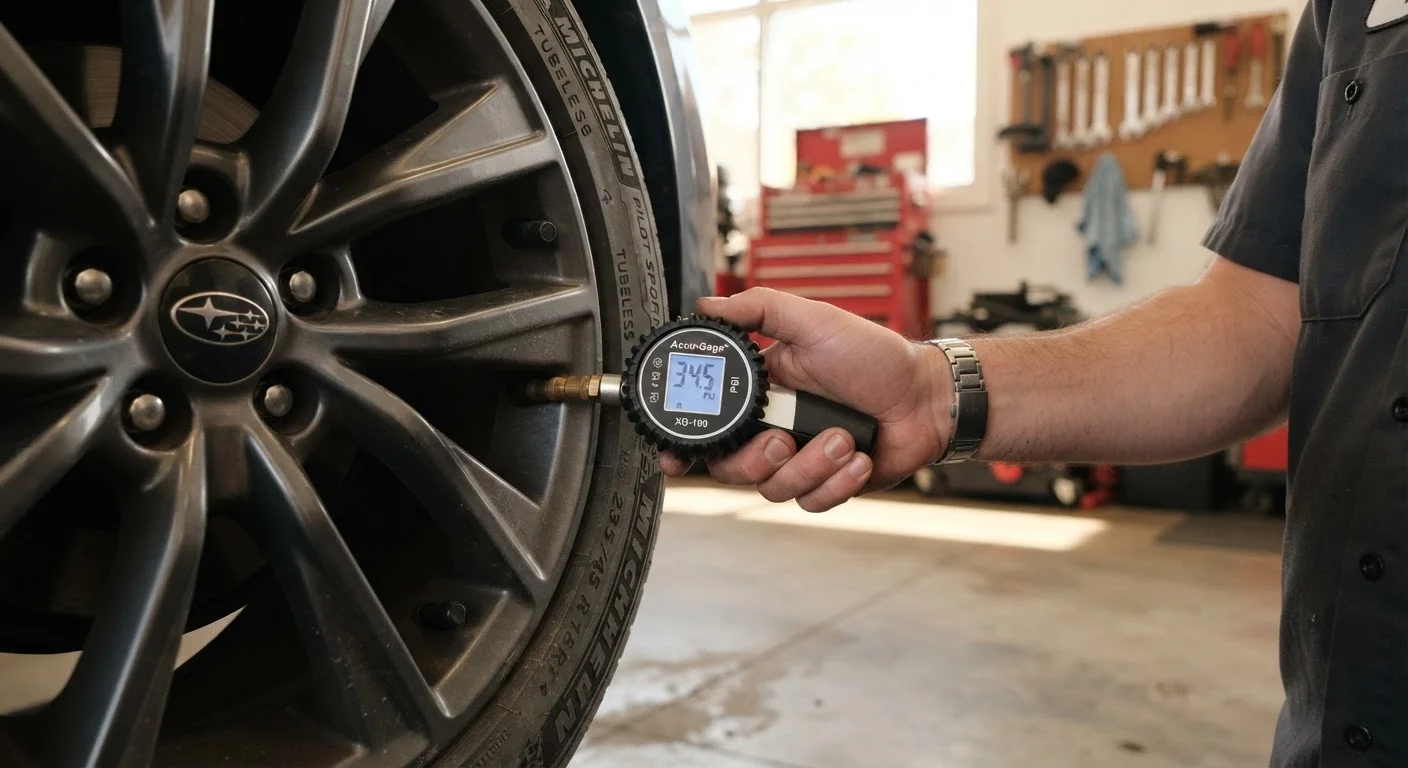
Accurate pressure checks require one key condition: cold tyres. Driving heats the air inside, raising pressure by several PSI - if you check immediately after a drive, you'll get a falsely high reading. Check before driving or after the car has sat for at least three hours.
- Locate the recommended PSI on the door jamb sticker (front and rear may differ).
- Remove the valve cap from each tyre and keep it somewhere safe.
- Press your gauge firmly onto the valve stem - a hiss means you haven't seated it properly.
- Read the PSI and compare it to the spec. Add air if low; release small amounts using the gauge's bleed valve if over.
- Replace all valve caps - they keep dirt out of the valve core.
For a complete picture of habits that extend tyre life, including rotation intervals and tread depth checks, see what every driver should know about tyre care.
Temperature and Seasonal Pressure Changes
Air contracts in cold weather and expands in heat. As a rule of thumb, tyres lose approximately 1 PSI for every 10°F drop in ambient temperature. That means a tyre correctly inflated in September may be 4-6 PSI low by a cold January morning - without any slow leak or damage involved.
This makes seasonal pressure checks especially important. Drivers in states with significant winter temperature swings should check more frequently in autumn and early winter. Conversely, hot summer days can temporarily push pressure above spec, so it's worth verifying after extreme heat as well.
Keeping tyres at the right pressure year-round is a straightforward everyday money habit that costs nothing but a few minutes of attention each month.