

Key Takeaways
Both hands remain on the steering wheel
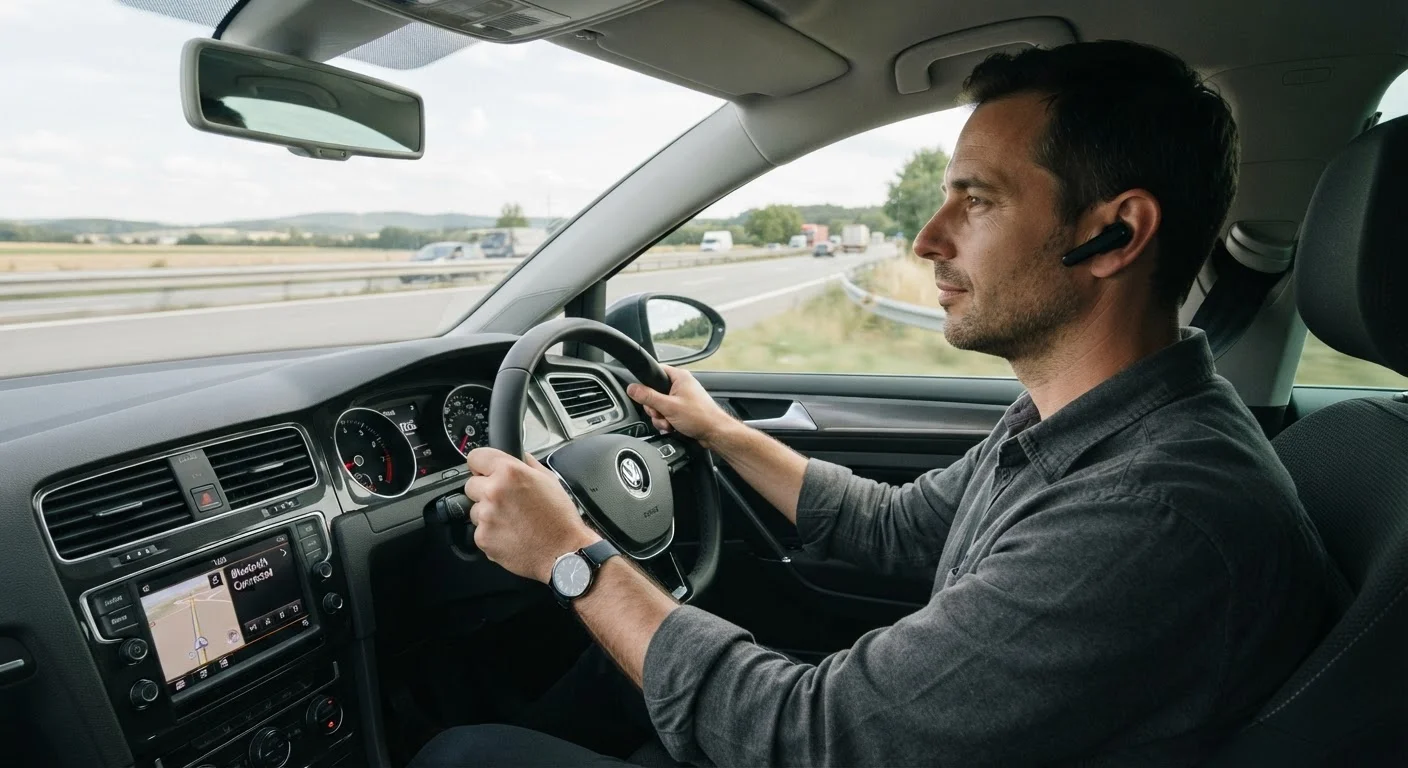
Physical control of the vehicle is not compromised, allowing normal steering, signaling, and emergency maneuvers. This is the primary and most concrete safety advantage hands-free calling provides.
Legal compliance in most U.S. states
Using a hands-free device satisfies the requirements of handheld-phone bans across the majority of states, reducing the risk of traffic citations and the distraction of worrying about legal consequences.
Eliminates visual distraction from the screen
Drivers are not looking down at a screen to dial, read messages, or navigate an interface, which removes one of the most dangerous elements of phone use - eyes off the road.
Allows brief, necessary communication
Short logistical calls - confirming an arrival time, getting simple directions - can be handled with minimal disruption compared to complex tasks like texting or browsing.
Integrated systems reduce fumbling
Built-in vehicle calling systems controlled by voice commands minimize the physical interaction required to initiate or end a call, reducing the manual distraction component.
Cognitive distraction persists despite free hands
Research from institutions such as the AAA Foundation for Traffic Safety and the University of Utah has found that conversing on a hands-free phone still imposes measurable mental load, slowing reaction times and narrowing attention.
Drivers can miss critical visual information
Studies have described a phenomenon sometimes called 'inattention blindness,' where drivers look at the road but fail to process what they see. One frequently cited line of research suggests drivers in this state can fail to notice a significant portion of their visual environment.
Phone callers don't adjust to road conditions
Unlike a passenger who can see traffic and pause the conversation, a phone caller is unaware of what the driver is facing and will continue speaking during complex or dangerous moments, sustaining the cognitive demand.
Voice-command systems are often unreliable
When voice recognition fails to understand commands, drivers may become frustrated and spend more mental energy repeating instructions or manually intervening - potentially creating more distraction than simply handling the phone.
Emotional calls are particularly hazardous
Stressful, upsetting, or emotionally engaging conversations amplify distraction significantly. The content of the call matters, not just its format, and difficult conversations impair driving regardless of the device used.
Risk normalisation can lead to overconfidence
Legal permission to use hands-free devices can cause drivers to underestimate the remaining risk, leading to longer, more complex calls during drives than they might otherwise attempt.
Our Verdict
Hands-free calling meaningfully reduces the physical risk of holding a phone while driving, and its widespread legal acceptance reflects that benefit. However, the cognitive distraction it creates is real and well-documented - drivers should not treat hands-free as fully safe. Treating these devices as a risk-reduction tool rather than a risk-elimination tool is the right mindset.
Hands-free calling is best suited to brief, low-stakes conversations on familiar, low-traffic roads - not extended or emotionally intense discussions during complex driving situations.
Why Hands-Free Became the Mainstream Safety Solution
When states began banning handheld phone use behind the wheel, hands-free technology was widely positioned as the responsible alternative. Bluetooth earpieces, speakerphone systems, and integrated in-car calling allowed drivers to keep both hands on the wheel while staying connected. Today, the vast majority of U.S. states prohibit handheld phone use while driving, but permit hands-free calls for adult drivers.
The logic is straightforward: removing the physical act of holding and manipulating a device eliminates one clear category of distraction. You can steer normally, use turn signals, and grip the wheel properly. For that reason, hands-free calling represents a genuine improvement over handheld phone use - but the research community has consistently cautioned against treating the two as categorically different from a cognitive standpoint.
How Distraction Is Classified
Traffic safety researchers typically categorize driving distraction into three types: visual (eyes off road), manual (hands off wheel), and cognitive (mind off driving). Handheld phone use involves all three. Hands-free calling eliminates visual and manual distraction but retains cognitive distraction - which many researchers consider the most dangerous category in sustained or complex driving situations.
The Pros: Real Benefits Worth Acknowledging
It's important to recognize what hands-free technology genuinely does well before examining its limitations.
Both hands remain on the steering wheel
Physical control of the vehicle is not compromised, allowing normal steering, signaling, and emergency maneuvers. This is the primary and most concrete safety advantage hands-free calling provides.
Legal compliance in most U.S. states
Using a hands-free device satisfies the requirements of handheld-phone bans across the majority of states, reducing the risk of traffic citations and the distraction of worrying about legal consequences.
Eliminates visual distraction from the screen
Drivers are not looking down at a screen to dial, read messages, or navigate an interface, which removes one of the most dangerous elements of phone use - eyes off the road.
Allows brief, necessary communication
Short logistical calls - confirming an arrival time, getting simple directions - can be handled with minimal disruption compared to complex tasks like texting or browsing.
Integrated systems reduce fumbling
Built-in vehicle calling systems controlled by voice commands minimize the physical interaction required to initiate or end a call, reducing the manual distraction component.
For many everyday driving scenarios - a quick check-in, a short logistical call, a hands-free navigation prompt - these advantages translate into meaningful risk reduction compared to reaching for a phone.
The Cons: What the Research Actually Shows
The case against treating hands-free calls as fully safe rests primarily on cognitive distraction research. The human brain is not well-designed for divided attention at high stakes.
Cognitive distraction persists despite free hands
Research from institutions such as the AAA Foundation for Traffic Safety and the University of Utah has found that conversing on a hands-free phone still imposes measurable mental load, slowing reaction times and narrowing attention.
Drivers can miss critical visual information
Studies have described a phenomenon sometimes called 'inattention blindness,' where drivers look at the road but fail to process what they see. One frequently cited line of research suggests drivers in this state can fail to notice a significant portion of their visual environment.
Phone callers don't adjust to road conditions
Unlike a passenger who can see traffic and pause the conversation, a phone caller is unaware of what the driver is facing and will continue speaking during complex or dangerous moments, sustaining the cognitive demand.
Voice-command systems are often unreliable
When voice recognition fails to understand commands, drivers may become frustrated and spend more mental energy repeating instructions or manually intervening - potentially creating more distraction than simply handling the phone.
Emotional calls are particularly hazardous
Stressful, upsetting, or emotionally engaging conversations amplify distraction significantly. The content of the call matters, not just its format, and difficult conversations impair driving regardless of the device used.
Risk normalisation can lead to overconfidence
Legal permission to use hands-free devices can cause drivers to underestimate the remaining risk, leading to longer, more complex calls during drives than they might otherwise attempt.
~50%
Visual cues potentially missed during phone conversations
Research cited by the AAA Foundation for Traffic Safety suggests drivers engaged in phone conversations may process significantly less of their visual environment than drivers who are not distracted.
4x
Increased crash risk from phone use while driving
The National Safety Council has reported that phone use - handheld and hands-free - is associated with roughly four times the crash risk compared to undistracted driving.
27 states
U.S. states banning all handheld phone use while driving
As of recent legislative tallies, more than two dozen states have enacted broad handheld bans, reflecting the policy consensus that physical phone handling is an unacceptable risk.
Importantly, these effects are not unique to phone calls - emotionally charged conversations with passengers can create similar distractions. However, passengers tend to naturally modulate the conversation when driving becomes difficult, while phone callers cannot observe road conditions and do not adjust accordingly.
Legal Does Not Mean Safe: Understanding the Gap
A common assumption is that if something is legal, it must be acceptably safe. Traffic law, however, tends to reflect enforcement practicality and political consensus as much as it does neuroscience. Laws banning handheld use are easier to enforce visually - an officer can see a phone in your hand. Cognitive distraction from a legal hands-free call is invisible.
Drivers should be particularly cautious during high-demand situations: merging onto a busy highway, navigating unfamiliar intersections, driving in poor weather, or moving through dense urban traffic. In these moments, even a brief lapse in attention can have serious consequences. The prudent approach is to end or postpone calls when driving demands increase - something many drivers do not instinctively do.
For those who need to take calls regularly behind the wheel, building a habit of briefly assessing road complexity before accepting a call is a practical safety strategy worth developing.