

Key Takeaways
Start here
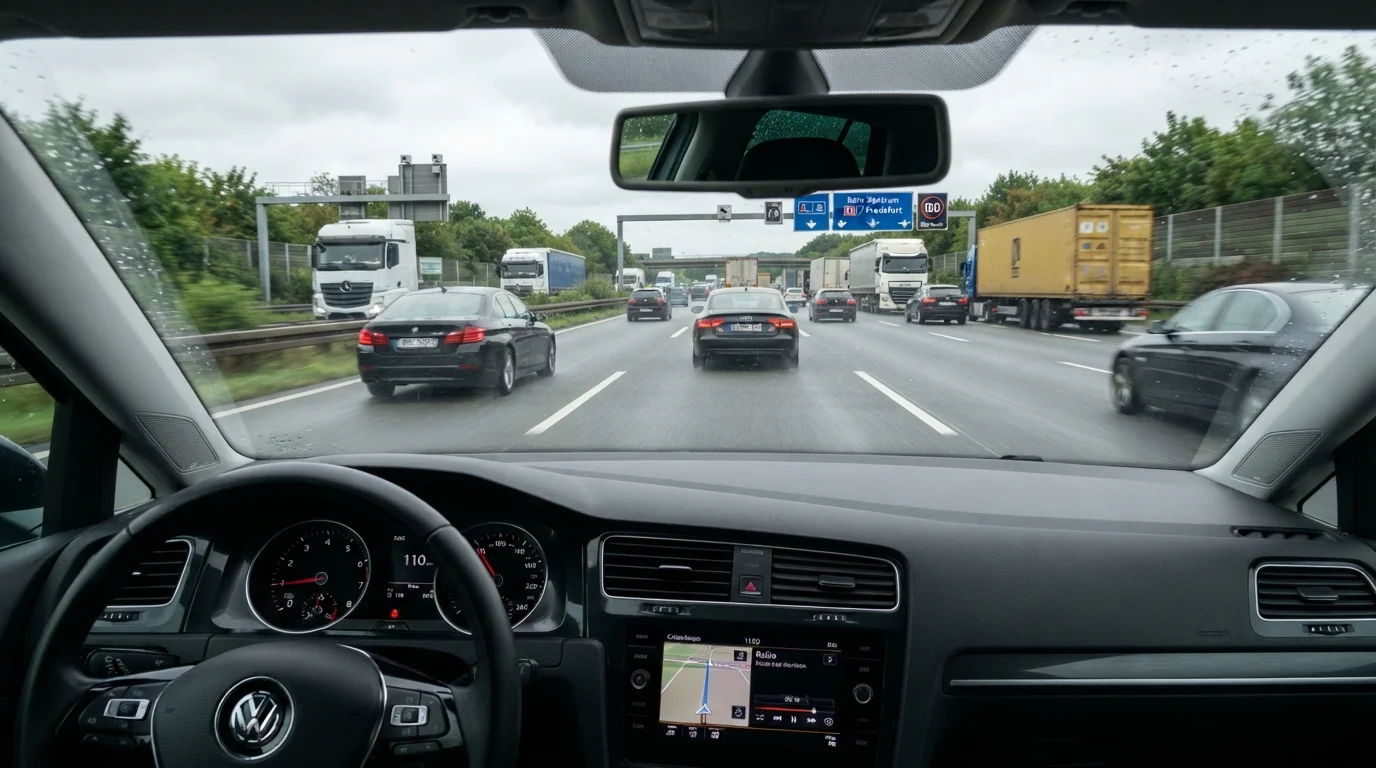
Why Motorways Feel Different
Next
Joining the Motorway: Merging at Speed
Then
Lane Discipline and Overtaking
Going deeper
Sharing the Road with Heavy Lorries
Before every trip
Staying Alert on Long Journeys
Be prepared
What to Do If Something Goes Wrong
Why Motorways Feel Different
Freeways and interstate highways operate at speeds that fundamentally change the demands on a driver. At 70 mph, you cover roughly 103 feet every second - leaving almost no time to react to hazards that emerge without warning. New drivers often underestimate this compression of time and space because their experience to date has been on roads where 35-45 mph felt fast.
The sensory experience also shifts. Traffic noise increases, lane changes feel more consequential, and there's pressure from vehicles travelling close behind. Understanding these differences before you drive is half the battle.
On-ramp / Acceleration lane
The short connecting road that leads onto a freeway, designed to let drivers build speed before merging into highway traffic.
Following distance
The gap between your vehicle and the one in front. On highways, a minimum two-second gap is recommended, more in adverse conditions.
Lane discipline
The practice of staying in the correct lane for your speed and moving to a passing lane only to overtake, then returning to the travel lane.
Blind spot
An area around a vehicle that the driver cannot see using mirrors alone. Larger vehicles have much bigger blind spots than passenger cars.
Hard shoulder / Emergency refuge
A paved strip at the edge of a highway reserved for breakdowns and emergency stops only - never for normal driving or parking.
Graduated Driver Licensing (GDL)
A staged licensing system used in many US states that places restrictions on new drivers - such as nighttime curfews or passenger limits - before granting full privileges.
Joining the Motorway: Merging at Speed
The on-ramp (also called an acceleration lane) exists for one purpose: to let you reach the speed of existing traffic before you merge, not after. A common mistake is to enter the freeway slowly and then attempt to accelerate while also changing lanes - this forces vehicles already on the highway to brake or swerve around you.
- Accelerate firmly along the full length of the on-ramp.
- Signal early so drivers beside you know your intention.
- Find a gap - look for one roughly four car-lengths or more.
- Match speed, then merge smoothly without cutting in abruptly.
If there's no gap, ease your speed slightly to let one open, but do not stop on the ramp unless traffic has completely halted. Stopping on an active on-ramp creates a rear-end risk from the vehicle behind you.
Practice merging during off-peak hours
If you're new to freeway driving, choose quieter times - mid-morning on weekdays, for example - for your first few attempts at merging. Lighter traffic gives you more time and space to build the skill before tackling rush-hour conditions. Once merging feels instinctive, busier roads become significantly less stressful.
Lane Discipline and Overtaking
In the United States, standard practice and law in most states require drivers to keep right except when passing. The left and center lanes are for overtaking - not for cruising. Middle-lane hogging reduces road capacity, increases frustration among other drivers, and can result in a traffic citation in states that enforce keep-right laws.
When overtaking, check your mirrors, signal, move into the passing lane, complete the pass at a steady speed, signal again, and return to the right lane when the vehicle you passed is clearly visible in your rearview mirror. Never undertake (passing on the right) unless traffic is queued in all lanes and moving slowly.
Never slam brakes after overtaking
After completing a pass and returning to the right lane, maintain your speed rather than braking suddenly. The vehicle you just passed may be following close behind and a sharp slowdown can trigger a rear-end collision. If you need to slow down, do so gradually and predictably.
Sharing the Road with Heavy Lorries
Semi-trucks and large freight vehicles are a constant presence on American highways, and understanding their limitations protects you. Key facts every new driver should know:
- Blind spots
- Trucks have large blind zones on both sides, directly behind, and directly in front. If you cannot see the truck driver's mirrors, they cannot see you. Pass decisively - don't linger alongside.
- Stopping distance
- A fully loaded 80,000-lb truck traveling at 65 mph can take up to 525 feet to stop - nearly double that of a passenger car. Never cut in front of a truck and then brake.
- Wind buffet
- When passing or being passed by a large truck, expect a push-pull effect from displaced air. Hold the steering wheel firmly and maintain your lane position.
- Wide turns
- Trucks swing wide at exits and interchanges. Give them extra room and don't try to squeeze alongside at an off-ramp.
Staying Alert on Long Journeys
Driver fatigue is one of the most significant contributors to highway crashes. Unlike drowsy driving on local roads where low speed limits and intersections naturally interrupt a journey, motorway driving can be monotonous - which accelerates the onset of fatigue even when you don't feel tired.
Plan rest stops every two hours or every 100 miles, whichever comes first. Signs of fatigue include difficulty keeping your eyes focused, drifting within your lane, missing signs or exits, and slow reaction to events ahead. If you notice these, exit at the next safe opportunity, park, and rest before continuing. Opening a window or turning up the radio offers only brief, unreliable relief.
What to Do If Something Goes Wrong
Breakdowns and emergencies happen. Knowing the correct response in advance prevents panic from making a dangerous situation worse.
- If possible, move to the right shoulder or, on managed highways, an emergency refuge area. Do not stop in an active lane.
- Turn on your hazard lights immediately - before you've fully stopped.
- Exit the vehicle from the passenger side away from traffic and move behind the barrier or as far from the roadway as possible.
- Call for assistance from behind the barrier, not from inside the car where you remain at risk from passing vehicles.
- Never attempt roadside repairs in an active traffic lane or in poor visibility conditions.
If you miss your exit, proceed calmly to the next one. Reversing or crossing a grass median is illegal and has caused fatal crashes. No exit is worth the risk.
This article provides general driving guidance for educational purposes and does not substitute for formal driver training, your state's official driver handbook, or instruction from a licensed driving professional. Always follow local traffic laws and regulations.