
Exercise Intensity Explained: RPE, Heart Rate Zones, and What They Mean in Practice

| RPE Scale Range | 6-20 (Borg) or 0-10 (modified) (Borg G, 1982, Psychophysical bases of perceived exertion) |
| Common MHR Estimate Formula | 220 minus age (General population average; individual variation is significant) |
| Zone 2 Heart Rate Range | 60-70% of maximum heart rate (Standard five-zone model used by most fitness organizations) |
| Recommended Weekly Moderate Activity | At least 150 minutes (U.S. Department of Health and Human Services Physical Activity Guidelines) |
| Talk Test Indicator | Moderate intensity = able to speak in short sentences (CDC guidance on measuring exercise intensity) |
Why Measuring Exercise Intensity Matters
Not all movement is created equal - but that doesn't mean more intense is always better. Exercise intensity describes how hard your body is working relative to its maximum capacity. Training at the right intensity for your goals can make the difference between building aerobic fitness, burning excess fuel stores, or recovering without overstressing your system.
Two of the most practical tools for gauging intensity are Rate of Perceived Exertion (RPE) and heart rate zones. Both are accessible, require little to no equipment, and can be adapted to virtually any fitness level - including those who prefer low-impact activity like walking, swimming, or cycling.
| RPE Scale Range | 6-20 (Borg) or 0-10 (modified) (Borg G, 1982, Psychophysical bases of perceived exertion) |
| Common MHR Estimate Formula | 220 minus age (General population average; individual variation is significant) |
| Zone 2 Heart Rate Range | 60-70% of maximum heart rate (Standard five-zone model used by most fitness organizations) |
| Recommended Weekly Moderate Activity | At least 150 minutes (U.S. Department of Health and Human Services Physical Activity Guidelines) |
| Talk Test Indicator | Moderate intensity = able to speak in short sentences (CDC guidance on measuring exercise intensity) |
Rate of Perceived Exertion (RPE): Your Built-In Gauge
RPE is a self-reported scale that asks one simple question: How hard does this feel? The most widely used version, the Borg RPE Scale, runs from 6 (no exertion at all) to 20 (absolute maximum effort). A modified 0-10 version is also common in fitness settings, where 0 is rest and 10 is the hardest effort imaginable.
General RPE reference points on the 6-20 scale:
- 6-10: Very light - gentle walking, easy stretching
- 11-12: Light - comfortable conversation is easy
- 13-14: Somewhat hard - breathing is noticeably deeper but you can still speak in short sentences
- 15-16: Hard - sustained effort, speaking becomes difficult
- 17-19: Very hard to extremely hard - near-maximum output
- 20: Maximal - brief, all-out effort
RPE is particularly useful when external factors (altitude, heat, medication) affect heart rate, making it a reliable complement to any device-based measurement.
Rate of Perceived Exertion (RPE)
A self-rated scale used to measure exercise intensity based on how hard an activity feels. The classic Borg scale runs from 6 (no effort) to 20 (maximum effort).
Maximum Heart Rate (MHR)
The highest number of times your heart can beat per minute during all-out exertion. It is commonly estimated using the formula 220 minus age, though individual values vary.
Heart Rate Zone
A range of heart rate values expressed as a percentage of maximum heart rate, each linked to distinct physiological effects and training benefits.
Aerobic Base
The foundation of cardiovascular fitness developed through sustained, moderate-intensity exercise that primarily uses oxygen for energy production.
Lactate Threshold
The exercise intensity at which lactate begins to accumulate in the blood faster than it can be cleared. Training near this threshold can improve endurance performance.
Heart Rate Zones: A Numbers-Based Framework
Heart rate zones divide your working heart rate into ranges, each associated with different physiological responses. They are typically calculated as a percentage of your estimated maximum heart rate (MHR), often approximated by the formula 220 minus your age - though this is a population average with meaningful individual variation.
| Zone | % of Max HR | Feel | Primary Benefit |
|---|---|---|---|
| Zone 1 - Very Light | 50-60% | Easy, conversational | Recovery, basic cardiovascular health |
| Zone 2 - Light | 60-70% | Comfortable, sustainable | Fat metabolism, aerobic base |
| Zone 3 - Moderate | 70-80% | Somewhat hard, breathing deeper | Aerobic endurance, cardiovascular fitness |
| Zone 4 - Hard | 80-90% | Hard, limited conversation | Lactate threshold, performance |
| Zone 5 - Maximum | 90-100% | Near all-out effort | Speed, peak power (short bursts) |
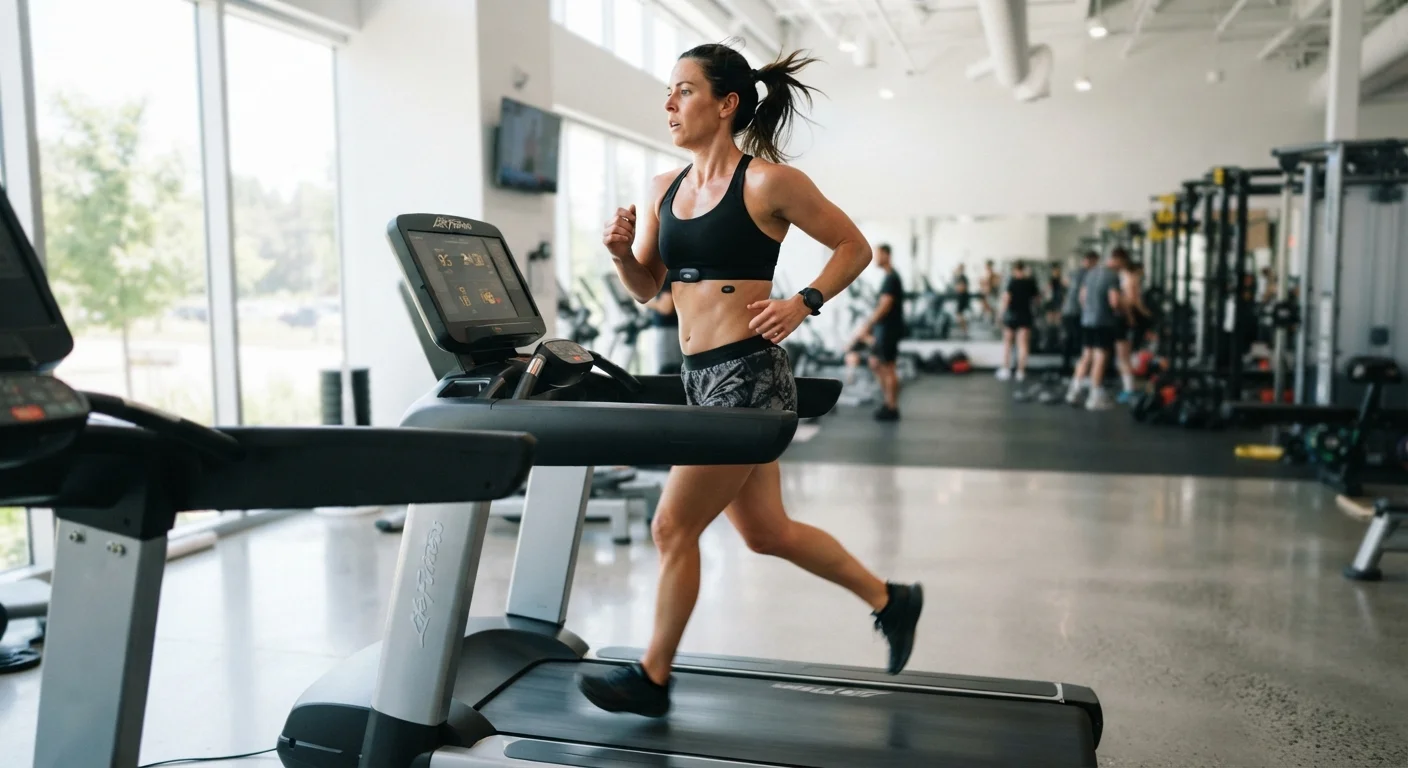
Heart rate monitors - whether chest straps or optical wrist sensors - vary in accuracy. Chest straps are generally considered more precise during high-intensity work.
150 min
Recommended weekly moderate-intensity aerobic activity for adults
According to the U.S. Department of Health and Human Services Physical Activity Guidelines for Americans.
~60-70%
Heart rate range associated with fat metabolism and aerobic base building
Corresponds to Zone 2 in the standard five-zone heart rate model used by exercise scientists.
6-20
Range of the original Borg RPE Scale
Developed by exercise physiologist Gunnar Borg; designed to correlate numerically with typical heart rate during exercise.
Putting It Into Practice
For most people pursuing general health, spending the majority of cardio time in Zones 2 and 3 (roughly RPE 11-14) builds a strong aerobic foundation without excessive recovery demands. Higher zones serve a purpose for those training for performance goals, but they should represent a smaller portion of overall volume.
A practical approach is to use RPE as your primary check-in and cross-reference it against heart rate data when available. If your heart rate monitor says Zone 4 but the effort feels like RPE 12, consider factors like dehydration, poor sleep, or sensor error before adjusting your pace.
Always consult a qualified healthcare professional before significantly increasing exercise intensity, especially if you have a cardiovascular condition, are new to exercise, or belong to a special population such as older adults or those managing chronic illness. These tools are guides, not substitutes for personalized medical or fitness guidance.
This article is for informational and educational purposes only and does not constitute medical or fitness advice. Speak with a qualified healthcare provider before making significant changes to your exercise routine.