
Movement Snacks: The Science Behind Short Bursts of Exercise Throughout the Day

Key Takeaways
Movement Snacks
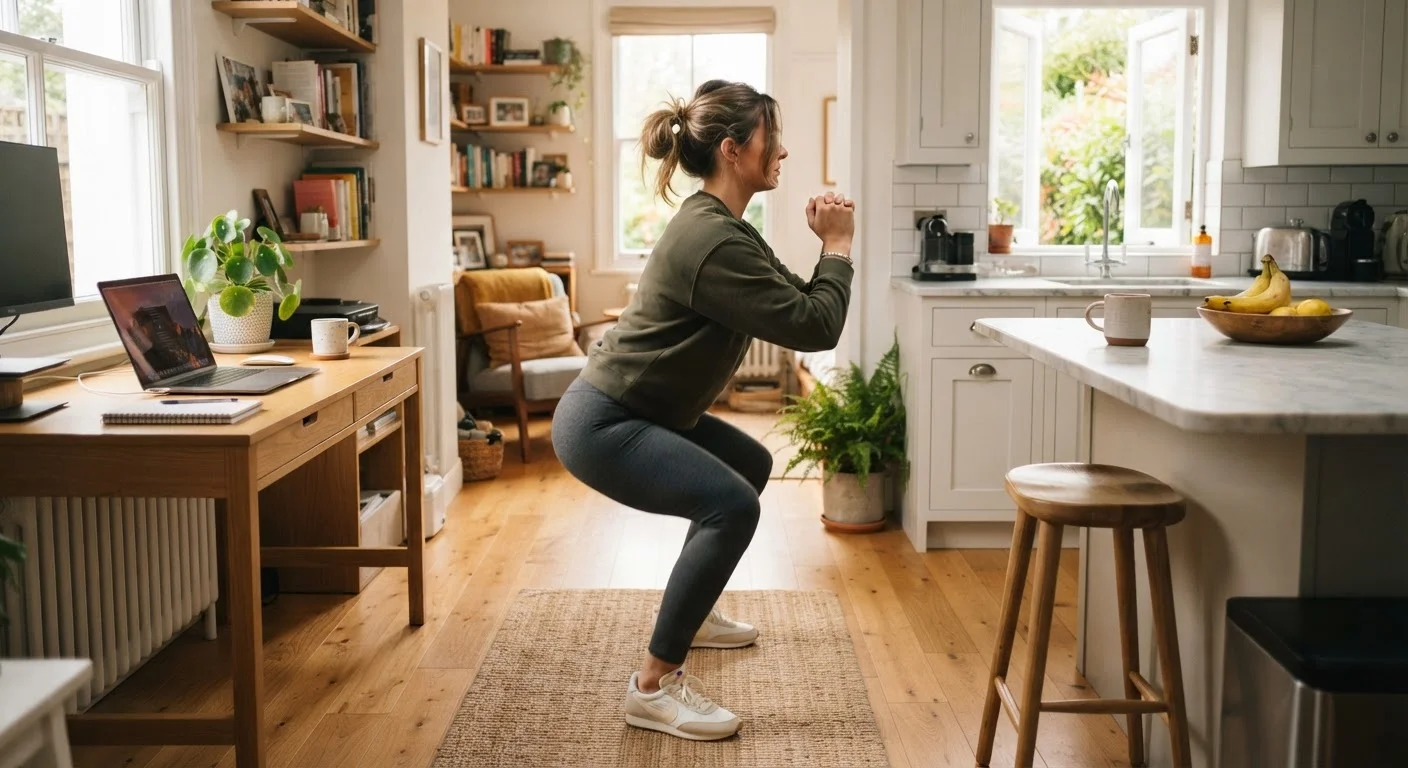
Movement snacks are brief, intentional bouts of physical activity - typically lasting one to ten minutes - distributed throughout the day rather than concentrated in a single workout session. The idea is that breaking up sedentary time with frequent, short bursts of movement can contribute to overall health, even when a longer gym session isn't possible. Examples include a brisk walk around the block, a set of bodyweight squats, or climbing stairs between meetings.
In exercise science, this concept is often studied under the term 'exercise snacks' or as a component of interrupted sedentary behavior research, examining how acute bouts of activity affect metabolic and cardiovascular markers.
Where Did the 'Movement Snack' Idea Come From?
For decades, public health messaging positioned exercise as a discrete, time-bound event - something you scheduled, dressed for, and completed in one sitting. The idea that activity had to reach a minimum threshold of 30 continuous minutes before it "counted" became deeply embedded in popular thinking, even as the science was quietly moving in a different direction.
Researchers began questioning that threshold in the late 1990s and early 2000s, with studies suggesting that multiple shorter bouts of activity could produce cardiovascular improvements comparable to a single continuous session. This body of work eventually influenced the 2018 revision of the U.S. Physical Activity Guidelines, which removed the previous requirement for bouts to last at least 10 minutes and instead emphasized total accumulated movement across the day.
The term "movement snacks" or "exercise snacks" became a shorthand for this approach in both research literature and public health communication - framing brief activity as something easily woven into daily life, rather than a special event requiring preparation. If this framing resonates with you, you might also recognize some of the common fitness myths that kept people believing short bouts didn't count.
What the Research Actually Shows
The evidence for movement snacks spans several health outcomes. A growing number of studies have examined what happens when people interrupt prolonged sitting with brief activity breaks - and the findings are consistent enough to be taken seriously, even if long-term data is still accumulating.
~25%
Reduction in post-meal blood sugar from activity breaks
Studies published in journals including Diabetologia found that short activity breaks every 30 minutes reduced postprandial glucose by approximately 25% compared to uninterrupted sitting.
3x
Daily movement snack sessions in key stair-climbing studies
Canadian researchers found that three short stair-climbing intervals performed before meals improved aerobic capacity over six weeks, representing minimal total daily time investment.
2018
Year U.S. guidelines removed the 10-minute minimum bout requirement
The U.S. Physical Activity Guidelines Advisory Committee updated federal recommendations to recognize that activity accumulated in any bout length contributes to health benefits.
Blood sugar regulation: Multiple randomized trials have found that breaking up sitting with two- to three-minute walks or light resistance exercises every 30 minutes significantly reduces post-meal blood glucose levels compared with continuous sitting. This is particularly relevant for people at risk of type 2 diabetes.
Blood pressure: A study published in the journal Hypertension found that participants who took three ten-minute walks spread across the day saw greater reductions in blood pressure than those who completed one continuous 30-minute session - suggesting that frequency, not just duration, may matter.
Cardiorespiratory fitness: Canadian research on "exercise snacks" - short, vigorous stair-climbing intervals performed before meals - showed improvements in aerobic capacity over six weeks with remarkably minimal time investment per session.
It's worth noting that most movement snack studies are relatively short-term and involve modest sample sizes. The findings are promising but should be interpreted as part of a broader picture of physical activity research, not as definitive proof that short bouts are equivalent to all forms of structured exercise.
Why Sedentary Behavior Is Its Own Risk Factor
One important nuance in this science is the distinction between being insufficiently active and spending prolonged time sitting. Research suggests these are partially independent risk factors - meaning someone who meets weekly exercise guidelines but sits for eight or more hours a day may still face elevated health risks from that unbroken sedentary time.
Movement snacks address this second concern directly. By interrupting long stretches of sitting, they reduce the physiological consequences of inactivity - including reduced circulation, muscle inactivity, and metabolic slowdown - even when they don't dramatically increase total weekly exercise volume.
Start Small and Build Consistency
If movement snacks are new to you, beginning with just two or three intentional breaks per day is a realistic starting point. Research on habit formation suggests that consistency - however modest - is more important than volume in the early stages. Once short breaks feel automatic, adding more throughout the day becomes much easier.
This is why movement snacks are particularly well-suited to people with desk-based jobs, long commutes, or lifestyles that make traditional exercise scheduling difficult. They don't replace a broader active lifestyle, but they meaningfully reduce one of its key risks. For those exploring how to build this into a realistic routine, see our guide on fitting exercise into a packed schedule.
Making Movement Snacks Work in Practice
The practical appeal of movement snacks lies in their low barrier to entry. There's no equipment required, no special location needed, and no minimum fitness level to begin. The goal is simply to reduce the gaps between movement - to treat physical activity as something woven through the day rather than saved for later.
Some approaches that people find sustainable include:
- Standing and doing a short walk or set of exercises each time a phone call comes in
- Using a timer or app reminder to prompt a two-minute movement break every hour
- Choosing stairs over elevators consistently, rather than as an occasional gesture
- Pairing movement with an existing habit - stretching while coffee brews, or squats before opening email
Pairing movement snacks with intentional mobility work during breaks can also support joint health and posture - particularly relevant for people who sit for extended periods. And if motivation to move at all is the core challenge, the principles behind building a consistent exercise habit apply just as well to small daily bouts as they do to full workouts.
This article is for general informational purposes only and does not constitute medical advice. Consult a qualified healthcare professional before making changes to your physical activity routine, especially if you have an existing health condition.