

Key Takeaways
Start here
What Is the Stress Response?
Build the foundation
The Nervous System at the Center
Go deeper
Fight, Flight, and Freeze Explained
Understand the risks
When Stress Becomes Chronic
Take action
Supporting Your Nervous System
What Is the Stress Response?
The stress response is your body's built-in alarm system - an automatic, coordinated set of biological changes designed to help you survive a threat. It evolved long before modern life, in environments where danger was often immediate and physical. What we now call the "stress response" is the same mechanism that once helped our ancestors outrun predators or react quickly in a crisis.
Understanding this system is the starting point for making sense of how stress affects your health. For a broader look at mental wellbeing concepts, the Mental Wellbeing: A Comprehensive Reference covers key frameworks in accessible language.
Autonomic Nervous System (ANS)
The part of the nervous system that controls automatic body functions - like heart rate and digestion - without conscious effort. It manages the stress response.
Cortisol
A hormone released by the adrenal glands during stress. It helps provide energy and regulate the stress response, but elevated levels over time are associated with various health concerns.
Amygdala
An almond-shaped brain structure that acts as an early-warning threat detector, triggering the stress response before conscious thought kicks in.
Sympathetic Nervous System
The branch of the autonomic nervous system that activates the stress response - speeding up the heart, tensing muscles, and releasing stress hormones.
Parasympathetic Nervous System
The branch of the autonomic nervous system responsible for rest and recovery, slowing the body down after a stressor has passed.
Acute vs. Chronic Stress
Acute stress is short-lived and usually resolves when the threat passes. Chronic stress is prolonged or recurring activation of the stress response without adequate recovery.
The Nervous System at the Center
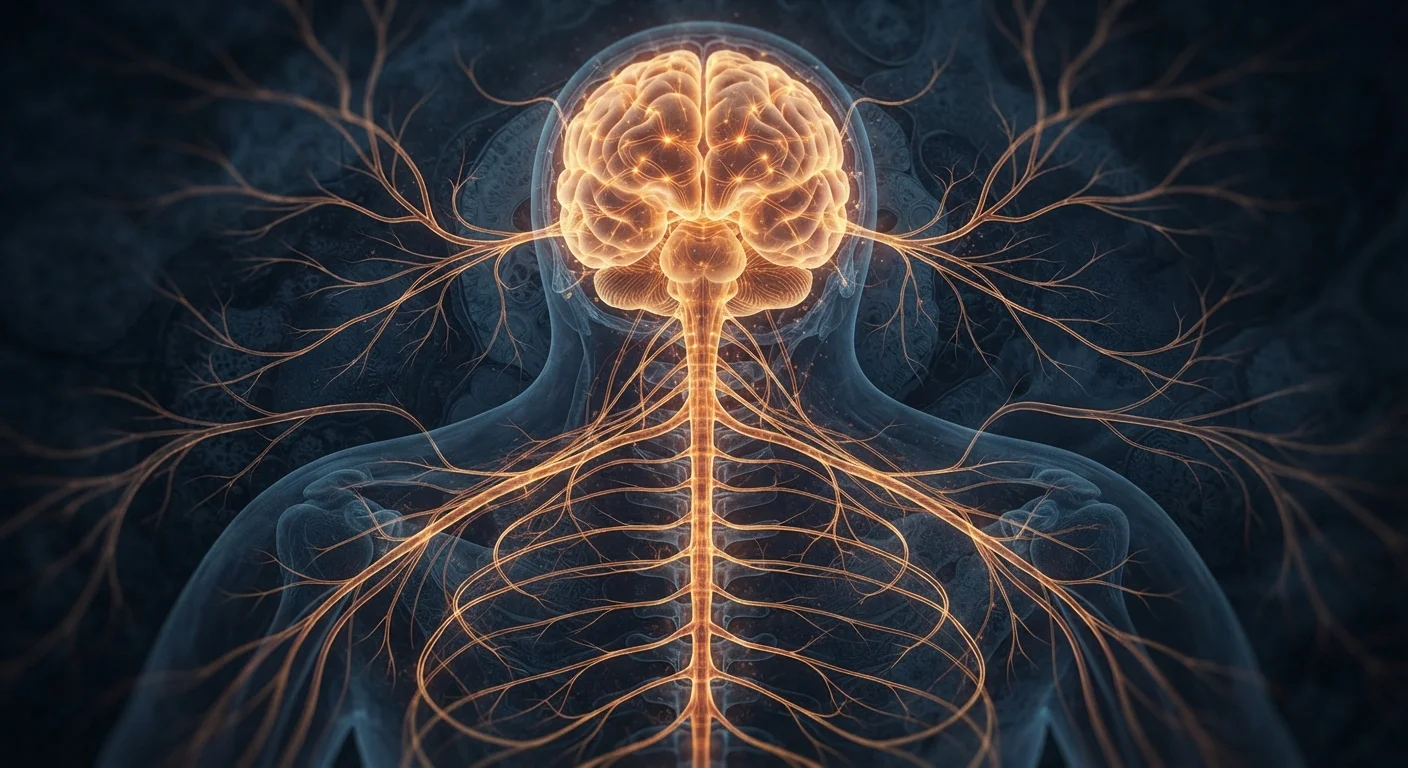
The autonomic nervous system (ANS) governs the stress response. It operates largely below the level of conscious thought and controls functions like heart rate, breathing, digestion, and hormone release. The ANS has two main branches that work in opposition:
- Sympathetic nervous system: The accelerator. It activates the body's stress response - increasing heart rate, redirecting blood to muscles, and releasing stress hormones like adrenaline (epinephrine) and cortisol.
- Parasympathetic nervous system: The brake. It promotes the "rest and digest" state - slowing heart rate, supporting digestion, and helping the body recover after stress.
A small brain region called the amygdala acts as the threat-detection center. When it signals danger - real or perceived - it triggers the hypothalamus to set off the sympathetic response almost instantaneously, before the thinking parts of your brain have fully processed the situation.
Fight, Flight, and Freeze Explained
The terms "fight," "flight," and "freeze" describe three distinct survival responses the nervous system can mount depending on how the brain assesses a threat.
Fight
The body mobilizes for confrontation. Heart rate and blood pressure rise, muscles receive more blood flow, and the stress hormones adrenaline and cortisol surge. You may feel a spike of energy, aggression, or heightened alertness.
Flight
The same hormonal cascade is activated, but the impulse is to escape rather than confront. You may notice an urge to leave, rapid breathing, and heightened senses scanning for an exit.
Freeze
When escape or confrontation both seem impossible, the nervous system may shift into a conserved, immobilized state. Heart rate can drop, the body becomes still, and the mind may feel detached. This is sometimes described as "playing dead" and is an involuntary, protective response - not a failure of will.
Noticing Your Own Pattern
Most people have a tendency toward one stress response over others - some become agitated and reactive, others feel an urge to withdraw, and some experience a kind of mental blankness. Recognizing your own pattern, without judgment, is a useful starting point for understanding how stress shows up for you personally.
When Stress Becomes Chronic
Acute stress - a short-term, resolved threat - is something the body is well-equipped to handle. Chronic stress, however, occurs when the stress response is repeatedly or continuously activated without adequate recovery. Research from institutions such as the American Psychological Association and the NIH suggests that prolonged elevation of cortisol is associated with a range of health concerns, including disrupted sleep, impaired immune function, digestive issues, and cardiovascular strain.
Chronic stress can also affect mood and cognition. Persistent cortisol exposure has been linked in research to changes in brain areas associated with memory and emotional regulation - though the precise mechanisms are still an active area of study.
Chronic Stress Warrants Professional Support
If you regularly feel overwhelmed, experience persistent physical symptoms such as headaches or sleep disruption, or find stress difficult to manage on your own, speak with a healthcare provider. Chronic stress can be a contributing factor in several medical and mental health conditions, and a professional evaluation can help identify what kind of support is most appropriate for your situation.
Supporting Your Nervous System
While you cannot eliminate stress, evidence suggests that several practices can help activate the parasympathetic (recovery) branch of the nervous system more reliably:
- Controlled breathing: Slow, extended exhales - such as those used in diaphragmatic or box breathing - have been shown to stimulate the vagus nerve, which helps shift the body toward a calmer state.
- Regular physical movement: Exercise helps metabolize stress hormones and supports mood regulation through endorphin release. The type and intensity of exercise that is appropriate varies by individual - consult a healthcare provider if you are managing a health condition.
- Sleep hygiene: Adequate sleep allows cortisol rhythms to regulate naturally. Chronic sleep deprivation can itself become a stressor, perpetuating the cycle.
- Social connection: Positive social interaction has been associated with lower cortisol levels and improved resilience in peer-reviewed research.
If you find that stress is significantly affecting your daily functioning, a qualified mental health professional can offer personalized, evidence-based support. This article is for general information only and is not a replacement for professional care.
This article is for informational and educational purposes only and does not constitute medical or mental health advice. Always consult a qualified healthcare professional for concerns about your personal health.