

Key Takeaways
Why Daily Watering Often Does More Harm Than Good
Watering your garden every day feels responsible - almost nurturing. But for most established plants, frequent light watering is one of the most counterproductive habits a gardener can develop. When only the top inch or two of soil gets wet, roots have no reason to reach deeper. Over time, plants become shallow-rooted and almost entirely dependent on you to deliver moisture every single day. Skip a day in summer heat, and the stress is immediate.
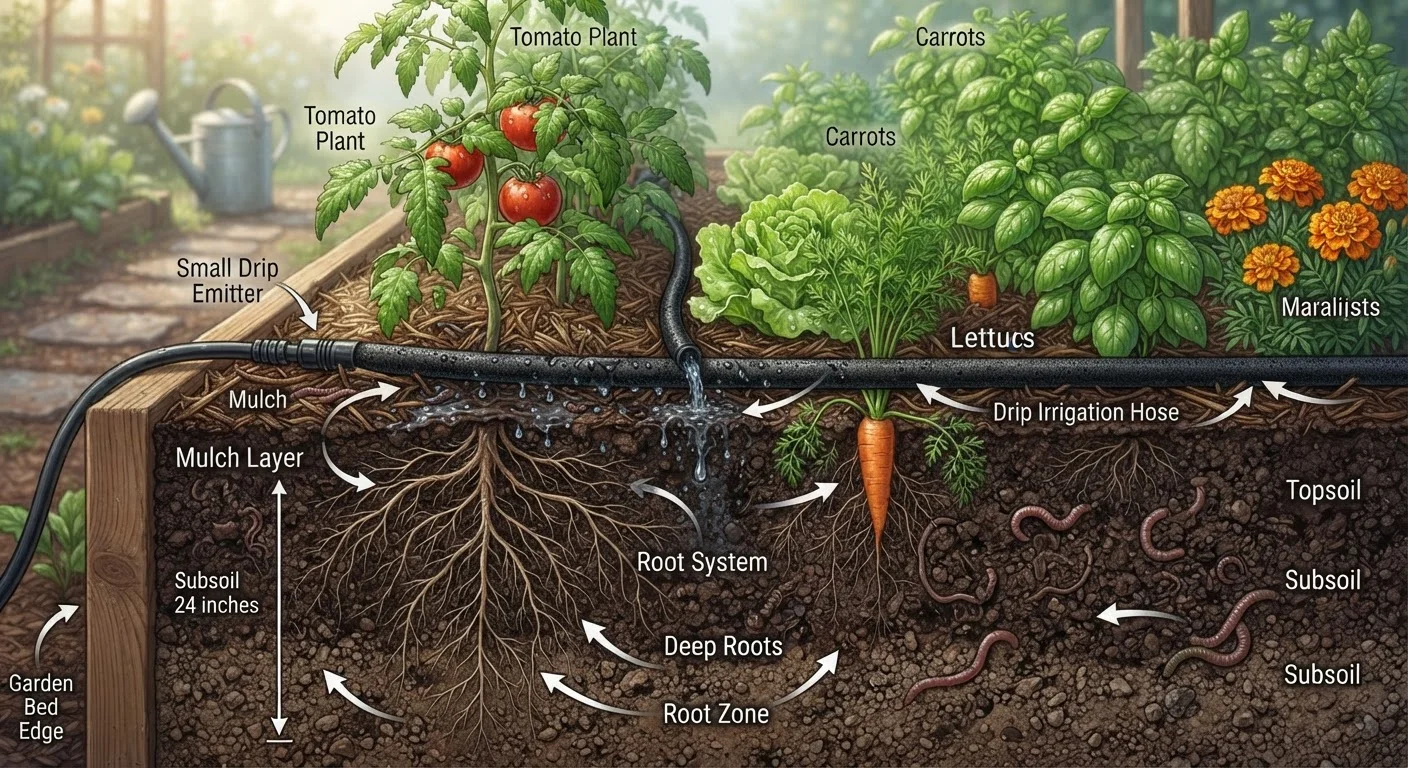
Shallow watering also promotes fungal disease. Wet foliage and persistently damp surface soil create ideal conditions for powdery mildew, root rot, and other common garden pathogens. The goal of any sound watering routine is to get water deep into the root zone - typically six to twelve inches below the surface - and then allow the top layer to partially dry out before watering again.
“Plants grown with deep, infrequent irrigation develop extensive root systems that buffer them against both drought and temporary flooding - they become genuinely more resilient, not just reliant on the gardener.”
— Extension Horticulture Specialists, Land-grant university cooperative extension programs across the US
The Core Principles of Deep, Infrequent Watering
Understanding what plants actually need changes how you approach the hose or irrigation timer. Here are the proven practices that make deep watering effective:
Water slowly and at soil level, not overhead
Slow application allows water to penetrate deeply rather than run off. Overhead sprinklers wet foliage, which encourages fungal disease and leads to significant evaporation before water reaches the roots.
Water in the early morning whenever possible
Morning watering allows any moisture on foliage to dry quickly as temperatures rise, reducing disease risk. Evaporation rates are at their lowest in the early hours, so more water reaches the roots.
Apply a two- to three-inch layer of organic mulch around plants
Mulch dramatically slows evaporation from the soil surface, can cut watering frequency nearly in half, and gradually improves soil structure as it breaks down. It also suppresses weeds that compete for moisture.
Adjust frequency based on plant type, season, and soil
Sandy soils drain fast and may need watering every four to five days; heavy clay holds moisture longer. Newly transplanted seedlings need more frequent attention than established perennials, which have extensive root systems.
Measure how much water you are actually applying
Most gardeners significantly underestimate or overestimate the water they deliver. An inch of water per week is a common general guideline for vegetable gardens, but that is hard to judge without measurement.
How to Know When Your Garden Actually Needs Water
The most reliable watering schedule is not a calendar - it is the soil itself. Two simple field tests help you make smarter decisions:
- The finger test: Push your finger two inches into the soil near the plant's root zone. If it still feels moist, hold off. If it feels dry at that depth, it is time to water.
- The screwdriver test: Push a long-bladed screwdriver into the ground. If it slides in easily, moisture is adequate. If it meets resistance before reaching six inches, the soil is too dry.
Wilting plants can be deceiving. Some plants wilt during peak afternoon heat as a temporary stress response, even when soil moisture is fine. Check again in the cooler morning hours - if they have perked up, watering is not yet needed.
New Transplants Are an Exception
Newly planted seedlings and transplants do need more frequent watering until their root systems establish - often every day or two for the first one to two weeks. Once you see active new growth, begin gradually stretching the interval between waterings to encourage deeper rooting.
Quick Wins to Start Watering Smarter Today
Shifting your watering habits does not require new equipment or major changes. A few immediate adjustments can make a measurable difference in plant health within one growing season.
Pairing these habits with attentive observation - checking soil moisture, watching how quickly the ground dries, and noticing how plants respond - builds the kind of practical knowledge that makes every future gardening decision more confident.