

Key Takeaways
How Many Litter Boxes Does Your Cat Actually Need?
The widely accepted guideline among veterinary behaviorists is the N+1 rule: one litter box per cat in the household, plus one additional box. For a single-cat home, that means two boxes. For three cats, four boxes minimum. This isn't an arbitrary number - it reflects how cats naturally prefer not to share elimination sites, and how one soiled box quickly becomes unacceptable to a fastidious animal.
Multi-cat households are especially prone to litter box conflict. A dominant cat may guard access, leaving subordinate cats with no safe option - and a carpet that pays the price. Spreading boxes across different rooms, rather than clustering them together, ensures each cat has independent access without social pressure.
10%
Cats that develop litter box avoidance at some point
Litter box avoidance is one of the most frequently cited behavioral concerns in feline veterinary practice, affecting roughly 1 in 10 cats according to estimates from feline behavior specialists.
2-3"
Optimal litter depth preferred by most cats
Veterinary behaviorists consistently recommend two to three inches of litter to support natural digging behavior without making the surface feel unstable.
Placement: Where You Put the Box Matters as Much as the Box Itself
Cats are vulnerable when eliminating, which is why location drives so much of their box-use behavior. Ideal placement shares a few consistent characteristics:
- Quiet and low-traffic - avoid laundry rooms with startling appliances or hallways with heavy foot traffic.
- Away from food and water bowls - cats instinctively avoid eliminating near their feeding area.
- Multiple escape routes - corners feel like traps; cats prefer spots where they can see approaching threats and exit easily.
- Accessible at all times - avoid placing boxes behind closed doors or in rarely-visited rooms.
Basements can work if your cat uses them freely, but elderly cats or kittens may struggle with stairs. Keep at least one box on every floor of a multi-story home.
Try a Litter Box Location Audit
Walk through your home from a cat's perspective - low to the ground, attuned to noise, vibration, and sightlines. Note any box locations that feel exposed, cornered, or startling. Cats cannot tell you the box location feels threatening; avoidance is their only communication. Repositioning even one box can resolve persistent problems without any other changes.
Choosing the Right Litter: Type, Depth, and Box Style
Research from veterinary behaviorists consistently finds that unscented, clumping clay litter is preferred by most cats when given a choice. The fine texture mimics natural substrates, and the absence of perfume doesn't mask important scent signals cats rely on. Heavily scented litters are designed for human noses, not feline comfort - many cats actively avoid them.
Fill the box to a depth of about two to three inches. Too shallow limits digging behavior; too deep can make the box feel unstable underfoot. If your cat consistently kicks litter out or seems reluctant to dig, experimenting with depth is a worthwhile first step.
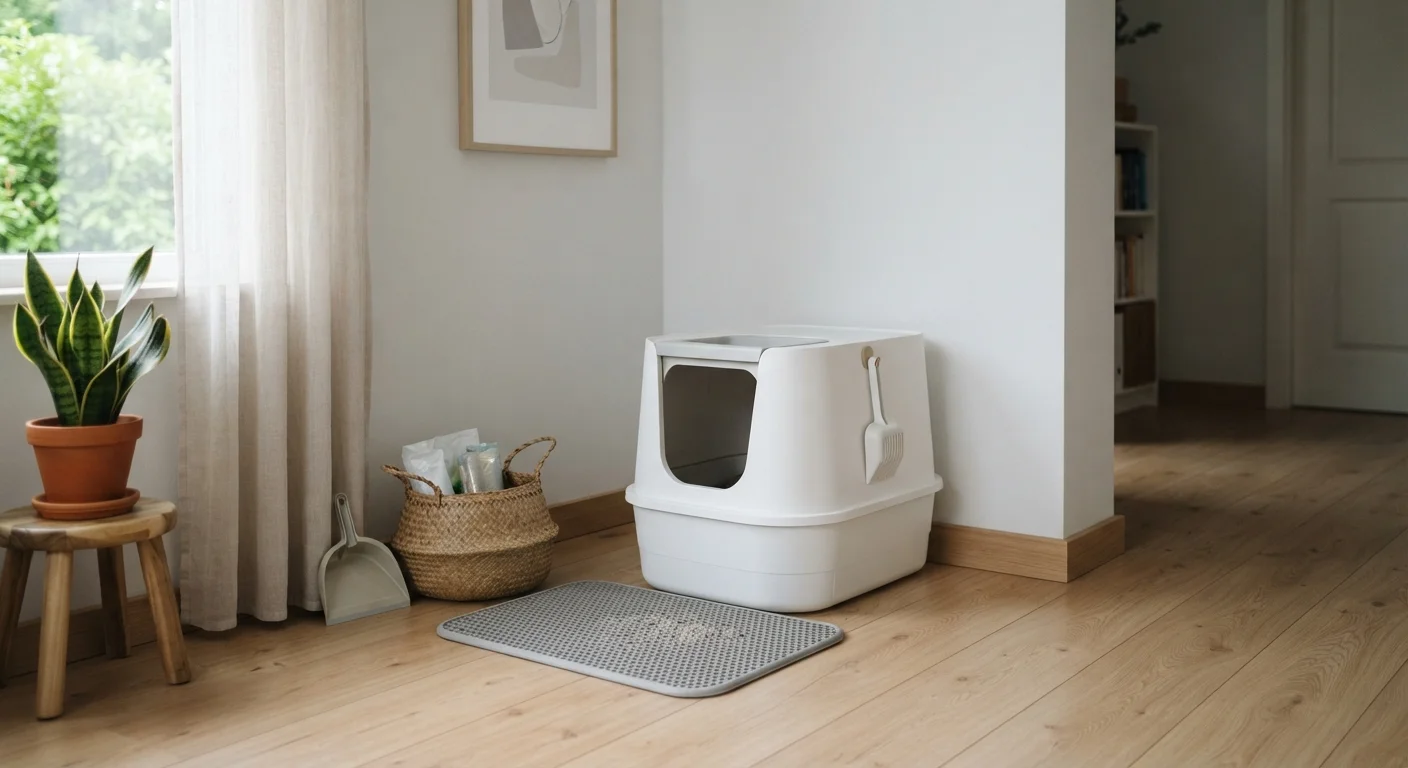
Box style also plays a role. Covered boxes trap odors - which may appeal to owners but often deters cats. Open-top boxes with low sides are generally better tolerated. For cats that spray over the edge, a high-sided open box is usually a better solution than a lid.
Follow the N+1 rule for litter box quantity in every household.
Having more boxes than cats reduces resource competition and gives every cat a clean, unclaimed option at any time. It also provides a buffer for the inevitable delay between scoopings.
Place boxes in quiet, low-traffic areas with multiple exit routes.
Cats feel vulnerable while eliminating. A box in a startling or cornered location creates anxiety that overrides the instinct to use it, leading to avoidance even in cats who previously had no issues.
Use unscented, clumping litter at a depth of two to three inches.
Most cats strongly prefer unscented fine-textured litter, which mimics natural digging substrates. Scented varieties often repel cats despite being marketed as more hygienic.
Scoop daily and do a full litter change every one to two weeks.
Cats will refuse a sufficiently soiled box and seek alternatives elsewhere in the home. Regular scooping removes the odor buildup that triggers avoidance, especially in sensitive cats.
Treat sudden litter box avoidance as a potential medical symptom.
Urinary tract infections, kidney disease, arthritis, and other conditions frequently manifest first as changes in elimination behavior. Assuming the cause is purely behavioral can delay necessary veterinary care.
Hygiene Routines That Prevent Avoidance
The single most common reason cats stop using their litter box is cleanliness. Cats have an olfactory sensitivity far exceeding humans - what smells faintly unpleasant to you is overwhelming to them. Establishing a consistent hygiene routine is the most reliable way to prevent avoidance problems before they start.
“The litter box is often the first place a cat communicates that something is wrong - either with their environment or their health. Owners who pay close attention to elimination habits have a significant early-warning advantage.”
— Dr. Ilona Rodan, Board-certified feline veterinary specialist and cat behavior consultant
At minimum, scoop solid waste and clumps once daily. Homes with multiple cats may need twice-daily scooping. Every one to two weeks, discard all litter, wash the box with mild unscented soap and warm water, dry completely, and refill with fresh litter. Avoid bleach or strongly scented cleaners - chemical residue can deter use.
Replace plastic boxes entirely every one to two years. Scratches in the plastic harbor bacteria and odors that cleaning cannot fully remove, even when the box appears clean.
This article is for general informational purposes only and does not constitute veterinary advice. If your cat shows sudden changes in litter box behavior, consult a licensed veterinarian to rule out underlying medical conditions.