

Key Takeaways
Why Security Myths Spread So Easily
Airport security sits at the intersection of official policy, constantly evolving technology, and word-of-mouth travel advice - a perfect environment for myths to thrive. Rules do change, procedures vary by airport, and the stakes feel high enough that travelers cling to whatever tips seem to reduce friction. The result is a lot of misplaced stress built on outdated or simply wrong information.
Getting the facts straight doesn't just save you anxiety. It helps the line move faster for everyone. Below, we tackle the most persistent misconceptions head-on.
Myth
You have to remove all jewelry and metal items before going through the scanner, or you'll definitely set off the alarm.
Fact
Modern body scanners detect items based on density and shape, not magnetism - small jewelry typically doesn't trigger them.
This myth likely originates from the early days of walk-through metal detectors, which were indeed sensitive to metal. Today's millimeter-wave body scanners work differently: they produce a generic outline image and flag anomalies by shape and density. A thin necklace or small earrings are extremely unlikely to cause an alarm. You can leave light jewelry on. Bulky belts, large metal-buckle accessories, and items in pockets are a different story - those are worth removing.
Myth
The 3-1-1 liquids rule means you can't pack full-size shampoo or toiletries anywhere in your luggage.
Fact
The 3-1-1 rule only applies to your carry-on bag. Full-size liquids are allowed in checked baggage without restriction.
The TSA's 3-1-1 rule limits carry-on passengers to containers of 3.4 ounces (100 ml) or less, all fitting in a single quart-sized clear bag. Checked baggage is governed by different rules and generally has no liquid volume limit (though airline and destination-specific rules may apply). If you regularly check a bag, you can pack standard-size toiletries there without a second thought.
Myth
Pacemakers and implanted medical devices are seriously dangerous near airport security scanners.
Fact
Most modern implanted devices are designed to tolerate common security screening, but you should always consult your doctor and inform TSA officers.
This concern is not entirely baseless - older device models and certain scanner types did pose risks - but the landscape has shifted considerably. Most current cardiac devices are engineered to function safely in common electromagnetic environments. That said, this is a personal medical matter that varies by device model and individual health situation. The right approach is to discuss security travel with your cardiologist, carry your device card, and notify TSA officers before screening so they can offer appropriate alternatives. Never assume without checking with your healthcare provider.
Myth
TSA PreCheck and Global Entry are basically the same thing - getting one automatically gives you the other.
Fact
They are different programs with different purposes; however, Global Entry membership does include TSA PreCheck as a benefit.
TSA PreCheck speeds up domestic security screening - you keep shoes on, laptops in bags, and use a dedicated faster lane. Global Entry is a U.S. Customs and Border Protection program that expedites re-entry into the United States from abroad through automated kiosks. Global Entry membership includes TSA PreCheck, but TSA PreCheck alone does not include Global Entry. If you travel internationally regularly, Global Entry is generally the more comprehensive option - but each requires a separate application and in-person interview.
Myth
Laptops are the only electronics you need to remove from your bag at security.
Fact
TSA guidelines require removing all large electronics - generally anything larger than a cell phone - unless you have TSA PreCheck.
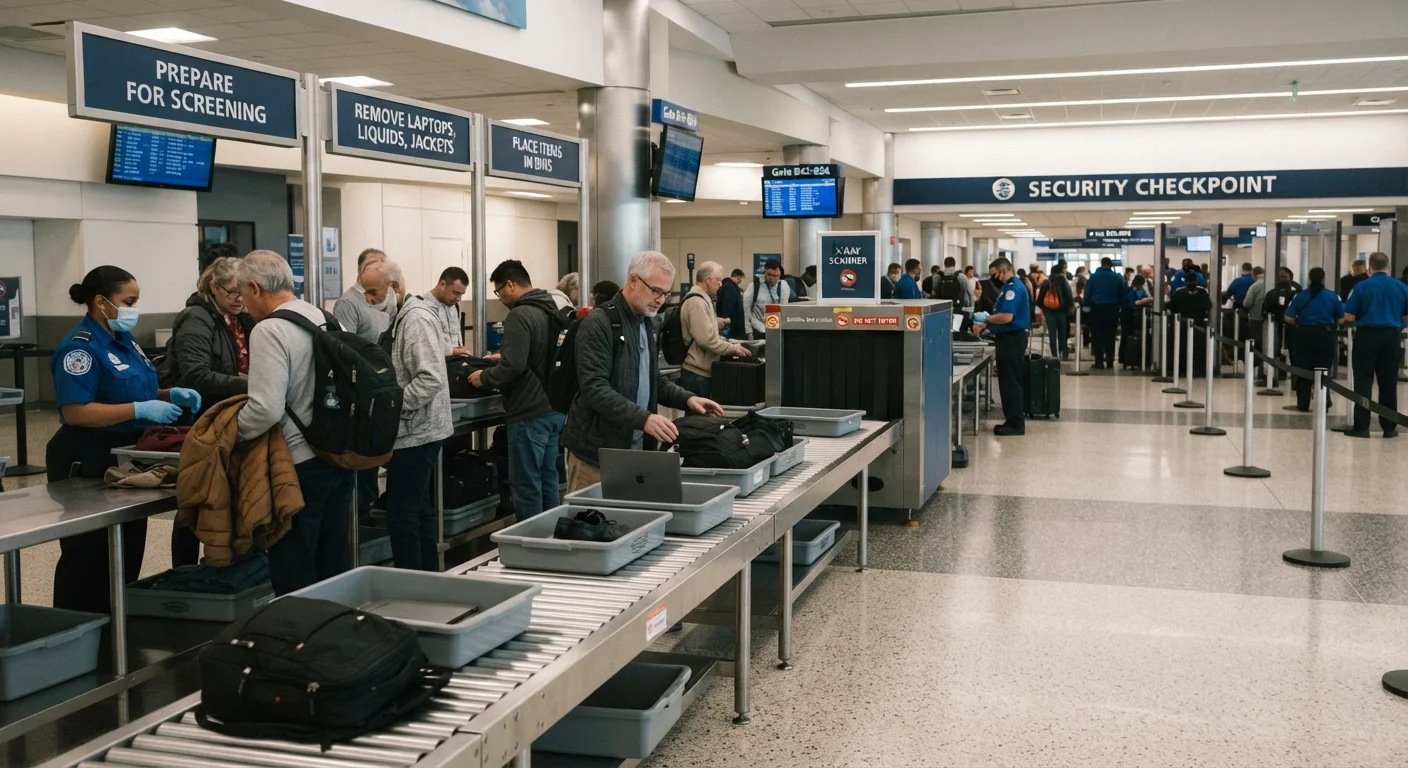
Many travelers pull out just their laptop and are surprised when a tablet, e-reader, or large camera gets flagged. Standard screening asks passengers to remove all electronics larger than a cell phone and place them flat in a bin for X-ray. TSA PreCheck members are exempt from this step, which is one of the program's most practical time-saving benefits. If you're in a standard lane, keep your tablet and camera accessible rather than buried at the bottom of your bag.
Myth
Wearing slip-on shoes is required to get through security quickly.
Fact
Removing shoes is required in the U.S. for standard screening lanes, but the type of shoe doesn't affect how fast you clear the checkpoint.
Shoe removal is a TSA requirement in standard screening lanes regardless of shoe type - it's not optional, so wearing lace-up boots doesn't break a rule. What slip-ons do offer is a minor convenience when you're putting shoes back on afterward. If speed is your goal, TSA PreCheck eliminates the shoe-removal step entirely, which is a more meaningful improvement than swapping your footwear.
Practical Takeaways for a Smoother Security Experience
Understanding the actual rules frees you up to focus on what genuinely helps at the checkpoint. Arrive with liquids already organized in your carry-on, keep electronics accessible, and know which trusted traveler program - TSA PreCheck or Global Entry - matches your travel habits. For a broader look at protecting your belongings while traveling, see our guide on keeping valuables safe without security anxiety.
~87M
TSA PreCheck-enrolled travelers
According to TSA, tens of millions of travelers are enrolled in PreCheck, reflecting widespread uptake of trusted traveler programs across U.S. airports.
Under 5 min
Average PreCheck lane wait time
TSA has reported that the vast majority of PreCheck passengers wait fewer than five minutes at security, compared to longer standard-lane averages.
Interestingly, the same pattern of myth versus fact shows up well beyond airports. If you've ever second-guessed rules on the road, our piece on driving myths that could put you in danger applies similar myth-busting thinking to road safety. The point is the same: accurate information beats anxious guessing every time.
Security procedures and regulations can change. Always verify current rules with the Transportation Security Administration (tsa.gov) or your airline before traveling, particularly if you have medical devices or specialized equipment.