

Travel & Trips

Before You Board: A Pre-Trip Safety Checklist for Every Traveller

Share
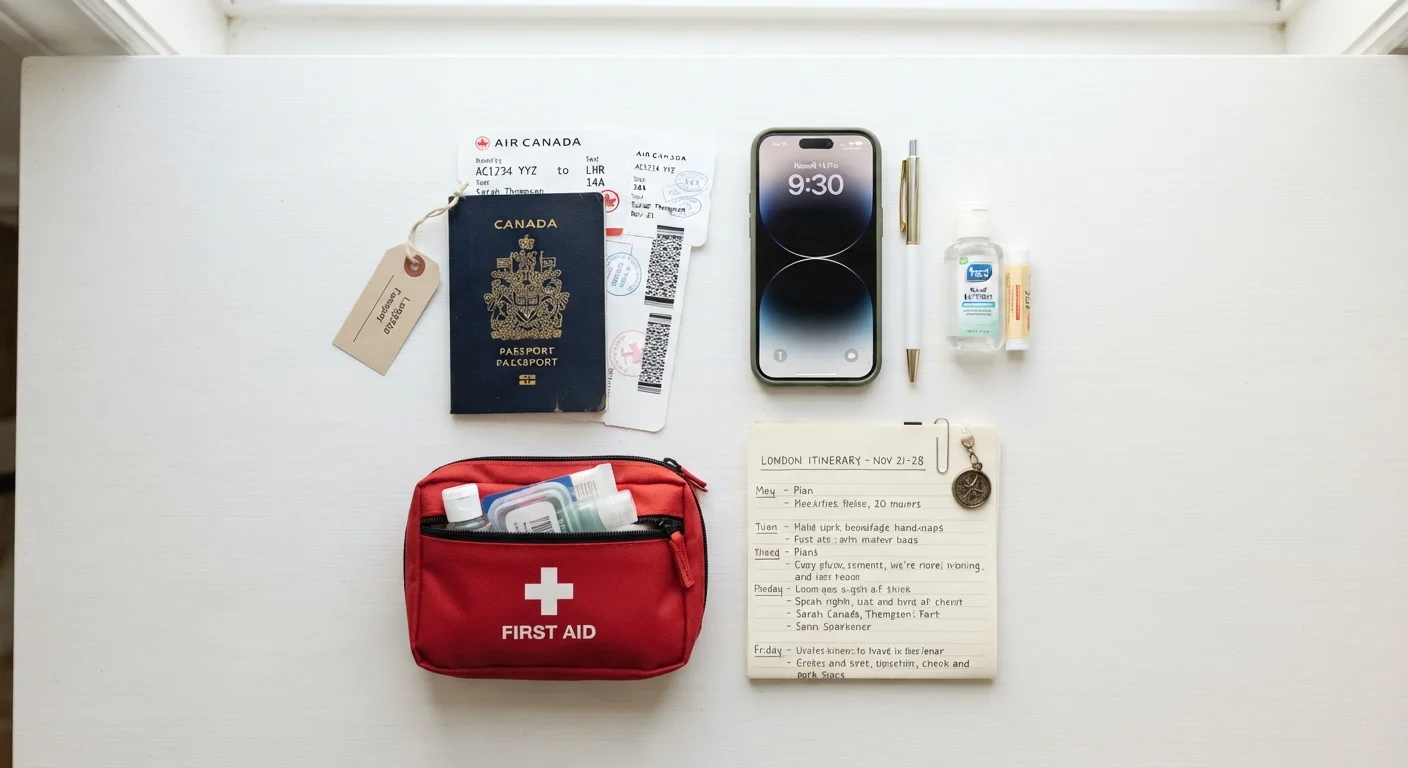
Overhead flat lay of travel documents, phone, and first-aid kit arranged neatly before a trip

Key Takeaways

Photocopying or digitally backing up your key documents is one of the highest-value steps you can take before any trip.
Travel insurance scope varies widely — always read the policy before departure, not after an incident.
Sharing your itinerary with a trusted contact at home provides a critical safety net at no cost.
Health and medication prep is especially important for international travel where familiar products may be unavailable.
Most pre-trip safety tasks take under an hour and dramatically reduce stress mid-journey.
30–60 min

Summary

22 items · 30–60 minutes

Why a Safety Checklist Belongs in Every Pre-Trip Routine

Packing your suitcase is the fun part. Wrangling travel documents, verifying insurance coverage, and confirming emergency contacts? Less glamorous — but far more important when something unexpected happens 3,000 miles from home.

This checklist is designed to plug the gaps that experienced travelers still forget. It covers documents, health prep, financial access, communication, and home security — the five areas most likely to cause real disruption if left unchecked. Whether you're heading out for a long weekend or a month abroad, working through these items before you board will help you travel with genuine confidence rather than vague hope.

For a fuller picture of what goes into organized, stress-free trip planning, explore our trip planning hub — it covers everything from budgeting to booking strategy.

Documents & Identity

Check that your passport is valid for at least six months beyond your return date, as many countries require this. Must
Make digital and physical copies of your passport, visa, driver's license, and travel insurance policy — store copies separately from the originals. Must
Confirm that any required visas have been approved and are valid for your planned entry and exit dates. Must
Save your hotel confirmation, transportation tickets, and itinerary both offline and in email so they're accessible without internet. Must
Email a copy of your full itinerary and key document scans to a trusted contact at home. Should

Health & Medications

Confirm you have enough prescription medication to last the entire trip, plus a few extra days as a buffer. Must
Carry medications in original labeled containers in your carry-on, not in checked luggage. Must
Check official government travel health advisories for your destination and consult a healthcare provider about recommended vaccinations or precautions well in advance of departure. Should
Pack a basic travel health kit: adhesive bandages, pain reliever, antidiarrheal, antihistamine, and any personal essentials. Should
Note the location of the nearest hospital or clinic to your accommodation before you arrive. Nice to have

Money & Financial Access

Notify your bank and credit card providers of your travel dates and destinations to prevent automatic fraud blocks. Must
Carry at least two payment methods — ideally from different card networks — stored in separate locations. Must
Have a small amount of local currency on hand for arrival, when card access may be limited. Should
Know the international contact number for your bank in case you need to report a lost or stolen card abroad. Should

Safety & Emergency Contacts

Save local emergency numbers (police, ambulance, fire) for each destination in your phone before you travel. Must
Register with your country's embassy or consular service for your destination when traveling internationally — this is often free and takes minutes. Should
Share your accommodation addresses and a rough daily schedule with someone at home who can raise an alert if needed. Should
Download offline maps for your destination so you can navigate without data connectivity. Nice to have

Home Security Before You Leave

Arrange for mail collection, package holds, or a trusted neighbor to check on the property to avoid signaling an empty home. Should
Unplug non-essential appliances and confirm that stoves, irons, and heaters are off before you leave. Must
Lock all windows and doors, and double-check garage access if applicable. Must
Set timers on interior lights or use a trusted smart home system to maintain the appearance of occupancy. Nice to have

Documents and Identity

Lost or expired documents are among the most common causes of trip derailment. A little redundancy here goes a long way.

Passport Validity Rules Vary by Country

Many countries require your passport to remain valid for three to six months beyond your planned departure date — not just your entry date. Showing up at the border with a passport that expires the week you're due to fly home can result in denied entry. Always check the specific entry requirements for your destination through official government travel advisory sources well before your departure date.

For international trips specifically, the first-time international traveler guide is worth reading alongside this checklist — it covers passport validity rules, customs declarations, and entry requirements that often catch travelers off guard.

Health, Money, and Home Security

These three categories tend to be underestimated until they become urgent. A prescription that runs out mid-trip, a locked debit card, or a home security gap can each derail an otherwise smooth journey.

Don't Leave Medication in Checked Luggage

Checked bags can be delayed, lost, or misrouted — sometimes for days. Any medication you depend on should travel with you in your carry-on in its original labeled packaging. If you take controlled substances, carry documentation from your prescribing provider, as requirements vary significantly by country. Verify specific import rules for your medications with official sources before you travel.

On the financial side, notify your bank of travel dates in writing if possible, and consider carrying a backup card from a different network stored separately from your wallet. Our guide to protecting valuables without travel paranoia offers practical, proportionate strategies for keeping money and documents secure without becoming anxious about it.

For insurance specifically, don't assume you're covered — read what your policy actually includes before departure. Our breakdown of what travel insurance actually covers explains the gap between what travelers expect and what policies typically deliver.

Required

Cloud storage app (e.g., any major provider)

Store digital copies of travel documents accessible from any device without relying on a single phone.

Required

Offline maps app

Navigate your destination without cellular data, especially useful on arrival or in low-connectivity areas.

Required

Travel health kit

Cover minor medical needs — pain relief, bandages, antidiarrheal — without hunting for a pharmacy in an unfamiliar place.

Optional

International SIM or roaming plan

Maintain reliable mobile connectivity for maps, communication, and emergency calls at your destination.

Required

Travel insurance policy document

Verify coverage scope — including medical evacuation and trip cancellation — before departure, not during a crisis.

Travel & Trips Editorial Team is the collective byline for our editorial team and contributor network. Articles published under this byline or an editorial pen name are researched, written, and reviewed according to our editorial standards for clarity, consistency, and independence before publication.

View all articles by Travel & Trips Editorial Team →
Disclaimer: The content provided on our blog site traverses numerous categories, offering readers valuable and practical information. Readers can use the editorial team’s research and data to gain more insights into their topics of interest. However, they are requested not to treat the articles as conclusive. The website team cannot be held responsible for differences in data or inaccuracies found across other platforms. Please also note that the site might also miss out on various schemes and offers available that the readers may find more beneficial than the ones we cover.