

Key Takeaways
Lower prices with more room to negotiate
Private sellers typically price closer to trade-in value and have more flexibility to negotiate since they're not managing lot overhead or sales commissions.
Direct access to the vehicle's ownership history
You can ask the original owner directly about service history, accidents, and usage patterns - information that isn't always fully captured in a vehicle history report.
Faster, simpler transaction structure
Without a finance department, extended warranty upsell, or trade-in desk involved, a private sale can often be completed in a single meeting once agreement is reached.
No add-on fees or dealer documentation charges
Dealerships routinely add doc fees, advertising fees, and other line items; private sales generally involve only the agreed purchase price plus applicable state taxes and registration costs.
No warranty or consumer protection safety net
Most private sales are completed as-is, meaning the buyer assumes full responsibility for any mechanical issues that emerge after the sale closes.
Buyer bears all due diligence responsibility
Verifying title status, checking for liens, running a vehicle history report, and arranging an independent inspection all fall to the buyer with no institutional support.
No on-site financing available
You'll need to secure financing before you arrive - through a bank, credit union, or personal funds - since private sellers cannot arrange loans on your behalf.
Limited legal recourse if problems arise
Unlike dealers, private sellers are generally not subject to lemon laws, and misrepresentation claims can be difficult and costly to pursue through civil channels.
Our Verdict
Private sales can offer genuine savings for buyers who are comfortable doing their own due diligence, verifying vehicle history, and handling paperwork independently. Dealerships offer a more structured process with consumer protections, financing access, and recourse if something goes wrong - but those benefits come with added cost. Neither channel is inherently superior; what matters is matching the route to your comfort level, budget, and the specific vehicle.
Private sales suit experienced buyers purchasing a well-documented used vehicle; dealerships are better for first-time buyers or anyone who values consumer protection and on-site financing.
How Each Buying Channel Works
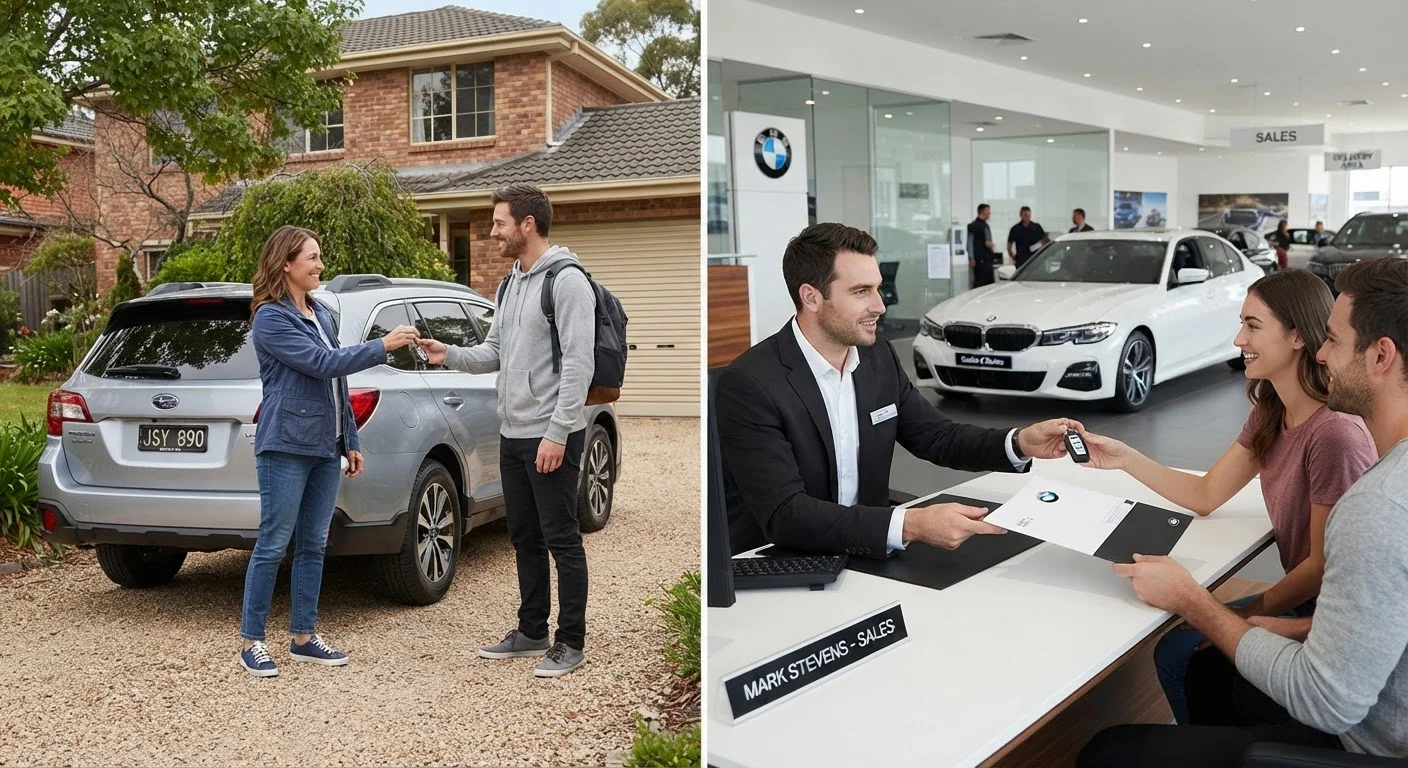
When you buy a car, your two primary options are a private seller - typically an individual listing their personal vehicle - or a franchised or independent dealership. The mechanics of each transaction differ considerably, and understanding those differences before you start shopping can save you from surprises later.
In a private sale, you negotiate directly with the owner. There's no intermediary, no trade-in desk, and usually no financing arranged on-site. You'll need to arrange your own financing in advance if you're not paying cash, run the vehicle history report yourself, and handle title transfer through your state's DMV. The process can move quickly, but the due diligence rests almost entirely on you.
At a dealership, a sales team manages the transaction from test drive to paperwork signing. Dealers are licensed businesses subject to state and federal consumer protection regulations. They handle title work, can arrange financing, and are required to disclose known defects in many states. For a broader look at every stage in the process, see what actually happens when you buy a car.
Private Sale: Pros and Cons
Buying privately appeals most to buyers who have done this before, know what to look for in a used vehicle, and want to avoid the overhead built into dealership pricing.
Lower prices with more room to negotiate
Private sellers typically price closer to trade-in value and have more flexibility to negotiate since they're not managing lot overhead or sales commissions.
Direct access to the vehicle's ownership history
You can ask the original owner directly about service history, accidents, and usage patterns - information that isn't always fully captured in a vehicle history report.
Faster, simpler transaction structure
Without a finance department, extended warranty upsell, or trade-in desk involved, a private sale can often be completed in a single meeting once agreement is reached.
No add-on fees or dealer documentation charges
Dealerships routinely add doc fees, advertising fees, and other line items; private sales generally involve only the agreed purchase price plus applicable state taxes and registration costs.
The trade-offs, however, are meaningful. Private sellers are generally not bound by lemon law protections the way dealers are in most states, and there's no warranty on the vehicle unless one is still transferable from the manufacturer. If a significant mechanical problem surfaces the week after purchase, your legal recourse is limited. This makes a pre-purchase inspection by an independent mechanic - not the seller's preferred shop - an essential step, not an optional one.
No warranty or consumer protection safety net
Most private sales are completed as-is, meaning the buyer assumes full responsibility for any mechanical issues that emerge after the sale closes.
Buyer bears all due diligence responsibility
Verifying title status, checking for liens, running a vehicle history report, and arranging an independent inspection all fall to the buyer with no institutional support.
No on-site financing available
You'll need to secure financing before you arrive - through a bank, credit union, or personal funds - since private sellers cannot arrange loans on your behalf.
Limited legal recourse if problems arise
Unlike dealers, private sellers are generally not subject to lemon laws, and misrepresentation claims can be difficult and costly to pursue through civil channels.
Documentation is another area where private sales require more legwork. You'll need to confirm the seller holds a clean title, check for any outstanding liens, and verify the VIN against a vehicle history report. Your state DMV sets the rules for transferring ownership, and some states require a bill of sale, emissions test, or safety inspection before registration transfers.
Dealership Purchase: Pros and Cons
Dealerships - whether franchised (selling new vehicles from a specific manufacturer) or independent (selling used vehicles) - operate within a regulated framework that creates a more predictable buying experience.
~48%
Used car sales occurring privately in the US
Industry estimates suggest roughly half of all used vehicle transactions in the US take place between private parties rather than through dealerships.
$1,000-$3,000+
Typical dealer doc and add-on fee range
Dealership documentation fees, advertising fees, and optional add-ons can add several thousand dollars to the advertised vehicle price depending on the state and dealer.
Certified Pre-Owned (CPO) vehicles, available only through franchised dealers, add another layer of protection: manufacturer-backed inspections and extended warranties. If you're weighing CPO against other used options, understanding the real differences between new, used, and CPO vehicles is worth reading before you decide.
Dealer Protections Vary by State
Consumer protection rules for dealership purchases - including lemon law coverage, required disclosures, and cooling-off periods - vary significantly from state to state. Before you buy, it's worth checking your state's DMV or attorney general website to understand exactly what protections apply to your transaction. Independent used-car dealers and franchised new-car dealers may also be subject to different rules within the same state.
On financing: dealers can arrange loans on the spot, which is convenient - but convenience isn't always the same as the best rate. It's worth comparing dealer financing against a pre-approved loan from your bank or credit union before you commit. How dealer financing and bank loans compare walks through exactly what to weigh up. If negotiating feels daunting, practical approaches to dealership negotiation can help you stay in control of the conversation.
Making the Decision That Fits Your Situation
The right channel comes down to a few honest questions: How familiar are you with evaluating used vehicles? Do you have financing arranged, or do you need it facilitated? How much risk are you comfortable absorbing if a problem surfaces after purchase?
If you're newer to car buying, the added structure and protections of a dealership can be worth the premium - especially for a higher-value purchase. What first-time car buyers need to know covers the concepts and stages to understand before you walk in.
If you're an experienced buyer, comfortable with a mechanic inspection, familiar with title paperwork, and have financing ready, a well-priced private sale can represent genuine value. Whichever route you take, resist the pressure to skip due diligence steps because a deal feels urgent. A rushed purchase - private or dealer - is where costly mistakes most commonly happen.