

Key Takeaways
Car Depreciation
Car depreciation is the reduction in a vehicle's market value over time. It happens to every car, regardless of brand or condition, though the rate varies considerably. The gap between what you paid and what the car is now worth is your depreciation loss.
Depreciation is calculated as the difference between a vehicle's purchase price and its current resale or trade-in value, often expressed as a percentage of the original price lost over a set period.
The Depreciation Curve: Where the Biggest Losses Happen
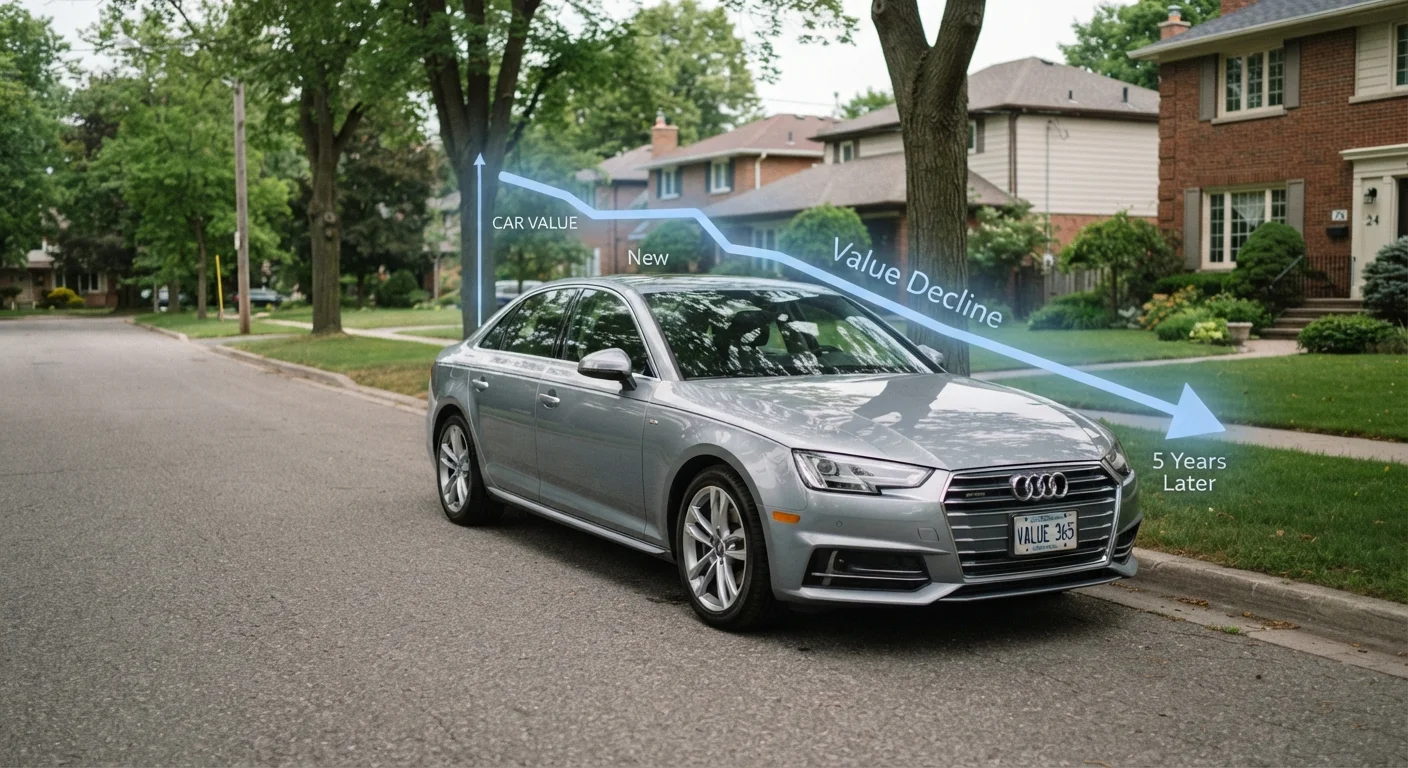
Depreciation isn't spread evenly across a vehicle's life - it front-loads the pain. A new car can shed 15-25% of its value within the first 12 months, and by year three, cumulative losses often reach 40-50% of the original purchase price. After that, the curve flattens.
Understanding this shape matters enormously when timing a vehicle purchase. If you buy new and sell after two years, you absorb the most punishing segment of the depreciation curve. If you buy a vehicle that's already three years old and sell it at seven, you're riding the flatter portion - losing far less per year as a percentage of what you paid.
~20%
Average first-year value loss for new vehicles
Industry valuation data consistently shows new cars lose roughly 15-25% of their value within the first 12 months of ownership.
~50%
Typical value lost in first five years
Many mainstream new vehicles lose close to half their purchase price within five years, making depreciation the single largest component of long-term ownership cost.
Years 1-3
Period of steepest depreciation decline
The sharpest drop in vehicle value consistently occurs within the first three years, after which the rate of loss typically slows considerably.
The rate isn't uniform across all models either. A vehicle with strong resale demand - perhaps a popular pickup truck or a compact SUV with a reputation for reliability - may only lose 30-35% over five years. A large luxury sedan or a technologically dated electric vehicle could lose 60% or more in the same period.
What Drives Depreciation (Beyond Time)
Time is the baseline, but several other factors accelerate or slow a vehicle's value loss:
- Mileage: Every mile signals wear. Driving significantly more than the typical 12,000-15,000 miles per year pushes depreciation faster, because buyers price in remaining useful life.
- Condition: Dents, worn interiors, and a spotty service history all reduce what a buyer will pay. Deferred maintenance can compound this damage - a car that hasn't been properly serviced loses value faster and is harder to sell.
- Market demand: Models that buyers consistently want hold value better. Fuel-efficient vehicles tend to rise in relative value when gas prices climb; large trucks and capable SUVs hold strong in markets where buyers rely on them for work or towing.
- Technology cycle: When a manufacturer releases a significantly updated version of a model, older versions drop in perceived value - even if mechanically identical. This "model refresh" effect is especially pronounced in the electric vehicle segment.
- Color and trim: Unusual colors and lower trim levels can reduce resale appeal, while neutral colors and mid-to-high trim packages tend to broaden buyer interest.
Check Projected Residual Values Before You Commit
Before settling on a model, look up its projected resale value at three and five years using independent vehicle valuation sources. A model that retains 10-15% more of its value than a comparable alternative can represent thousands of dollars in real savings if you plan to sell or trade eventually. This research takes minutes but pays off significantly over time.
How Depreciation Should Influence Your Buying Decision
Depreciation is one of the largest components of the true cost of car ownership - often exceeding fuel and insurance costs combined over a five-year period. Yet it's frequently overlooked because it doesn't arrive as a bill.
When weighing options, consider how long you plan to own the vehicle. If you keep a car for ten or more years and drive it into the ground, the depreciation rate matters less - you're extracting full utility regardless. But if you tend to trade in every three to four years, the depreciation profile of the model you choose has a direct financial impact every time you sell or trade.
New, used, and certified pre-owned vehicles each sit at different points on the depreciation curve. A two- to three-year-old vehicle with moderate mileage has already absorbed the steepest losses, while a certified pre-owned (CPO) vehicle may carry a manufacturer-backed warranty that adds peace of mind without the new-car price tag.
Before finalising any vehicle budget, factor depreciation into your total cost of ownership - alongside insurance, fuel, financing, and maintenance. See how to build a realistic car budget for a framework that captures all these costs together.
Practical Ways to Limit Your Depreciation Exposure
You cannot eliminate depreciation, but you can position yourself to absorb less of it:
- Research residual value before buying. Independent vehicle valuation resources publish projected resale values by model. Choosing a model with a strong track record of holding value reduces your long-term cost, especially if you plan to sell or trade eventually.
- Buy slightly used. A vehicle coming off a two- or three-year lease, or a low-mileage used example, lets someone else absorb the steepest drop. You step in where the curve begins to flatten.
- Maintain the vehicle carefully. Complete service records, clean condition, and prompt repairs all protect resale value. Understand where hidden costs quietly accumulate - some expenses feel optional but protect the asset's value.
- Be strategic about financing. Financing a depreciating asset at a high interest rate accelerates the gap between what you owe and what the car is worth - a condition known as being "underwater" or "upside down." Understanding how financing options compare helps you avoid this trap.
Depreciation is a fact of vehicle ownership, not a flaw in the system. The goal isn't to avoid it entirely - it's to make decisions that keep your exposure proportional to the value you receive from the vehicle.
This article is for general informational purposes only and does not constitute financial or purchasing advice. Readers should evaluate their personal circumstances and consult qualified professionals when making significant financial decisions.