

Key Takeaways
Don't Wait for a Dead Battery to Tell You It's Dying
A dead battery doesn't usually arrive without warning. In most cases, it sends signals for days or even weeks before leaving you stranded in a parking lot. The problem is that those signals are easy to dismiss - a sluggish start here, a flickering interior light there - until one cold morning the car simply won't turn over.
Car batteries typically last between three and five years, though extreme heat, frequent short trips, and high electrical loads can shorten that window. Knowing what to watch for lets you schedule a replacement on your terms, not the battery's. The following signs are what experienced mechanics see most often in the weeks before a battery gives out.
Add Battery Checks to Your Pre-Trip Routine
Before long drives or road trips, a quick visual check of the battery terminals takes under a minute. Look for corrosion buildup, loose cable connections, or any signs of physical damage to the case. Pairing this with a check of your lights and tyres makes for a solid pre-departure habit - see Before You Pull Out of the Driveway for a fuller checklist.
Warning Signs to Watch For
Slow or labored engine cranking
When you turn the key or press the start button, the starter motor draws a large burst of current from the battery. A healthy battery handles this instantly. A weakening one delivers current more slowly, and you'll hear it - the engine turns over sluggishly, almost like it's wading through mud before catching. This is usually the first sign drivers notice, and it's worth taking seriously rather than chalking up to cold weather alone.
A sluggish crank is rarely a fluke - it's the battery signaling reduced capacity.
Frequent need for jump-starts
Needing a jump-start once after accidentally leaving lights on is understandable. Needing one twice in a month - without an obvious explanation - is a battery problem. A battery that can't hold a charge overnight, or that dies after sitting for a day or two, has likely lost significant capacity and is overdue for replacement or at least professional testing.
Two unexplained jump-starts in a month is a clear signal to get the battery tested.
Dimming headlights or interior lights
Your car's electrical system relies on the battery and alternator working together. When the battery weakens, it can struggle to supply steady voltage, especially at idle when the alternator's output is lower. You may notice headlights that seem dimmer than usual, or interior lights that pulse slightly when the blower motor or rear defroster kicks in. These are signs the electrical system is under strain.
Flickering or dimming lights at idle often point to a battery that can't hold steady voltage.
Electrical gremlins and erratic behavior
Modern vehicles have dozens of modules - power windows, infotainment systems, heated seats, backup cameras - all drawing power from the same battery. A weakening battery can cause these systems to behave unpredictably: windows moving more slowly, the radio resetting, or warning messages appearing seemingly at random. If your car suddenly seems to have a personality of its own, voltage instability is a logical place to start investigating. You'll find more context in Reading Your Car: Noises, Smells, and Sensations That Deserve Attention.
Unexplained electrical quirks in modern vehicles often trace back to an unstable battery.
Battery warning light on the dashboard
The battery icon on your dashboard doesn't exclusively mean the battery is dead - it indicates a fault somewhere in the charging system, which includes the battery, alternator, and related wiring. If it illuminates while driving, the vehicle may be running solely on battery reserve, which can deplete quickly. Pull over safely when you can and have the system checked promptly. Ignoring this light risks a complete electrical shutdown while driving.
A lit battery warning light means the charging system needs immediate attention, not just monitoring.
Visible corrosion or a swollen case
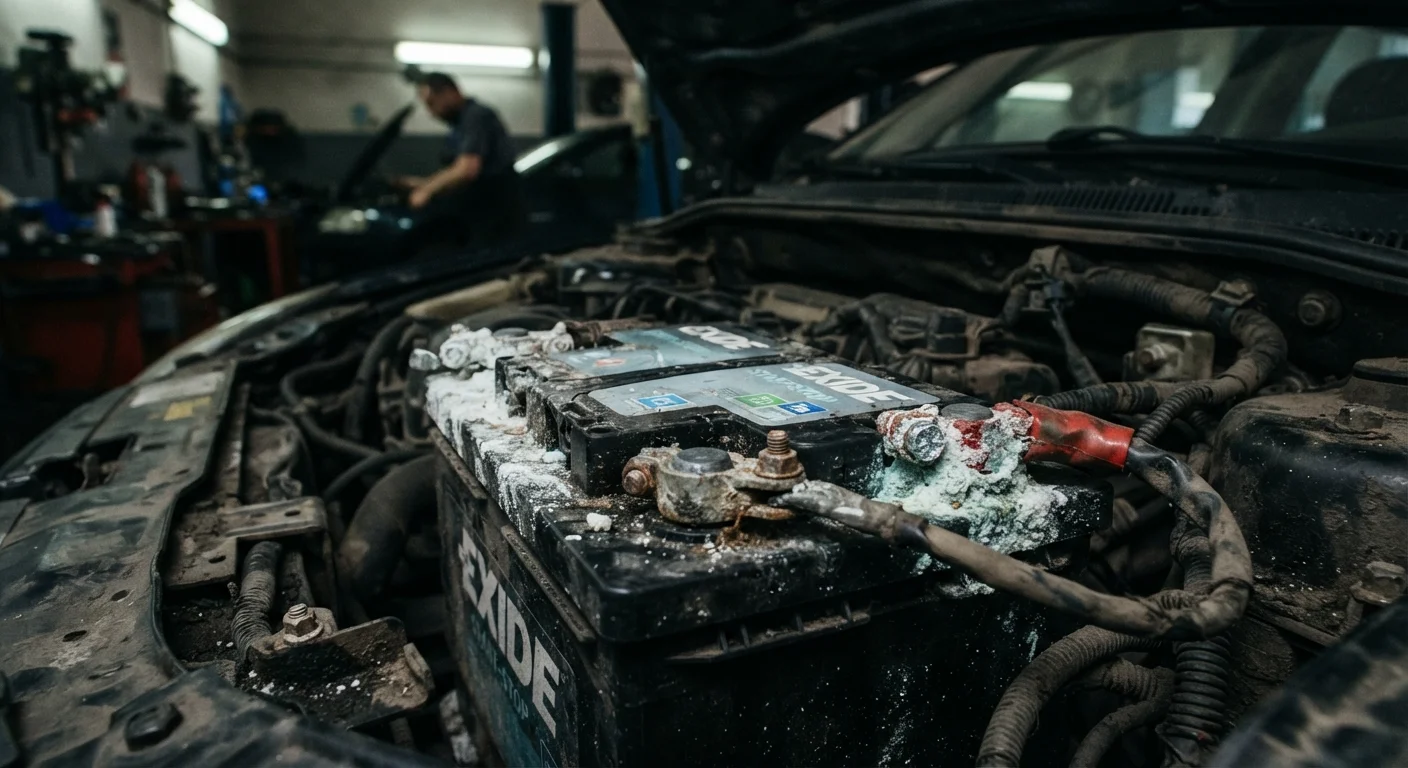
A quick look at the battery can reveal a lot. White or blue-gray powdery buildup around the terminals is corrosion, which increases resistance and can impair the battery's ability to deliver current reliably. More seriously, a battery case that appears bloated or swollen - rather than flat-sided - has likely been exposed to excessive heat or has been overcharged. A swollen battery should be replaced promptly, as the internal chemistry has been compromised. Exercise caution around any battery showing physical damage, and let a qualified mechanic handle the replacement if you're not confident working in the engine bay.
A swollen battery case is a physical red flag that the battery needs immediate replacement.
Cold Weather Accelerates Battery Strain
Low temperatures reduce a battery's ability to deliver current - a battery that's already at 70% capacity might behave adequately in summer but fail to start the engine on a cold January morning. If your battery is approaching three years old and you live in a region with harsh winters, having it tested in the fall is a sensible precaution. This is especially relevant if you also deal with extreme summer heat, which degrades battery chemistry from the other direction.
What to Do When You Spot These Signs
If you recognize one or more of these symptoms, the most practical step is to have your battery load-tested. Most auto repair shops and many chain service centers can perform this test quickly - it measures how well the battery holds voltage under real electrical demand, which is more informative than a simple resting voltage check. Don't rely solely on the battery's age or appearance; a test gives you actual data.
It's also worth having the charging system checked at the same time. A worn alternator can drain a healthy battery, and replacing a battery without addressing a faulty alternator means you'll be back in the same situation before long. For a broader look at what your dashboard might be trying to tell you, see Your Car's Warning Lights, Decoded. And if you want to build battery checks into a seasonal routine, Seasonal Car Maintenance: Preparing Your Vehicle for Every Season offers a practical framework for year-round vehicle care.