

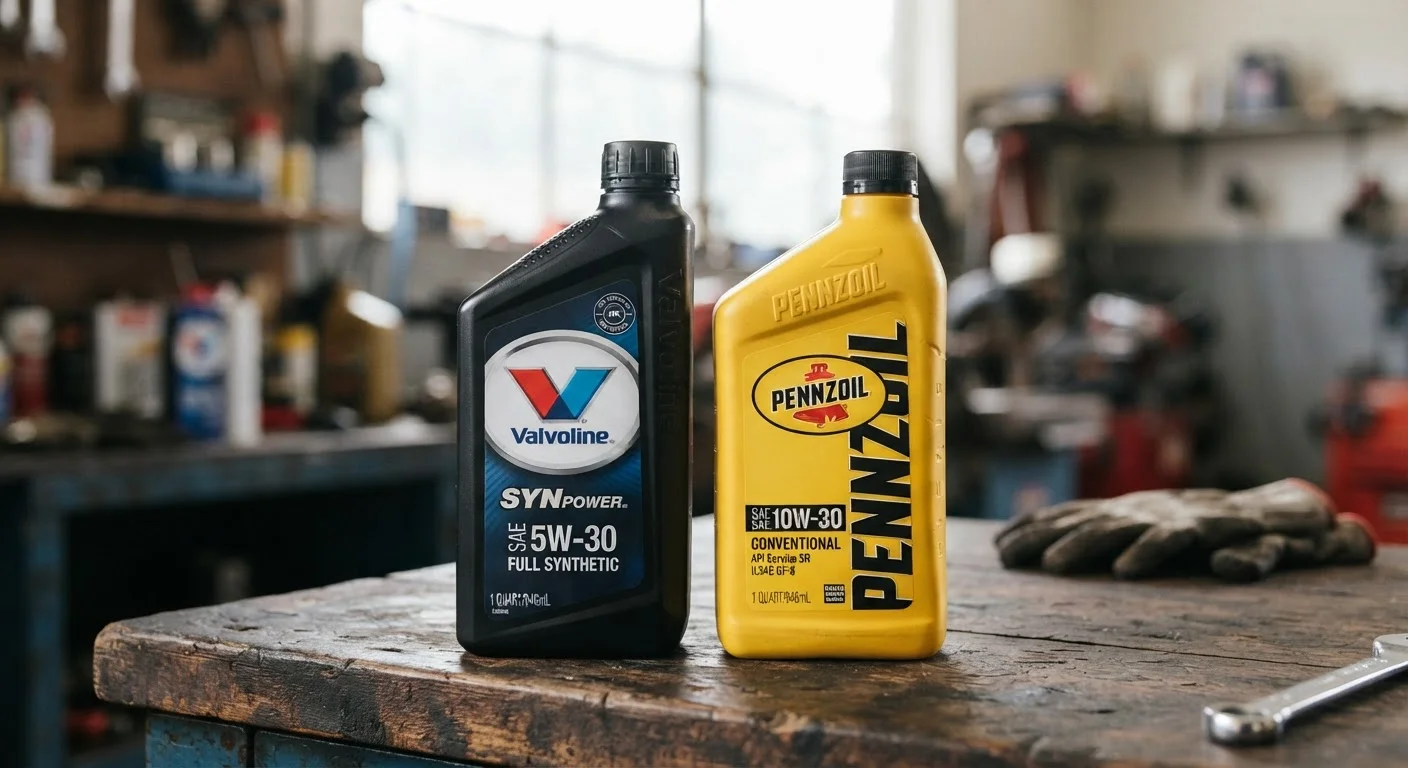
Key Takeaways
Option A
Synthetic Motor Oil
The engineered, high-performance formulation.
Best for: Drivers with modern vehicles, extreme climates, high-mileage engines, or longer intervals between oil changes.
Option B
Conventional Motor Oil
The time-tested, straightforward baseline.
Best for: Drivers with older or simpler engines operating under normal, moderate driving conditions.
If you drive a late-model vehicle under normal daily conditions
Synthetic Motor Oil
Most vehicles manufactured in the past decade are engineered to use full synthetic oil, and using conventional may not meet manufacturer specifications.
If you own an older vehicle with simple engine design and moderate mileage
Conventional Motor Oil
Older engines built before synthetic formulations were standard may operate reliably on conventional oil, particularly when the manufacturer's manual specifies it.
If you drive in extreme cold, extreme heat, or regularly tow heavy loads
Synthetic Motor Oil
Synthetic oil maintains stable viscosity across a wider temperature range and holds up better under sustained high-stress operation.
If you want the longest possible interval between oil changes
Synthetic Motor Oil
Synthetic formulations resist breakdown and oxidation longer, supporting extended change intervals when paired with the correct oil filter.
If upfront cost is your primary concern and your owner's manual allows it
Conventional Motor Oil
Conventional oil carries a lower per-quart price and remains a legitimate choice for vehicles and driving patterns where it is manufacturer-approved.
What Makes These Two Oils Fundamentally Different
The core distinction between synthetic and conventional motor oil lies in how each is made. Conventional oil - also called mineral oil - is extracted from crude petroleum and refined to remove impurities. The result is a lubricant whose molecular structure is naturally variable, meaning its molecules differ in size and shape.
Synthetic oil, by contrast, is built molecule by molecule in a laboratory. Chemists start with a base stock (often derived from natural gas or heavily processed petroleum) and construct uniform molecular chains engineered for specific performance properties. This precise structure gives synthetic oil measurable advantages in consistency and stability.
A third category - synthetic blend - mixes both types. Blends offer a middle-ground performance level at a price point between the two, and are commonly specified for trucks and SUVs under moderate towing conditions.
| Criterion | Synthetic Oil | Conventional Oil |
|---|---|---|
| Origin | Engineered from base stocks | Refined from crude petroleum |
| Molecular consistency | Uniform, precisely structured | Variable, naturally occurring |
| Typical change interval | 7,500-15,000 miles | 3,000-5,000 miles |
| Cold-weather performance | Flows readily at low temperatures | Thickens more in cold |
| High-heat stability | Resists breakdown and oxidation | Degrades faster under sustained heat |
| Upfront cost per quart | Higher (2-4x conventional) | Lower |
| Compatibility | Required by most modern engines | Suitable for older, simpler engines |
Performance: Temperature, Protection, and Longevity
The engineered uniformity of synthetic oil pays dividends in several real-world situations. In cold weather, synthetic oil flows more readily at startup - the moment when engine wear is highest because oil hasn't yet circulated fully. In extreme heat or during sustained high-load driving, synthetic resists breakdown better than conventional, maintaining its protective film between metal surfaces.
Conventional oil, with its less uniform molecular structure, can thicken in cold and thin excessively in heat. It also oxidizes more quickly, meaning it loses its protective qualities sooner. This is why conventional oil typically requires changes every 3,000 to 5,000 miles, while full synthetic is generally rated for 7,500 to 15,000 miles depending on the formulation and vehicle. Always confirm intervals with your owner's manual rather than relying on general estimates alone.
For a deeper look at how oil grade ratings interact with these properties, see our guide to engine oil grades.
7,500-15,000 mi
Typical synthetic oil change interval
Most synthetic oil manufacturers and automakers specify intervals in this range, compared to 3,000-5,000 miles for conventional oil.
~95%
New US vehicles specifying synthetic
Industry estimates suggest the vast majority of new vehicles sold in the US are factory-filled with and engineered for full synthetic motor oil.
2-4×
Price premium of synthetic over conventional
Synthetic oil generally costs two to four times more per quart at retail, though longer change intervals can reduce the annual cost gap.
Cost, Compatibility, and Choosing What's Right for Your Vehicle
Synthetic oil typically costs two to four times more per quart than conventional. However, the math isn't always straightforward: fewer oil changes per year can reduce the total annual spend, and in some cases make synthetic the more economical option over a full year of driving.
Compatibility matters just as much as cost. Check your owner's manual - the manufacturer's recommendation is the most reliable guide. Many modern engines require synthetic to maintain warranty coverage. Switching from synthetic to conventional in a car designed for synthetic is not recommended and may affect long-term engine health.
It's also worth setting aside a persistent myth: older engines do not automatically need conventional oil, and high-mileage synthetic formulations exist specifically for vehicles with more wear. Our article on common car maintenance myths addresses several related misconceptions in detail.
For a broader look at how oil changes fit into your vehicle's full service schedule, see understanding your car's service schedule.
This article is for general informational purposes only. Always consult your vehicle's owner's manual and a qualified mechanic for guidance specific to your engine and driving conditions.