

Key Takeaways
Engine Oil Viscosity Grade
An engine oil viscosity grade is a standardized rating that describes how easily oil flows at different temperatures. The numbers on the bottle - like 5W-30 or 10W-40 - tell you how thin the oil is when your engine is cold and how thick it stays when the engine reaches normal operating temperature. Using the correct grade helps protect engine parts from wear and keeps everything running smoothly.
Viscosity grades are defined by the Society of Automotive Engineers (SAE) under standard SAE J300. The 'W' stands for 'Winter,' not 'Weight,' and reflects low-temperature pumpability testing.
Breaking Down the Code: What Each Number Represents
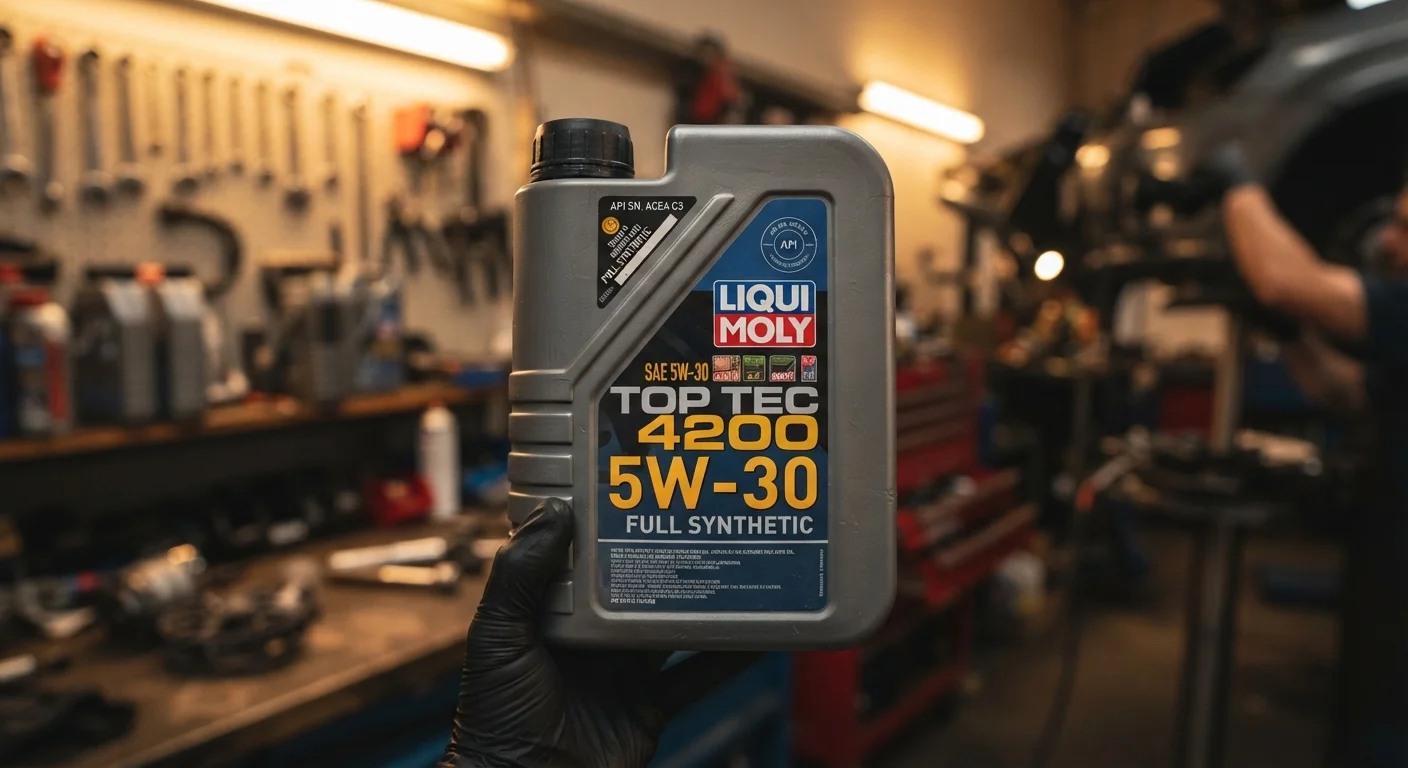
Pick up any bottle of motor oil and you'll see a label like 5W-30, 0W-20, or 10W-40. These aren't arbitrary codes - they're a standardized shorthand developed by the Society of Automotive Engineers (SAE) that tells you precisely how an oil behaves across a range of temperatures.
Here's how to read it:
- The number before the 'W' (e.g., 5 in 5W-30) describes the oil's flow characteristics in cold conditions. The 'W' stands for Winter. A lower number means the oil flows more freely when your engine is cold, which is critical because most engine wear happens in the first few seconds after startup before oil pressure builds.
- The number after the 'W' (e.g., 30 in 5W-30) describes the oil's thickness - technically its kinematic viscosity - at normal operating temperature, roughly 212°F (100°C). A higher number means a thicker oil film at operating temperature.
So a 5W-30 oil flows easily in cold weather and maintains a moderate thickness when hot. A 10W-40 is slightly thicker at startup in the cold and thicker still when hot. Neither is universally better - the right grade depends entirely on what your engine requires.
~20%
Engine wear occurring at cold startup
Engineering studies cited by SAE International suggest a significant portion of total engine wear occurs during the first moments after a cold start, before oil reaches all moving parts.
212°F
Standard temperature for hot-viscosity testing
SAE J300 specifies that the second number in a multi-grade rating (e.g., the '30' in 5W-30) is measured at 100°C (212°F), approximating normal engine operating temperature.
0W to 60
Full range of SAE viscosity grades
The SAE J300 standard defines cold ratings from 0W through 25W and hot ratings from 8 through 60, giving engineers a wide range of formulations for different engine designs.
Why Viscosity Matters to Your Engine
Engine oil has one primary job: to create a protective film between moving metal parts so they never actually touch. When oil viscosity is too low for the conditions, that film breaks down and metal contacts metal - the definition of engine wear. When oil is too thick, it doesn't flow fast enough through narrow passages and galleys, starving parts of lubrication, especially during the critical seconds after a cold start.
Modern engines are built to extremely tight tolerances. Manufacturers specify a viscosity grade after engineering the oil passages, clearances, and pressure requirements accordingly. Deviating from the recommended grade - even by one step - can alter oil pressure readings, affect fuel economy, and in some cases reduce the effectiveness of variable valve timing systems that rely on precise oil pressure to operate.
Always Check Your Owner's Manual First
Before purchasing oil, look up the manufacturer-specified viscosity grade in your owner's manual. This is the grade your engine was engineered to use, and deviating from it - even with a 'premium' product - can work against you. If the manual lists multiple approved grades for different climates, choose the one that matches your typical driving conditions.
For a broader look at what proper maintenance actually involves, see Understanding Your Car's Service Schedule - it covers how oil changes fit into your vehicle's overall maintenance plan.
Multi-Grade vs. Single-Grade Oils
Before multi-grade oils became the standard, drivers often had to switch between a thinner oil in winter and a thicker one in summer. Multi-grade oils - virtually everything on shelves today - use polymer additives called viscosity index improvers that allow the oil to behave like a thinner oil when cold and a thicker oil when hot, all in a single formulation.
Single-grade oils (such as SAE 30 or SAE 40 with no 'W' designation) still exist and are used in some small engines, older vehicles, and specific industrial applications, but they aren't suited to most modern car engines operating through seasonal temperature swings.
It's also worth knowing that viscosity grade is separate from whether an oil is synthetic or conventional. A 5W-30 can be conventional, synthetic, or a blend - the grade tells you about flow characteristics, not the oil's base stock. For more on that distinction, see Synthetic vs Conventional Oil: Understanding the Real Difference.
How to Find the Right Grade for Your Vehicle
The single most reliable source is your vehicle's owner's manual. The lubrication section will list the manufacturer-approved viscosity grade and may offer alternatives for extreme climates. Many vehicles also print the recommended grade directly on the oil filler cap under the hood.
If you're unsure - or if you've acquired a used vehicle without its manual - a qualified mechanic can look up the specification for your engine. Don't rely on the label claims of an oil bottle or a recommendation from someone unfamiliar with your specific engine.
One common misconception is that switching to a thicker oil will somehow compensate for engine wear in an older vehicle. While this is sometimes suggested, it's not a substitute for proper maintenance and can actually worsen conditions by restricting flow. See Car Maintenance Myths That Could Actually Damage Your Vehicle for a detailed breakdown of this and other persistent misconceptions.
When you're ready to check your oil level at home, Fluid Checks You Can Do at Home Without Any Special Tools walks through the process step by step - no equipment required.