

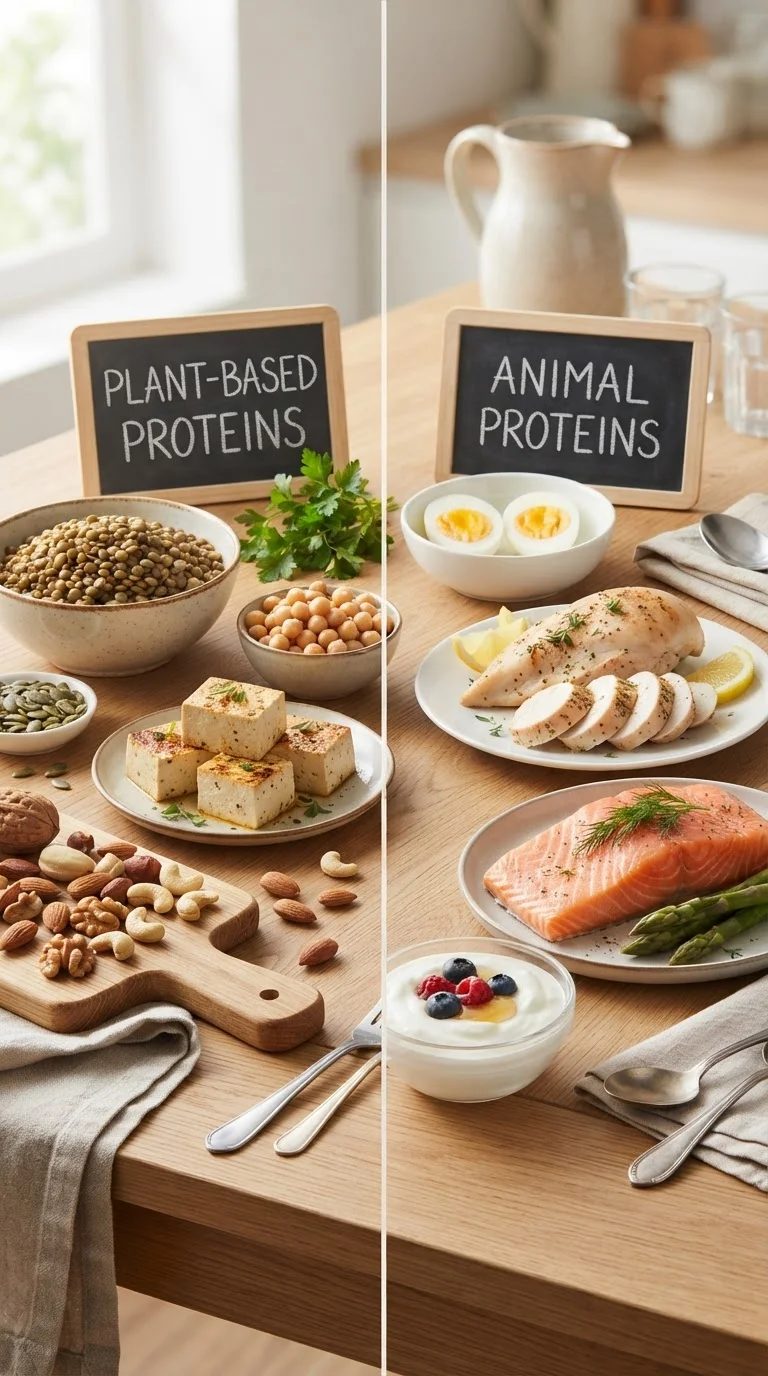
Key Takeaways
Option A
Plant Protein
The fiber-rich, environmentally lighter protein source.
Best for: People seeking protein alongside additional fiber, phytonutrients, and lower saturated fat intake.
Option B
Animal Protein
The complete, highly bioavailable protein source.
Best for: People prioritizing full amino acid profiles and high protein bioavailability in fewer food sources.
If you want the highest amino acid completeness and absorption efficiency
Animal Protein
Animal proteins supply all essential amino acids and are digested more efficiently, making them straightforward to incorporate without strategic meal planning.
If you want protein alongside fiber, phytonutrients, and lower saturated fat
Plant Protein
Legumes, nuts, seeds, and whole grains deliver protein together with gut-supporting fiber and beneficial plant compounds absent in most animal foods.
If you follow a vegetarian or vegan eating pattern
Plant Protein
A well-planned variety of plant foods - legumes, grains, soy, nuts - can collectively provide all essential amino acids without animal-derived foods.
If you want flexibility and the broadest nutrition research support
Animal Protein
Decades of established research support animal protein's role in muscle maintenance and overall protein adequacy, particularly for older adults and those with higher needs.
If you are looking to diversify and improve overall diet quality
Plant Protein
Shifting some meals toward plant protein sources is associated in population research with dietary patterns linked to long-term health, though individual results vary.
What Is Protein and Why Does the Source Matter?
Protein is one of the three macronutrients - alongside carbohydrates and fat - and it serves as the structural backbone of muscle, enzymes, hormones, and immune molecules. All proteins are built from amino acids, and while the human body can synthesize some of these itself, nine are classified as essential: they must come from food.
The source of protein matters because different foods deliver amino acids in different combinations and quantities, packaged alongside very different supporting nutrients. When you choose a protein food, you are never choosing protein in isolation - you are choosing a nutritional package. Understanding that package is what allows you to make more informed dietary decisions. For a broader look at how to read and compare those packages, our nutrition label guide walks through every section of a standard label.
Amino Acid Profiles: Complete vs. Incomplete
Animal proteins - including meat, poultry, seafood, dairy, and eggs - are generally described as complete proteins because they contain all nine essential amino acids in proportions the human body can readily use. This makes them nutritionally efficient protein sources from an amino acid standpoint.
Most plant proteins, by contrast, are considered incomplete: they are low or limiting in one or more essential amino acids. For example, legumes tend to be low in methionine, while grains tend to be low in lysine. However, this does not mean plant proteins are inadequate. Consuming a variety of plant foods across a day - say, beans alongside rice, or hummus with whole-grain bread - provides a complementary amino acid mix that can collectively meet essential amino acid needs. Major nutrition bodies, including the Academy of Nutrition and Dietetics, confirm that well-planned plant-based diets can meet protein requirements at all life stages.
A notable exception is soy protein: soybeans and foods like tofu and edamame are among the few plant sources considered complete proteins, with an amino acid profile comparable to many animal foods.
| Criterion | Plant Protein | Animal Protein |
|---|---|---|
| Amino acid completeness | Usually incomplete (soy is an exception) | Complete - all 9 essential amino acids |
| Digestibility (DIAAS) | Generally lower | Generally higher |
| Saturated fat content | Typically low | Varies; often higher (esp. red meat) |
| Dietary fiber | Present in whole food sources | Absent |
| Phytonutrients | Present | Absent |
| Omega-3 fatty acids | Some (flaxseed, chia, walnuts) | High in fatty fish |
| Vitamin B12 | Absent (supplementation may be needed) | Naturally present |
| Iron type | Non-heme iron (lower absorption) | Heme iron (higher absorption) |
Bioavailability: How Much Protein Does Your Body Actually Use?
Protein quality is not just about which amino acids are present - it also depends on how efficiently your digestive system can break down and absorb them. This is called bioavailability or digestibility.
Animal proteins score consistently high on standardized measures like the DIAAS - the internationally recognized metric recommended by the Food and Agriculture Organization for assessing protein quality. Eggs, milk, and meat typically receive top scores.
Plant proteins generally score lower on these measures. The reason involves structural differences in plant cell walls and the presence of antinutrients - naturally occurring compounds like phytates and tannins that can bind to proteins and reduce their digestion. Cooking, soaking, fermenting, and processing can reduce antinutrient levels substantially, improving plant protein digestibility.
~20%
Typical digestibility gap vs animal protein
FAO/WHO assessments suggest plant protein digestibility is often 10-20% lower than animal protein on average, though cooking and processing can narrow this gap.
Top scorer
Soy protein DIAAS ranking among plants
Soy protein consistently achieves the highest DIAAS scores among plant proteins, often comparable to some animal sources according to FAO protein quality evaluations.
1 in 3
U.S. adults not meeting daily protein needs
NHANES data has indicated that certain subgroups - including older adults - frequently fall short of recommended protein intakes regardless of source.
It's also worth noting that protein requirements can be met from plant sources, but individuals relying primarily on plant protein may benefit from consuming somewhat larger total protein quantities to account for lower average digestibility - something a registered dietitian can help assess in context.
The Broader Nutritional Package
Protein source profoundly shapes what else you consume alongside it. Animal protein foods - particularly red and processed meats - tend to carry higher levels of saturated fat, which has well-documented links to cardiovascular risk factors at high intakes. For a clear breakdown of fat type differences, see our comparison of saturated, unsaturated, and trans fats. Fatty fish are a notable counter-example, providing omega-3 fatty acids alongside high-quality protein.
Plant protein foods, meanwhile, deliver dietary fiber, which supports gut health, glycemic regulation, and satiety - none of which is present in animal protein sources. They also provide phytonutrients - plant-derived compounds such as polyphenols and flavonoids - associated in observational research with various health benefits, though the science continues to evolve.
Understanding the full food matrix is important. A balanced plate framework can help contextualize how protein fits alongside other food groups. Neither protein type is inherently superior; the broader dietary pattern - variety, whole-food quality, and overall balance - is what the strongest evidence consistently supports.
Special Populations: Extra Considerations Apply
Pregnant individuals, young children, older adults, and people managing chronic conditions often have protein needs or absorption factors that differ meaningfully from the general population. Plant-only diets in particular require careful planning around nutrients like vitamin B12, iron, zinc, and calcium. If you fall into any of these groups, consult a qualified healthcare provider or registered dietitian before making significant dietary changes.
This article is for general informational and educational purposes only and does not constitute medical or dietary advice. Consult a registered dietitian or qualified healthcare professional before making significant changes to your diet, particularly if you have existing health conditions or specific nutritional needs.