

Key Takeaways
Start here
Why Decoration Order Matters
Next
Start with the Bones: Floors, Walls, and Light
Then
Building a Functional Furniture Foundation
When you're ready
Adding Personality Without Overcommitting
Before you spend
Setting a Realistic Decorating Budget
Why Decoration Order Matters
Walking into an empty home with no idea where to begin is one of the most common experiences new homeowners describe. The instinct is often to start buying - a sofa here, some art there - but decorating without a sequence is one of the fastest ways to spend money you'll later regret.
Decoration decisions exist in a hierarchy. Some choices constrain everything that follows: your flooring sets the tone for wall colour, wall colour influences furniture selection, and furniture scale shapes what accessories make sense. Working out of order means you'll frequently find yourself replacing or reworking things you've already paid for.
This guide walks you through that hierarchy - from the structural elements to the finishing touches - so you can build a home that actually reflects how you live, not just what caught your eye on a weekend shopping trip.
Layered lighting
Using multiple types of light sources in a room - general overhead light, task lighting for specific activities, and accent lighting for atmosphere - rather than relying on a single ceiling fixture.
Traffic flow
The natural paths people walk through a room. Good furniture placement leaves clear, unobstructed routes between doorways and key areas.
Colour palette
A curated selection of two to four colours that work together harmoniously across a room or home, providing visual consistency.
Negative space
Areas in a room that are intentionally left open or empty. In interior design, negative space creates breathing room and helps focal points stand out.
Foundational pieces
The essential, high-use furniture items - such as a bed, sofa, or dining table - that a room is built around before decorative elements are added.
Start with the Bones: Floors, Walls, and Light
Before choosing a single piece of furniture, assess the fixed elements of each room: the flooring, the wall surfaces, and the natural and artificial light sources. These are your constraints and your canvas.
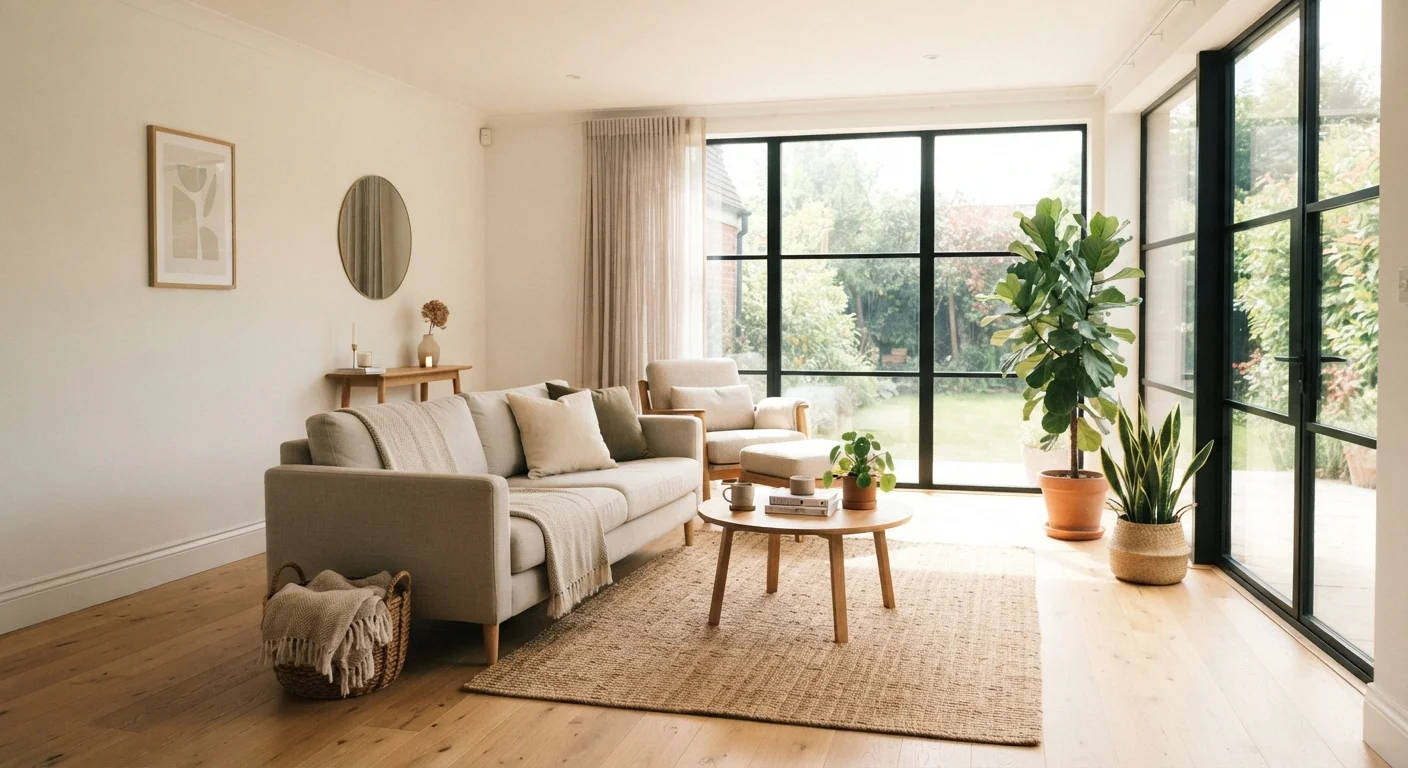
If the floors are in acceptable condition, work with them rather than against them. Warm wood tones suggest earthy or warm palettes; cool grey stone or tile pairs well with muted or cooler colour schemes. Replacing flooring is expensive and disruptive - take your cues from what's already there wherever possible.
For walls, resist the urge to paint immediately. Live in the space for at least two to four weeks so you can observe how light moves through the room at different times of day. A colour that looks fresh and airy in a north-facing room mid-morning can feel cold and dull by evening. Always test paint swatches directly on the wall - large swatches, not small chips - and observe them across multiple days.
Lighting is routinely underestimated. Overhead fixtures alone produce flat, harsh environments. Planning for layered lighting - ambient, task, and accent - from the outset prevents the common problem of a well-furnished room that still feels uninviting.
Building a Functional Furniture Foundation
Once you have a working sense of your fixed elements, you're ready to think about furniture - starting with function, not aesthetics. In your first year, a room that works well for daily life will serve you far better than one that looks polished but is awkward to use.
Measure every room carefully before purchasing anything. Sketch a rough floor plan - even freehand on graph paper - to test different layouts before committing. Pay particular attention to traffic flow: you should be able to move through a room without navigating around furniture.
Prioritise pieces you use every day: a mattress and bed frame, a sofa, a dining table if your household uses one. These are worth investing in proportionally, as they affect your comfort and wellbeing daily. Decorative items, on the other hand, can be accumulated gradually over time without compromising how you live.
Wait Before You Buy Big
If possible, hold off on purchasing large furniture for at least two to four weeks after moving in. Living in a space reveals how you actually use it - which direction you face when watching TV, where natural light pools in the afternoon, and how traffic flows through rooms. These real-world observations often change what furniture works best.
Adding Personality Without Overcommitting
Once your foundational pieces are in place and you've lived with them for a while, you'll have a much clearer picture of what the space still needs. This is the stage where personality enters - and it's intentionally the last layer, not the first.
Textiles are among the most effective and low-commitment ways to add character: cushions, throws, curtains, and rugs all shift the feel of a room significantly without structural change. Art, plants, books, and personal objects add warmth and individuality. If you're renting or want flexibility, our guide to rental-friendly decorating covers reversible approaches that let you experiment without risk.
Avoid over-filling a space too quickly. Negative space - areas without objects - is a design element in its own right. A room that feels slightly sparse is far easier to refine than one that's already crowded.
Setting a Realistic Decorating Budget
Decorating costs have a way of escalating well beyond early estimates, particularly when homeowners feel pressure to finish every room quickly. Before you shop, define a clear spending limit for each phase of the project and treat it as a boundary, not a suggestion.
A useful starting point is to separate your budget into three categories: foundational (flooring treatments, paint, essential furniture), functional (storage, lighting, window coverings), and decorative (art, plants, accessories). Allocate proportionally - most of your early budget should sit in the first two categories.
If you're navigating the financial demands of new homeownership alongside decorating costs, our beginner's budgeting guide offers a practical framework for managing competing financial priorities. Stretching decorating spend over twelve months rather than front-loading it is a widely sound approach - it preserves financial flexibility and typically produces a more considered, cohesive result.
This article is for informational purposes only. Consult a qualified financial professional for advice tailored to your personal financial circumstances.