

Key Takeaways
Why Rental Decorating Deserves a Real Strategy
Renting often comes with an unwritten rule: don't touch anything. White walls, builder-grade fixtures, and the constant anxiety of losing your security deposit can make a rental feel more like a waiting room than a home. But that constraint doesn't mean you're stuck with bare, impersonal spaces.
The key is understanding which changes are truly reversible, which products are designed specifically for renters, and where to invest your energy for the biggest visual payoff. Whether you're in a studio apartment or a three-bedroom house, the strategies below work across room types and budget levels - and they all leave the space exactly as you found it.
For a broader look at how to approach decorating from the ground up, the guide for new decorators covers decision sequencing that applies equally well to renters.
Removable Wallpaper and Peel-and-Stick Panels
Modern peel-and-stick wallpaper has improved dramatically in quality and variety. Available in everything from subtle linen textures to bold botanical prints, it applies directly to a smooth, clean wall and removes cleanly without pulling paint - provided walls are in good condition and the product instructions are followed carefully.
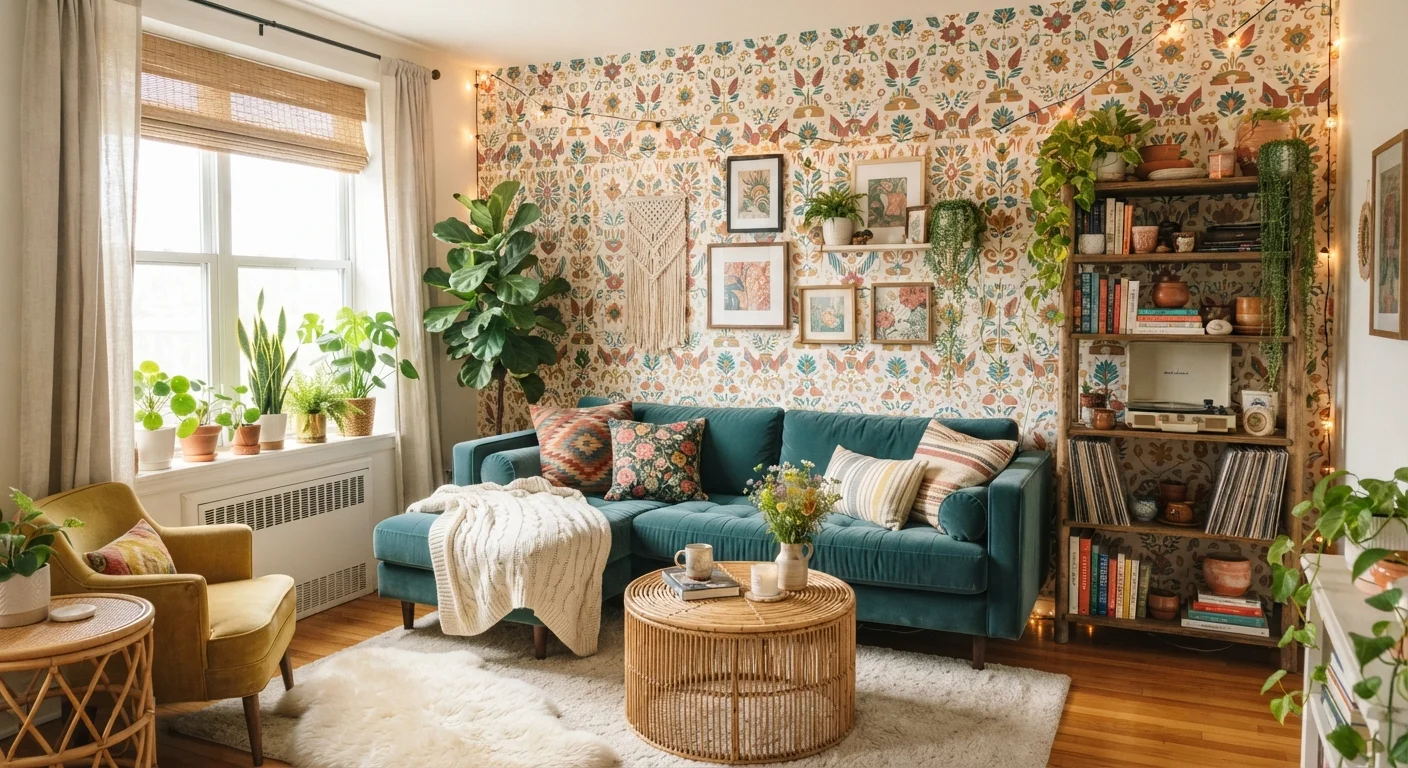
Focus removable wallpaper on one statement wall rather than an entire room to keep the project manageable and the effect impactful. A bedroom headboard wall or a dining nook are ideal starting points. For pattern inspiration that works well in smaller rooms, the article on common decorating myths challenges several assumptions about scale and pattern in compact spaces.
One patterned wall transforms a room's entire feel without touching a drop of permanent paint.
Tension Rods for Curtains, Dividers, and Storage
Tension rods are among the most underused tools in a renter's kit. They require no drilling, no hardware, and no wall damage - they simply press against two surfaces and hold firm under moderate weight. Use them inside window frames to hang lightweight curtains that soften harsh light without the need for a curtain rod bracket. In a closet, stack two tension rods to double your hanging capacity. In an open doorway, hang a curtain panel to create a visual divide between spaces.
In kitchens, a tension rod installed inside a cabinet can hold spray bottles or cleaning supplies vertically, reclaiming shelf space. The versatility of tension rods makes them worth keeping in quantity throughout a rental.
Tension rods solve curtain, storage, and room-divider problems without a single screw.
Large Area Rugs to Define and Ground a Space
Hard floors are standard in most rentals, and they can make a room feel cold and echoey. A large area rug - ideally large enough that the front legs of seating rest on it - immediately anchors a furniture arrangement, adds warmth underfoot, and introduces color, texture, or pattern in a way that's entirely removable.
Resist the temptation to choose a rug that's too small. A common mistake is placing a rug only under the coffee table, which makes the seating arrangement feel disconnected and the room feel smaller. If you're working with a compact living room, the small living room styling guide explains how rug sizing affects perceived space.
A correctly sized rug is one of the highest-impact, zero-damage changes you can make in any room.
Adhesive Hooks and Command Strips for Art and Décor
Hanging art without nails is no longer a compromise - adhesive hanging strips can hold framed pieces weighing several pounds when applied correctly to clean, dry surfaces. The key is following the weight rating precisely and pressing firmly for the recommended time before hanging anything.
For gallery walls, plan your arrangement on the floor first before committing to any placement. Paper templates (traced outlines of each frame) taped lightly to the wall let you visualize spacing without any permanent marks. Our guide to gallery walls walks through this method in detail, which works especially well for renters who need a plan they can revise before sticking anything down.
Paper templates let you plan a gallery wall perfectly before any adhesive touches the surface.
Freestanding Shelving and Furniture That Travels With You
Built-ins aren't an option for renters, but freestanding bookcases, ladder shelves, and modular cube units provide storage and display space without touching the walls beyond, in some cases, a small anti-tip anchor. Prioritize pieces with a finished back panel - they look intentional as room dividers or in open-plan spaces, not just pushed against a wall.
Choose furniture that serves multiple functions: an ottoman with interior storage, a bench at the foot of a bed that doubles as a coffee table, a console that acts as both an entryway table and a desk. When it's time to move, every piece comes with you and has already proven its usefulness.
Every piece of furniture you choose should earn its place twice - in this rental and the next.
Lighting Swaps That Require No Electrical Work
Overhead lighting in rentals is often unflattering and fixed - but the fixtures aren't the only option. Floor lamps, table lamps, clip-on reading lights, and plug-in pendant lamps (which hang from a hook and plug into a standard outlet) dramatically shift a room's atmosphere. Layering light sources at different heights creates warmth and flexibility that no single overhead fixture can achieve.
Battery-powered LED puck lights under shelves or inside cabinets add accent lighting without any wiring. String lights, when used intentionally rather than as decoration afterthought, can frame a window or headboard beautifully. Swapping a rental's standard lampshade for one in a bolder color or texture costs little and makes an immediate difference.
Layering light at multiple heights immediately makes a rental room feel designed rather than default.
Textiles and Plants to Add Depth and Life
Curtains, throw pillows, blankets, and table runners are the most forgiving decorating tools available - they cost relatively little, require no installation, and can be swapped seasonally or as your taste evolves. Heavier curtains hung close to the ceiling (using tension rods or adhesive hooks designed for curtain rods) make ceilings feel taller and windows more dramatic.
Plants introduce color, texture, and movement that no inanimate object quite replicates. Even a few well-placed pots of low-maintenance greenery - a trailing pothos on a shelf, a snake plant in a corner - make a rental feel genuinely inhabited rather than temporarily occupied. For more on how to layer soft furnishings effectively, the textile layering guide covers the principles that make combinations feel cohesive rather than cluttered.
Plants and textiles together do more for a room's warmth than almost any structural change could.
Bringing It All Together
The most effective rental spaces layer several of these approaches at once - a removable wallpaper feature wall, grounded by a large area rug, softened with curtains hung from a tension rod, and filled out with freestanding shelving and plants. No single element does all the work; the personality comes from the combination.
Always Test Adhesives Before Full Commitment
Before applying peel-and-stick wallpaper or adhesive strips across an entire wall, test a small patch in an inconspicuous area and leave it for 24-48 hours. Wall paint in older rentals can be more fragile or applied in thinner coats, and some surfaces (textured walls, freshly painted surfaces) are not compatible with removable adhesives at all. A small test saves significant trouble at move-out.
Before you begin any project, photograph your rental thoroughly at move-in and read your lease carefully - some landlords permit more than you'd expect, while others restrict even temporary adhesives. When in doubt, ask in writing so you have a record. For small-space challenges like bathrooms, our article on low-disruption bathroom upgrades shows how the same deposit-safe thinking applies in confined spaces.
Renting doesn't have to mean putting your style on hold. With the right tools and a little planning, any rental can feel like it genuinely belongs to the person living in it.