

Key Takeaways
Why Regular Grooming Matters Beyond Appearance
Grooming is not purely cosmetic. A consistent home grooming routine serves as an early-detection system for a wide range of health issues - from skin conditions and parasites to dental disease and ear infections. Cats are skilled at concealing discomfort, so the hands-on contact of regular grooming often surfaces problems before they become serious.
Self-grooming is a natural feline behavior, but it has limits. Long-haired breeds and older cats with reduced flexibility cannot maintain their coats alone. Even short-haired cats benefit from human-assisted grooming to control shedding, reduce hairball formation, and keep the coat in good condition. For a broader look at maintaining a thriving indoor environment, see The Indoor Cat Handbook.
Start Young for Lifelong Cooperation
Kittens introduced to brushing, nail trims, and mouth handling early are significantly easier to groom as adults. If you've recently brought home a kitten, our guide to the first weeks at home covers how to build positive handling habits from day one. Even adult cats can learn to tolerate grooming with patient, reward-based desensitization.
What you will need
What You'll Need Before You Start
Having the right tools makes the difference between a stressful scramble and a calm, efficient session. The list below covers the essentials for coat, claws, ears, and teeth. You do not need all items for every session - on a given day you might focus on brushing and a nail check, leaving dental care for the following day.
Slicker brush or grooming mitt
Removes loose hair and surface debris from short to medium coats without irritating skin.
Wide-toothed metal comb
Works through tangles in long or dense coats before they develop into full mats.
Cat nail clippers
Designed with the correct blade angle to trim cat claws cleanly without crushing or splitting.
Styptic powder
Stops minor bleeding quickly if a nail is accidentally clipped into the quick.
Veterinarian-approved ear cleaner
Loosens and lifts wax and debris from the ear canal safely without damaging delicate tissue.
Enzymatic cat toothpaste
Breaks down plaque and tartar chemically; formulated in flavors cats tolerate and safe to swallow.
Finger brush or small cat toothbrush
Reaches tooth surfaces and the gumline for effective plaque removal during brushing.
Step-by-Step Grooming Routine
Follow the steps below in order for a full grooming session. With a cooperative cat, a complete coat-claws-ears-teeth session takes 30-45 minutes. Splitting across several short sessions across the week works equally well and is often better tolerated.
Set the scene and gather your tools
Choose a time when your cat is relaxed - after a meal or a nap is ideal. Place all your tools within easy reach on a non-slip surface at a comfortable height for you. Bring high-value treats your cat genuinely loves. Begin with a few minutes of calm petting so your cat associates the session with positive attention before any tools appear.
Brush the coat
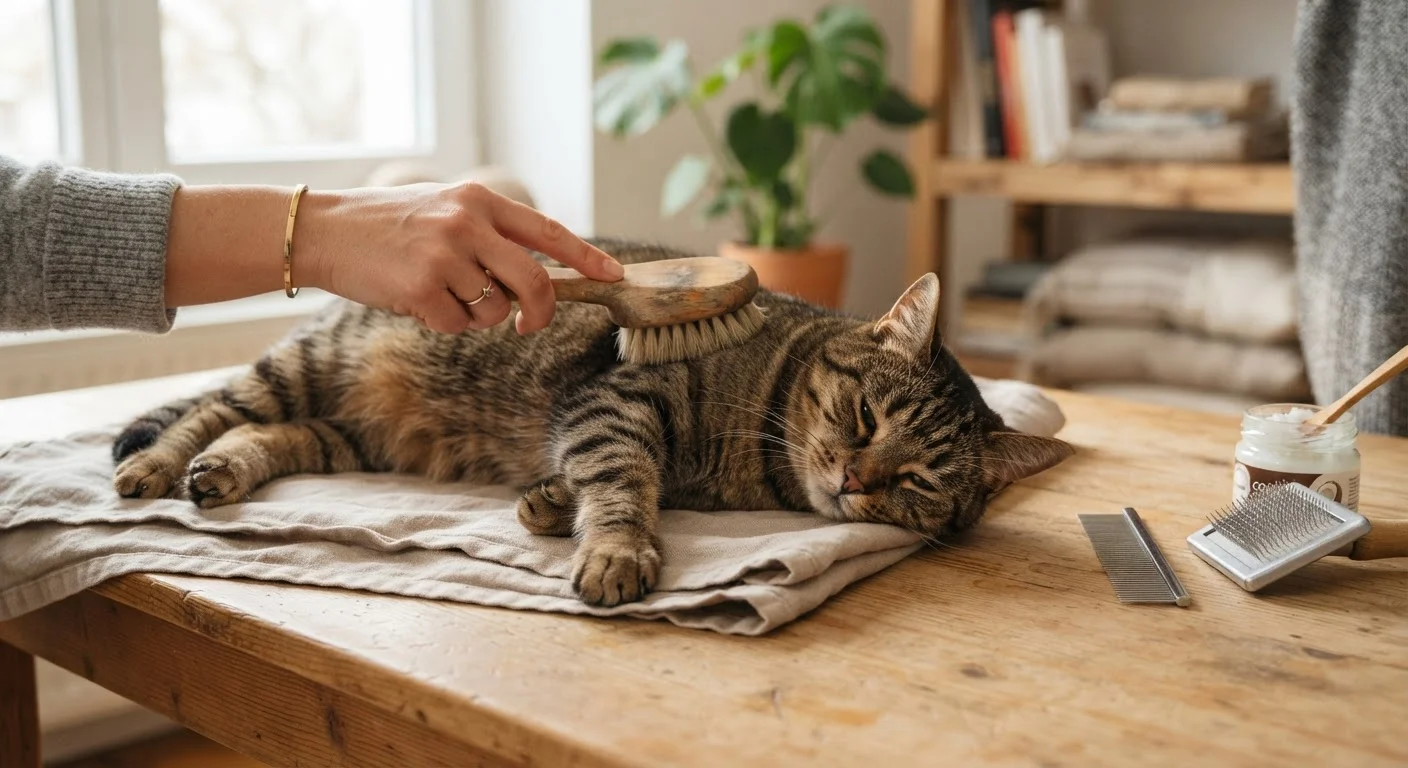
For short-haired cats, use a slicker brush or grooming mitt in the direction of hair growth, working from neck to tail. Pay attention to the belly and armpits where loose hair accumulates. Once a week is sufficient for most short-coated breeds.
For long-haired cats, start with a wide-toothed comb to gently work through tangles before using a slicker brush. Always hold the fur at its base when working through knots to avoid pulling the skin. Daily brushing prevents mats - once a mat forms close to the skin, cutting it out at home risks injuring the cat; consult a professional groomer instead.
Trim the nails
Hold your cat gently in your lap or on a stable surface. Press a paw pad lightly to extend one claw. Identify the pink quick (the blood vessel inside the claw) - on light-colored claws it is clearly visible; on dark claws, trim only the very tip. Clip below the quick at a slight angle using cat nail clippers. Work one paw at a time, rewarding between paws if needed.
Aim to trim every two to four weeks. Overgrown nails can curve back into the paw pad, causing pain and infection. Regular trims also work alongside scratch management strategies to reduce furniture damage.
Check and clean the ears
Fold the ear flap back gently and examine the inner ear. A healthy ear is pale pink, odorless, and has only minimal light-colored wax. Apply a few drops of veterinarian-approved ear cleaner to a cotton ball (never a cotton swab inserted into the canal) and wipe away visible debris from the outer ear and the folds of the inner flap only.
Do not attempt to clean deep into the ear canal at home. If you see dark, crumbly debris (a possible sign of ear mites), significant redness, swelling, or detect an unusual odor, schedule a vet appointment rather than treating blindly.
Brush the teeth
Dental disease is one of the most common health problems in domestic cats, yet brushing remains underused. Apply a small amount of enzymatic cat toothpaste to a finger brush or soft cat toothbrush. Lift the lip on one side and use small circular motions along the gumline and outer tooth surfaces. You do not need to brush the inner surfaces - cats' tongues keep those relatively clean.
Start by letting your cat lick toothpaste off your finger for several days before introducing the brush. Work toward daily brushing as the goal. The early warning signs of dental disease - bad breath, drooling, pawing at the mouth, or reluctance to eat hard food - are easy to miss without routine oral inspection.
End on a positive note and assess overall condition
Finish every session with praise and a treat, regardless of how much you managed to accomplish. Consistent positive endings build tolerance over time. As you conclude, do a quick visual assessment: check the eyes for discharge, look at the coat for symmetry and shine, and note any behavioral changes during the session compared with previous ones.
If your cat's grooming needs change significantly - increased shedding, new skin lesions, sudden resistance to areas previously tolerated - these may reflect an underlying health issue. The grooming needs of senior cats shift as mobility and self-grooming ability decline, so adjust your routine as your cat ages.
When to Skip DIY and See a Professional
Severe matting close to the skin, signs of skin infection (redness, oozing, crusting), or a cat that becomes genuinely aggressive during grooming are situations that call for a professional groomer or a veterinary visit - not persistence at home. Forcing a frightened or painful cat through grooming causes lasting fear and can result in injury to you or your pet.
Recognizing When Grooming Signals a Health Concern
Changes in coat quality, skin condition, or a cat's reaction to being touched are often the first visible signals of an underlying health problem. Excessive grooming or bald patches may indicate stress, allergies, or parasites. A sudden reluctance to be touched in an area previously tolerated can reflect pain. A coat that looks dull or greasy despite regular brushing may point to nutritional or metabolic issues.
Learn to distinguish normal variation from genuine change. Our article on cat health warning signs owners frequently overlook details the subtle shifts that warrant a veterinary conversation. When in doubt, a grooming concern is always worth raising at your next routine vet visit.
Bathing: Rarely Necessary, Done Carefully
Most cats are efficient self-groomers and do not require regular baths. When a bath is genuinely needed - following exposure to something toxic or extremely messy - use only cat-formulated shampoo, keep the water lukewarm, and thoroughly dry your cat afterward to prevent chilling. Cats stressed by bathing can scratch severely; if your cat panics, consult a professional groomer or your vet for guidance.
This article provides general grooming information for educational purposes and is not a substitute for professional veterinary advice. Always consult a qualified veterinarian with concerns about your cat's health.