

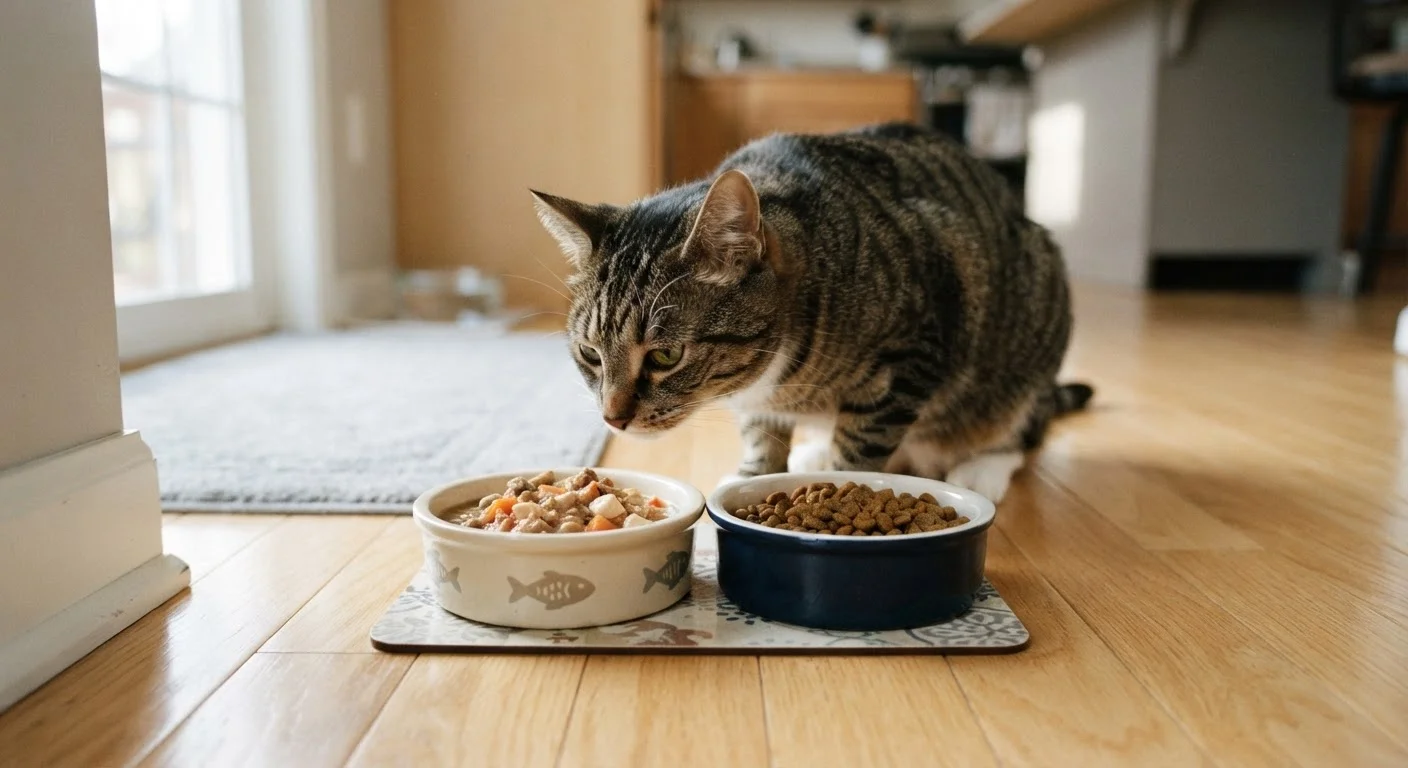
Key Takeaways
Option A
Wet Cat Food
The moisture-rich, palatable option for hydration-focused feeding.
Best for: Cats prone to urinary issues, finicky eaters, seniors, or those who drink little water.
Option B
Dry Cat Food (Kibble)
The convenient, shelf-stable staple of most cat feeding routines.
Best for: Owners seeking convenience and cats that tolerate free-feeding without overeating.
If your cat has a history of urinary tract issues or kidney disease
Wet Cat Food
High moisture content helps dilute urine and reduce the risk of crystal and stone formation, which vets frequently recommend for these conditions.
If you need a low-maintenance feeding routine or travel frequently
Dry Cat Food (Kibble)
Kibble is shelf-stable, easy to measure, and can be left in a feeder for longer periods without spoiling.
If your cat is a healthy adult with no specific health concerns
Wet Cat Food
Most veterinary nutritionists favour wet food as a primary diet for cats due to their naturally low thirst drive and need for dietary moisture.
If your cat is a senior with dental disease or reduced appetite
Wet Cat Food
Softer texture is easier to chew, and stronger aroma often appeals to older cats whose sense of smell may have diminished.
If cost and budget are significant constraints
Dry Cat Food (Kibble)
Dry food generally costs less per calorie, making it a more affordable primary diet - though supplementing with some wet food is still beneficial.
Why the Wet vs. Dry Debate Actually Matters
Cats are obligate carnivores with a biology shaped by millions of years of eating prey - animals that are roughly 70% water. Unlike dogs, cats have a relatively weak thirst drive and historically obtained most of their fluid intake from food, not a water bowl. This evolutionary reality sits at the heart of the wet vs. dry food debate, and it has direct implications for feline health.
Choosing the wrong primary diet isn't a trivial decision. Chronic low-level dehydration is linked to feline lower urinary tract disease (FLUTD) and kidney disease, two of the most common health problems in domestic cats. Understanding how food format affects hydration - and how to weigh that against practical and nutritional factors - is essential for responsible cat ownership. See our guide to feline nutritional requirements for a deeper look at what cats need at each life stage.
| Criterion | Wet Cat Food | Dry Cat Food (Kibble) |
|---|---|---|
| Moisture content | 70-80% | 6-10% |
| Urinary health support | Strong - high hydration | Weak without extra water intake |
| Protein content (typical) | Higher animal protein | Variable; often more carbs |
| Cost per calorie | Higher | Lower |
| Shelf life after opening | 2-3 days refrigerated | Weeks to months sealed |
| Suitability for seniors | Excellent - soft texture | Limited if dental issues present |
| Feeding convenience | Moderate - needs refrigeration | High - auto-feeder compatible |
| Appetite appeal | High aroma, palatable | Lower palatability for picky cats |
Wet Food: The Case for Moisture-First Feeding
Wet cat food typically contains 70-80% moisture, closely mimicking the water content of whole prey. This matters because cats fed a wet-food-primary diet consistently show higher total daily water intake than those eating dry food exclusively - even when fresh water is freely available alongside dry kibble.
Beyond hydration, quality wet foods tend to be high in animal protein and lower in carbohydrates than most dry formulas. Cats have limited ability to use carbohydrates efficiently, and some research suggests high-carbohydrate diets may contribute to obesity and diabetes in sedentary indoor cats. The stronger aroma of wet food also makes it more appealing to cats with reduced appetites - particularly relevant for senior cats whose needs change with age.
The downsides are real: wet food is more expensive per calorie, requires refrigeration after opening, and spoils within a few hours at room temperature. Portion discipline is also critical - unlike kibble, open cans cannot safely sit out all day.
Dry Food: Convenience With Caveats
Kibble's appeal is undeniable. It's cost-effective, shelf-stable, easy to measure, and compatible with automatic feeders - practical advantages that suit many households. Dry food is also more calorie-dense, meaning smaller volumes deliver the same energy, which can simplify portion control when managed carefully.
The persistent myth that dry food cleans cats' teeth has largely been dismissed by veterinary dentists. While some prescription dental diets with specific kibble structures may offer modest benefits, standard kibble provides negligible dental protection for most cats.
Watch for Signs of Inadequate Hydration
Cats on exclusively dry diets may show subtle signs of chronic low-level dehydration before any clinical diagnosis is made. Watch for concentrated, strong-smelling urine, reduced urination frequency, or lethargy. These aren't emergencies in isolation, but they warrant a conversation with your vet - especially if your cat already has a history of urinary issues.
The most significant concern with exclusive dry feeding is hydration. A cat eating only kibble may consume as little as half the daily moisture of a cat on wet food, even with access to fresh water. Over months and years, this deficit is a meaningful risk factor for urinary and kidney problems. Owners committed to dry feeding should actively encourage water intake - using water fountains, multiple water stations, and wet food toppers.
Mixed Feeding: Getting the Best of Both
Many veterinarians and feline nutritionists recommend a combination approach - wet food as the dietary foundation, supplemented by measured amounts of dry food. This strategy captures wet food's hydration and protein benefits while retaining the convenience and cost savings of kibble.
A common practical split is wet food at mealtimes and a small amount of kibble available separately - though exact ratios should reflect your cat's caloric needs and health status. Cats with diabetes, kidney disease, or obesity may require more specific guidance that only a veterinarian can provide.
For indoor cats managing weight and boredom, puzzle feeders loaded with kibble can add mental stimulation without compromising a primarily wet-food diet. Whatever approach you choose, consistency, appropriate portion sizes, and regular vet check-ups are non-negotiable.
~70%
Moisture in whole prey animals
Cats evolved to obtain most daily fluid from food rather than drinking, reflecting their origins as desert-adapted hunters.
~50%
Less water consumed on dry-only diets
Studies in veterinary nutrition have consistently shown cats on dry food drink more water but still achieve lower total daily intake than cats on wet food.
This article provides general information about cat nutrition and is not a substitute for professional veterinary advice. Consult your veterinarian before making significant changes to your cat's diet, particularly if your cat has existing health conditions.