

Key Takeaways
Why Dental Health Gets Overlooked
Most dog owners stay current with vaccines and parasite prevention, yet oral health consistently falls lower on the priority list. This gap has real consequences. Veterinary dental associations estimate that periodontal disease - infection of the structures supporting the teeth - is present in the majority of dogs by age three. Because early stages rarely cause obvious pain or behavioral changes, many owners assume their dog's mouth is fine. It usually isn't.
Part of the problem is that dogs rarely show discomfort the way humans do. If a tooth is painful, a dog will typically continue eating, masking the issue. Dogs instinctively hide pain, which makes oral problems easy to miss until they've progressed significantly.
~80%
Dogs with periodontal disease by age three
Figures cited by the American Veterinary Medical Association suggest the majority of dogs show signs of periodontal disease by their third year of life.
1 in 3
Pet owners who brush their dog's teeth regularly
Survey data from veterinary professional groups consistently indicates that regular at-home brushing remains uncommon despite being the most effective preventive measure.
Best Practices for Canine Oral Care
Good dental hygiene in dogs isn't complicated, but it does require consistency. The following practices reflect current veterinary guidance on what actually makes a measurable difference.
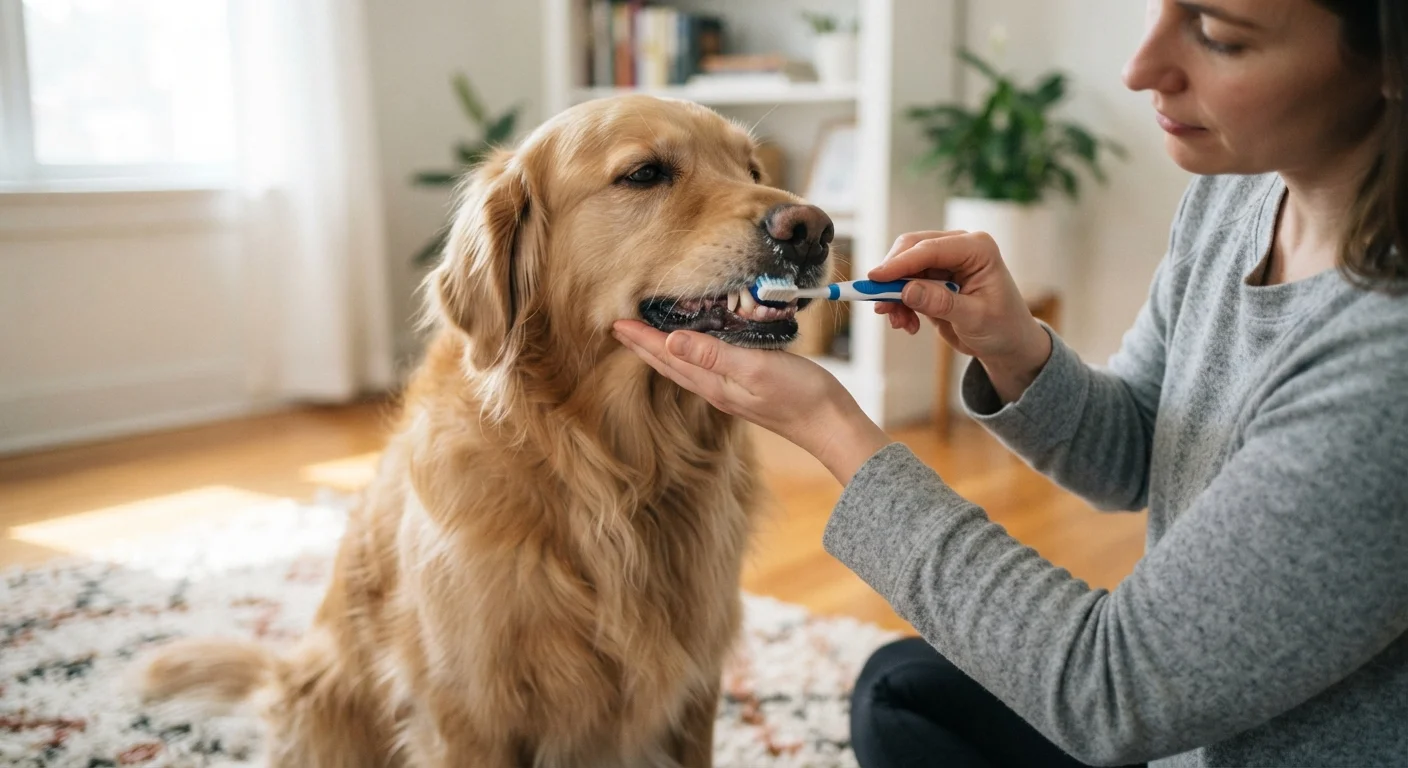
Brush your dog's teeth daily using dog-specific toothpaste.
Daily brushing disrupts the plaque biofilm before it mineralizes into tartar, which cannot be removed at home. Human toothpaste contains fluoride and xylitol - both toxic to dogs - making species-appropriate products essential. Consistency matters far more than technique; even a brief, gentle session delivers benefit.
Schedule annual professional dental examinations with your veterinarian.
A significant portion of each tooth sits below the gumline, invisible during a home inspection. Professional scaling under anesthesia removes subgingival tartar and allows probing for pockets, root exposure, and tooth resorption that cannot be assessed any other way. Skipping annual exams allows disease to progress silently.
Check your dog's mouth briefly every week for early warning signs.
Regular at-home visual checks help owners spot changes between vet visits - things like swollen gums, loose teeth, unusual growths, or a sudden reluctance to chew hard food. Catching these changes early typically means simpler, less costly treatment.
Treat persistent bad breath as a symptom, not a given.
Mild breath odor after meals is normal, but chronic halitosis in dogs is almost always a sign of bacterial accumulation, gum disease, or another oral or systemic issue. Normalizing 'doggy breath' delays diagnosis and treatment of a manageable condition.
Introduce dental care habits during puppyhood whenever possible.
Young dogs accept handling of their muzzle and mouth more readily than adult dogs who have never experienced it. Building a positive association with tooth brushing early makes lifelong compliance significantly easier and reduces stress for both dog and owner.
Quick Wins You Can Start This Week
If your dog's dental routine has been minimal, don't feel discouraged - incremental improvement significantly reduces disease risk. These actions require minimal equipment and can begin immediately.
Diet, Chews, and Common Misconceptions
There's a persistent belief that dry kibble mechanically cleans teeth the way brushing does. In reality, most kibble shatters before it makes meaningful contact with the gumline, providing little abrasive benefit. Wet food alone offers no mechanical cleaning whatsoever. Each feeding format has trade-offs - oral health is one of many factors worth considering when choosing a diet.
Certain dental chews and toys are recognized by veterinary dental organizations as providing genuine plaque-reduction benefits when used consistently, but they supplement - rather than replace - brushing. Hard natural bones and antlers carry a risk of tooth fracture, particularly in aggressive chewers; veterinary dentists generally advise against them. A simple test: if you wouldn't knock it hard against your own knee, it's probably too hard for your dog's teeth.
Anesthesia-Free Dental Cleaning: A Note of Caution
Some grooming and pet retail services offer anesthesia-free dental cleaning. While the surface-level scaling may make teeth look cleaner, it cannot safely reach subgingival deposits - the area where periodontal disease actually originates. Veterinary dental organizations advise that dental procedures performed without anesthesia do not provide the same diagnostic or therapeutic benefit as professional veterinary cleaning. Discuss any dental service options with your veterinarian before booking.
If you're new to dog ownership or still establishing your care routines, our guide on what first-time owners genuinely need to prepare for covers the broader health groundwork worth building early.