

Key Takeaways
Our Verdict
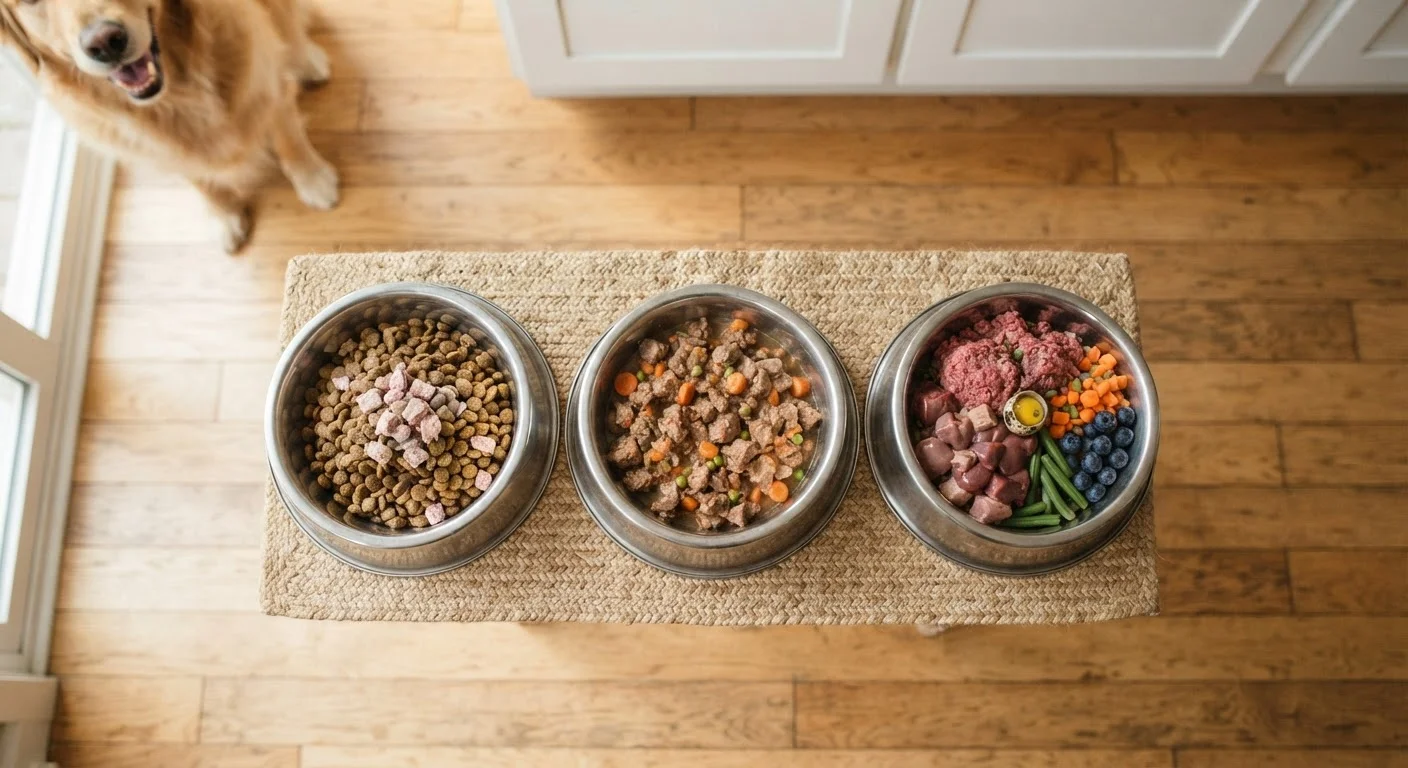
Dry kibble remains the most practical and well-researched option for most dogs, particularly when chosen with attention to ingredient quality. Wet food is a strong choice for dogs needing extra hydration or with dental or appetite challenges. Raw diets may suit some dogs but require careful planning, veterinary oversight, and rigorous food-safety practices to minimize risk.
| Best for | Recommended |
|---|---|
| Dog owners prioritizing convenience and cost-effectiveness | Dry Kibble |
| Dogs with low thirst drive, kidney issues, or difficulty chewing | Wet Food |
| Owners committed to hands-on preparation with veterinary guidance | Raw Diet |
| Dogs needing a balanced middle ground with added palatability | Mixed Wet and Dry |
Why Diet Format Matters More Than You Might Think
The format of your dog's food - not just the ingredients - shapes how well nutrients are absorbed, how their teeth and gut fare over time, and how practical the feeding routine is for your household. With so many options on the market, the decision can feel overwhelming. This comparison focuses on the three main diet formats: dry kibble, wet (canned or pouch) food, and raw diets, covering how each works, its documented advantages, and its realistic drawbacks.
It's worth noting upfront that a dog's ideal diet depends on factors including age, breed, body condition, health status, and activity level. If your dog has a diagnosed condition or has recently shown changes in appetite or energy, a veterinarian's input is especially important before switching formats.
Dry Kibble: The Baseline Standard
Dry kibble is the dominant format in the US dog food market, and for straightforward reasons: it's shelf-stable, portion-controlled, and available across a wide range of formulations suited to different life stages and health needs. Most commercial kibbles are formulated to meet the nutritional standards set by the Association of American Feed Control Officials (AAFCO), providing a reliable baseline of protein, fat, vitamins, and minerals.
One commonly cited benefit is dental health - the mechanical action of chewing dry food may help reduce plaque buildup compared to softer foods, though it isn't a substitute for active dental care. Our guide to dog dental health covers what owners most frequently miss on this front.
The key limitation is variability. Ingredient quality, protein sourcing, and processing methods differ substantially between products. High-heat extrusion - the standard manufacturing process - can reduce the bioavailability of some nutrients, though reputable formulas compensate through supplementation. Dogs with certain food sensitivities may also react to common kibble fillers such as corn or soy derivatives.
| Dry Kibble | Wet Food | Raw Diet | |
|---|---|---|---|
| Moisture Content | ~10% | 70-80% | 60-70% (varies) |
| Cost Per Day | Low to moderate | Moderate to high | High (home-prep or commercial) |
| Convenience | Very high - shelf-stable, easy to store | Moderate - requires refrigeration after opening | Low - requires prep, handling, freezer space |
| Nutritional Completeness | Generally AAFCO-compliant | Generally AAFCO-compliant | Variable - risk of imbalance without formulation |
| Food Safety Risk | Low | Low | Higher - bacterial contamination risk |
| Dental Benefit | Moderate mechanical abrasion | Minimal | Raw bones may help; whole-bone risks exist |
| Best Suited For | Most adult dogs; multi-dog households | Dogs needing hydration or with chewing difficulty | Dogs with specific needs under vet supervision |
Wet Food: Hydration and Palatability
Wet food typically contains 70-80% moisture, compared to roughly 10% in dry kibble. This makes it particularly useful for dogs who don't drink adequate water independently - a common concern in older dogs or those with urinary tract or kidney conditions. The higher moisture content also contributes to a sense of fullness and can ease digestion for dogs with sensitive stomachs.
Palatability is another consistent advantage. Dogs with reduced appetite - whether due to illness, age, or finicky preferences - often respond more readily to wet food's stronger aroma and softer texture. It's also easier to chew, making it a practical choice for puppies, senior dogs, and those recovering from dental procedures.
On the downside, wet food is more expensive per calorie than kibble, has a much shorter shelf life once opened (typically 2-3 days refrigerated), and doesn't provide the same mechanical chewing action. Portion control requires more attention, as overfeeding is easier with highly palatable foods.
Mixing Wet and Dry Food Safely
If you're adding wet food to kibble, measure both portions carefully to avoid overfeeding - wet food is calorie-dense and easy to misjudge by volume. Discard any uneaten wet food within two hours at room temperature and refrigerate opened cans or pouches promptly. Introduce the combination gradually over a week to let your dog's digestive system adjust.
Raw Diets: Potential Benefits and Real Risks
Raw diets - often called BARF (Biologically Appropriate Raw Food) or prey-model diets - typically include raw muscle meat, organ meat, raw meaty bones, and sometimes vegetables or fruits. Proponents suggest benefits including improved coat condition, smaller stools, and higher digestibility of unprocessed proteins. Some of these observations are supported by owner reports, though large-scale, controlled clinical studies comparing raw to commercial diets remain limited.
The risks, however, are well-documented. The US Food and Drug Administration (FDA) and major veterinary organizations including the American Veterinary Medical Association (AVMA) have expressed concern about raw diets' potential for bacterial contamination - particularly Salmonella, Listeria, and E. coli - which poses health risks to both dogs and the people who handle the food. Nutritional imbalances are another significant concern; without careful formulation, raw diets can be deficient in calcium, phosphorus, or key vitamins, leading to skeletal or metabolic problems over time.
If you're considering a raw diet, working with a board-certified veterinary nutritionist to develop or evaluate a recipe is strongly advised. Commercially prepared raw diets that have undergone high-pressure processing (HPP) to reduce pathogen load are generally considered lower-risk than home-prepared alternatives.
Dogs on raw diets sometimes show increased interest in plant matter - if you've noticed this, our article on why dogs eat grass may provide useful context.
Making an Informed Choice for Your Dog
No single format is universally superior. Dry kibble suits most dogs well and imposes the fewest logistical demands. Wet food adds meaningful benefits for specific health situations or picky eaters. Raw diets require the most investment - in preparation time, food-safety practices, and veterinary collaboration - but may be appropriate for some dogs under careful supervision.
Mixing formats is common and generally safe; many owners combine dry kibble with wet food for palatability and hydration benefits without the cost of feeding wet exclusively. Whatever format you use, transition any dietary change gradually over 7-10 days to reduce the likelihood of digestive upset.
Your dog's living environment also factors into nutritional needs - our overview of indoor vs. outdoor dog care touches on how activity and environment influence overall health management.
This article is for general informational purposes only and does not constitute veterinary or medical advice. Always consult a licensed veterinarian before making significant changes to your dog's diet, especially if your dog has a pre-existing health condition.