

Key Takeaways
Why Coat Type Determines Your Grooming Approach
Walk into any pet supply store and you'll find dozens of brushes, combs, and grooming tools - each designed with a specific coat in mind. Using the wrong tool for your dog's coat type doesn't just waste effort; it can leave the undercoat unaddressed, cause breakage, or irritate the skin. Understanding your dog's coat structure is the first step toward an effective, consistent routine.
Dog coats fall into five broadly recognized categories: short, double, curly, wavy, and wire (also called broken). Each has a distinct growth pattern, texture, and shedding cycle. A short-coated Beagle and a curly-coated Poodle may both need weekly attention, but they need completely different techniques to stay healthy and comfortable.
Grooming is also about more than aesthetics. Regular sessions let you check for skin irritation, lumps, parasites, and ear issues early - before they become veterinary problems. Don't overlook complementary care: dental health is another area many dog owners underestimate, yet it's just as important to overall wellbeing.
Short Coats: Low Maintenance, Not No Maintenance
Breeds like Boxers, Labrador Retrievers, and Dalmatians have smooth, single-layer or minimally layered coats that sit close to the skin. While they don't mat or tangle, they do shed - sometimes substantially - and benefit from weekly brushing with a rubber curry brush or a soft-bristle brush to remove loose hair and distribute natural skin oils.
Bathing every four to six weeks is typically sufficient unless your dog rolls in something unpleasant. Always dry the coat and skin folds thoroughly afterward. Run your hands along the coat during each session to feel for any bumps, dry patches, or parasites hiding against the skin.
Short coats still shed and need weekly brushing to stay clean and skin-healthy.
Double Coats: Prioritize the Undercoat
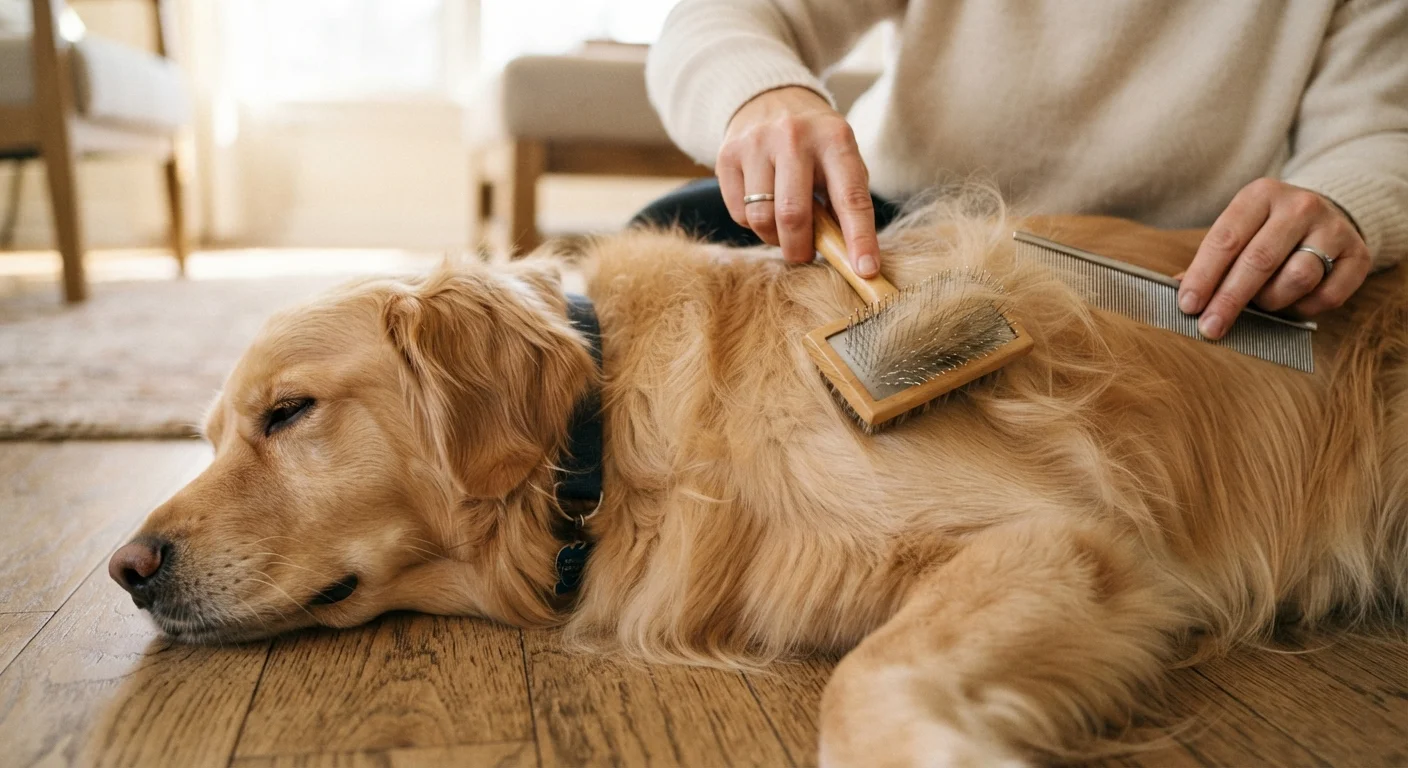
Double-coated breeds - including German Shepherds, Huskies, Golden Retrievers, and Border Collies - have a dense, insulating undercoat beneath a longer topcoat. This structure regulates body temperature in both heat and cold, which is why shaving a double coat is generally discouraged by veterinary and grooming professionals; it can disrupt thermoregulation and alter coat regrowth.
Instead, focus on deshedding. Slicker brushes remove surface tangles, while an undercoat rake or deshedding tool reaches the inner layer. During seasonal shedding cycles, daily brushing may be necessary. Pay special attention to areas prone to matting: behind the ears, under the armpits, and around the collar line.
Shaving a double coat can disrupt thermoregulation - deshedding tools are the right approach.
Curly Coats: Prevent Mats Before They Start
Poodles, Bichon Frises, Portuguese Water Dogs, and many doodle mixes carry curly coats that trap shed hair within the curl rather than releasing it to the floor. This dramatically reduces shedding around your home but creates a mat risk that demands consistent brushing - typically every two to three days with a slicker brush, working in sections from the skin outward.
Curly-coated dogs generally require professional clipping every six to eight weeks to keep the coat at a manageable length. Letting it grow too long without brushing almost guarantees pelting (tight matting against the skin), which is painful and sometimes requires shaving close to the skin to resolve.
Curly coats trap shed hair internally, making consistent brushing essential to prevent painful matting.
Wavy Coats: The Middle-Ground That Still Needs Attention
Wavy coats - seen on Spaniels, Irish Setters, and many mixed breeds - fall between straight and curly and share characteristics of both. They are moderately prone to tangling, particularly in longer feathering around the ears, chest, legs, and tail. Brushing two to three times per week with a pin brush, followed by a comb to check for hidden knots, keeps the coat looking smooth and prevents tangles from progressing into mats.
Many wavy-coated breeds benefit from light trimming around the paws, ears, and sanitary areas rather than full haircuts. Ask a groomer to show you where and how to maintain these zones safely between professional appointments.
Feathering on wavy-coated breeds tangles quickly - comb through it fully, not just the surface.
Wire Coats: Hand-Stripping vs. Clipping
Wire-haired (or broken-coated) breeds such as Jack Russell Terriers, Scottish Terriers, and Wire Fox Terriers have a rough, dense topcoat that grows in a distinctly different way from other coat types. The traditional method for maintaining texture and color is hand-stripping - removing dead topcoat hair by hand or with a stripping knife so new wire coat can grow through.
Clipping a wire coat is faster and more comfortable for many pet owners, but it softens the texture over time and can affect coat color. For show dogs, hand-stripping is standard. For companion pets, either approach is acceptable - discuss the tradeoffs with a groomer experienced in terrier breeds. Either way, these coats benefit from brushing two to three times a week to prevent tangles in the softer undercoat.
Hand-stripping preserves the wire coat's texture and color; clipping is easier but changes coat quality.
Building a Routine That Sticks
Whatever your dog's coat type, consistency is the single biggest factor in grooming success. Short sessions several times a week are more manageable - and less stressful for your dog - than infrequent marathon sessions that tackle weeks of buildup at once. Introducing grooming early in a puppy's life, or gradually and positively with a rescue, helps dogs accept handling as a normal part of life.
Make Grooming a Positive Experience
Keep early grooming sessions short - five to ten minutes - and pair them with calm praise or a small treat afterward. Dogs that associate brushing with positive outcomes are far more cooperative over time. Avoid grooming when your dog is overstimulated or anxious, and always stop before either of you becomes frustrated.
Pay attention to seasonal shifts. Double-coated breeds blow their undercoat twice a year and will need significantly more frequent deshedding during those periods. All breeds benefit from a post-swim or post-rain dry-out and check, especially around ears and skin folds. Keep a simple grooming log if you find it hard to track what's been done - it takes seconds and prevents important tasks from slipping through.
When in doubt about technique, coat condition, or whether a skin issue warrants attention, consult a professional groomer or your veterinarian. A groomer familiar with your breed can demonstrate the correct brushing direction, tool pressure, and clipping approach - knowledge that pays off in every session you do at home.