

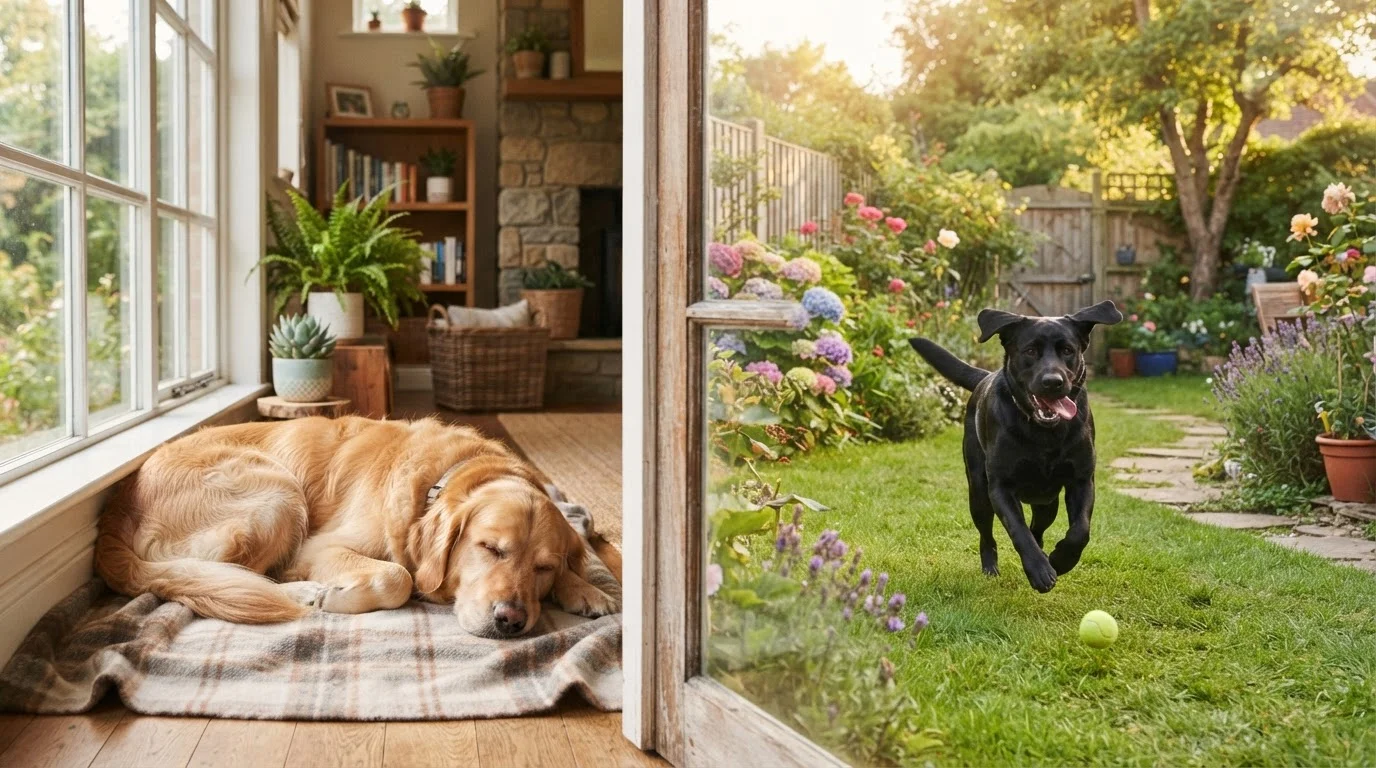
Key Takeaways
Option A
Indoor Dogs
The socially integrated, climate-sheltered companion.
Best for: Dogs that thrive on close human contact, smaller breeds, and dogs with health conditions requiring a controlled environment.
Option B
Outdoor Dogs
The working or active dog with space and stimulation.
Best for: High-energy working breeds given adequate shelter, social interaction, and veterinary care - not a substitute for owner engagement.
If you have a working or large high-energy breed with outdoor shelter and daily interaction
Outdoor Dogs
Some breeds tolerate outdoor living better when given proper shelter, veterinary oversight, and regular owner contact - but isolation is never acceptable.
If you have a small, short-coated, or brachycephalic breed
Indoor Dogs
These dogs are physically ill-suited to temperature extremes and require the climate control and closeness that indoor living provides.
If your dog shows signs of anxiety, behavioral changes, or loneliness
Indoor Dogs
Dogs are social animals; proximity to their human family is one of the strongest protective factors for emotional wellbeing.
If you want a practical arrangement that suits most household dogs
Indoor Dogs
For the vast majority of companion dogs, living inside with the family - combined with daily outdoor exercise - best meets their social and physical needs.
What 'Indoor' and 'Outdoor' Actually Mean
The terms "indoor dog" and "outdoor dog" are more cultural shorthand than scientific categories. An indoor dog lives primarily inside the home, sleeping and socializing alongside the family. An outdoor dog is kept mainly outside - in a yard, kennel run, or outbuilding - with limited time in the main living space.
It's worth separating this from exercise habits. A dog can live indoors and spend hours outside daily, or live outdoors and rarely be exercised properly. The distinction is really about where the dog is housed, rested, and emotionally anchored - and that has a direct bearing on welfare.
Some owners maintain a mixed arrangement: dogs sleep inside but spend working hours outdoors. This middle ground often works well provided the dog has shelter, socialization, and is not left in isolation for long periods. Understanding the genuine trade-offs of each approach helps owners make decisions grounded in evidence rather than habit.
Side-by-Side: How the Two Arrangements Compare
Looking at specific welfare criteria makes the differences concrete. The table below compares typical indoor and outdoor living across factors that matter most to canine health and behavior.
| Criterion | Indoor Dogs | Outdoor Dogs |
|---|---|---|
| Social interaction | Continuous family contact | Often limited and scheduled |
| Temperature safety | Climate-controlled year-round | Exposure risk in extremes |
| Parasite exposure | Lower baseline risk | Higher; requires active prevention |
| Health monitoring | Easier to spot early changes | Changes may go unnoticed longer |
| Behavioral wellbeing | Lower isolation-related stress | Higher risk of anxiety if isolated |
| Exercise | Requires deliberate outdoor time | Space available, but not guaranteed |
| Suitable for all breeds | Yes, with breed-appropriate activity | No - many breeds unsuited |
As the comparison shows, indoor living tends to offer stronger defaults across most welfare dimensions. That doesn't mean outdoor arrangements are always harmful - but it does mean they require considerably more deliberate management to meet the same standards.
The Welfare Case for Indoor Living
Dogs are a domesticated social species. Thousands of years of co-evolution with humans have shaped dogs to seek and benefit from close contact with their owners. Animal behavior research consistently links social isolation - even in otherwise well-fed, physically healthy dogs - with elevated stress indicators, including increased cortisol levels and the development of repetitive or destructive behaviors.
Indoor living offers dogs a stable thermal environment, proximity to family members, and integration into the household's daily rhythm. These aren't luxuries; they map directly onto the behavioral and social needs that domestic dogs have. If your dog is displaying unusual behaviors, unexplained shifts in temperament or energy can sometimes trace back to inadequate social contact or environmental stress.
~85%
US dogs kept primarily indoors
According to American Pet Products Association survey data, the large majority of US dog owners report their dogs live inside the home.
23x
Higher cortisol in socially isolated dogs
Research published in animal behavior journals has found substantially elevated stress hormones in dogs deprived of regular social contact with humans or other dogs.
Smaller breeds, short-nosed (brachycephalic) breeds, puppies, senior dogs, and dogs with chronic health conditions are especially poorly suited to primarily outdoor life. Their thermoregulatory capacity and physical resilience is lower, and the health risks of temperature extremes are proportionally higher.
When Outdoor Arrangements Carry Extra Risk
Even for robust, larger breeds, outdoor living introduces hazards that owners must actively manage. Exposure to fleas, ticks, and intestinal parasites is substantially higher for dogs spending most of their time outside, particularly in areas with dense vegetation or wildlife traffic. Consistent preventive care - discussed with a veterinarian - is essential, not optional.
Heat stroke and hypothermia are serious risks depending on season and region. A doghouse or covered run does not provide meaningful insulation in extreme cold, and shade alone is insufficient in high summer heat. The American Veterinary Medical Association and similar bodies note that leaving dogs in conditions of temperature extremes - even outdoors - can constitute neglect under animal welfare standards.
Diet and health monitoring is also less reliable outdoors. Choosing the right diet matters regardless of where a dog lives, but owners who spend less time with their dog are slower to notice changes in appetite, weight, or stool quality - early indicators of illness. Outdoor dogs may also eat grass or other vegetation more frequently, which can sometimes signal dietary or digestive issues worth monitoring.
Making Any Arrangement Work Better
If your dog spends significant time outdoors, several practices reduce the welfare gap considerably. Adequate weatherproof shelter - raised off the ground, insulated, and sized correctly for the dog - is a baseline requirement, not an upgrade. Fresh water must be available at all times and checked in freezing conditions. Daily structured interaction with family members, not just feeding visits, is non-negotiable.
For indoor dogs, the key is ensuring outdoor exercise time is genuinely sufficient for the breed. A Border Collie living in an apartment needs far more vigorous daily activity than its indoor status might imply. Understanding your dog's signals - including what their body language is communicating - helps owners identify unmet needs before they escalate into behavioral problems.
In all cases, regular veterinary check-ups, parasite prevention appropriate to your region, and honest assessment of whether the dog's needs are being met will do more for canine wellbeing than any single housing decision.
This article provides general information for educational purposes only and is not a substitute for professional veterinary advice. Consult a licensed veterinarian for guidance specific to your dog's health and circumstances.