

Key Takeaways
Separation Anxiety in Dogs
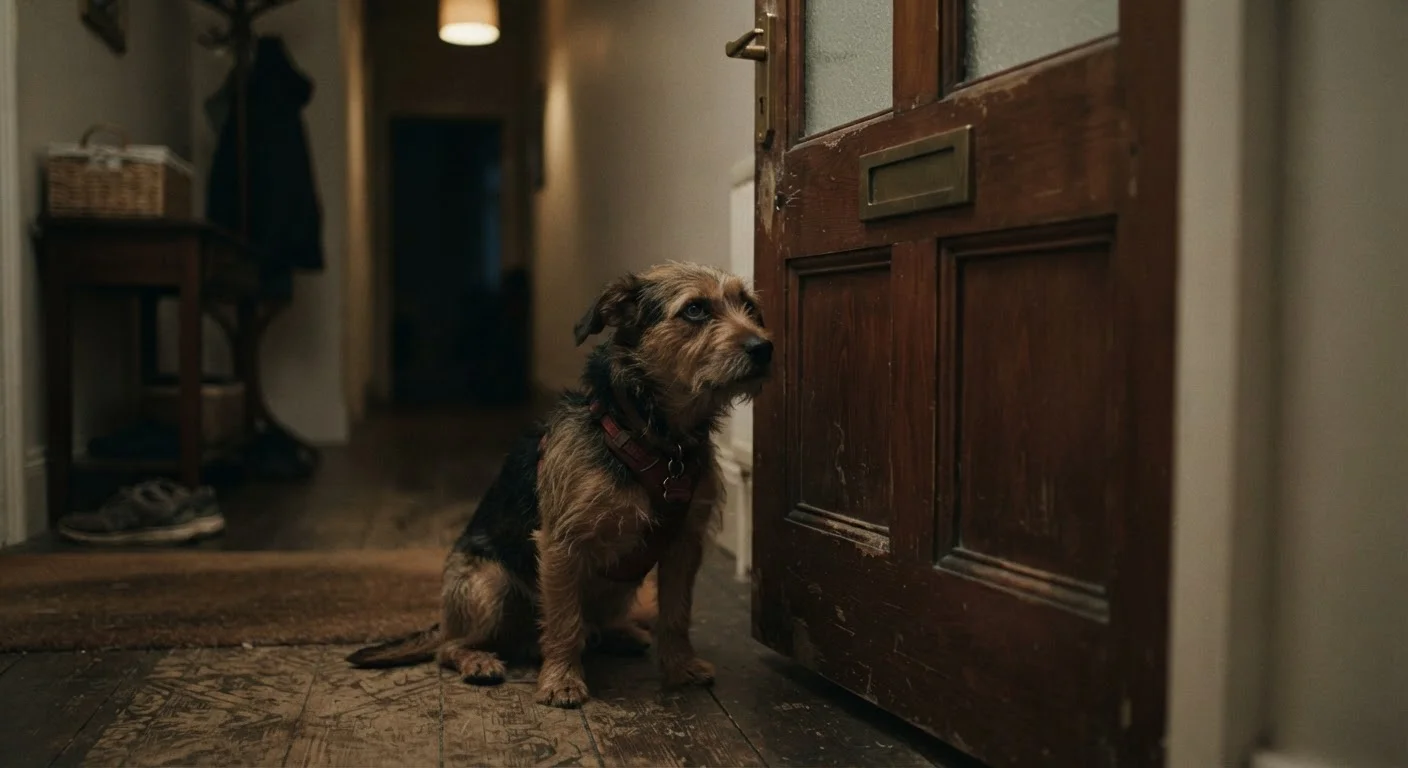
Separation anxiety is a behavioural condition in which a dog experiences significant distress when left alone or separated from a person (or people) they're strongly bonded to. Unlike ordinary boredom, it involves a genuine stress response - physiological and emotional - that can cause destructive behaviour, vocalization, and physical symptoms. It is not a training failure or a sign that a dog is spoiled; it reflects how that individual processes perceived abandonment.
Clinically, separation anxiety falls under the umbrella of separation-related behaviours (SRBs). Veterinary behaviourists distinguish between isolation distress (distress when alone, regardless of who is present) and true separation anxiety (distress tied specifically to the absence of one or more attachment figures).
What Separation Anxiety Actually Looks Like
The most important thing to understand about separation anxiety is that it is not a choice. A dog destroying a sofa cushion or barking for two hours is not being defiant - they are in a state of genuine panic. Recognising this reframes how owners respond, and that shift matters enormously for outcomes.
Common signs include:
- Destructive behaviour directed at exit points - doors, windowsills, and gate edges - rather than random chewing
- Excessive barking, howling, or whining that neighbours notice but the owner never witnesses directly
- House soiling despite reliable housetraining, occurring only during absences
- Pacing, drooling, or refusing food left behind
- Shadow behaviour before departure - following the owner from room to room, trembling at cues like keys or shoes
Critically, these behaviours tend to begin shortly after departure - often within the first 20 to 30 minutes - and ease when the owner returns. This timing pattern is diagnostically significant. A dog that is calm for two hours and then becomes destructive is more likely bored or under-stimulated than anxious.
If you notice a sudden change in your dog's behaviour, including new distress around your departures, it's worth ruling out medical causes before attributing everything to anxiety.
~17%
Dogs affected by separation-related behaviour
Research published in veterinary behaviour journals estimates separation-related behaviours affect roughly 14-20% of the general dog population, though many cases go undiagnosed.
20-30 min
When peak distress typically occurs after departure
Behavioural studies suggest most dogs with separation anxiety reach peak distress within the first 20 to 30 minutes after an owner leaves, with many showing signs within the first few minutes.
Top 3
Reason dogs are surrendered to shelters
Separation-related behaviours - particularly destruction and vocalization - are consistently cited among the leading reasons owners rehome dogs, according to shelter intake surveys.
Why It Develops: Causes and Risk Factors
Separation anxiety does not have a single cause. It typically emerges from a combination of temperament, early experience, and environmental history. Understanding contributing factors helps owners take a more targeted approach rather than applying generic advice.
Common Contributing Factors
- Attachment style
- Dogs that have formed an unusually intense bond with one person - sometimes described as hyper-attachment - are at greater risk. This can be inadvertently reinforced when owners spend prolonged time at home without encouraging independence.
- Disrupted routine
- A significant schedule change - a return to work after extended time at home, a move, or a change in household members - commonly triggers onset. The dog has recalibrated to near-constant presence and lacks the coping resources to adjust.
- Rescue and rehoming history
- Dogs adopted from shelters or with multiple prior homes may carry a heightened sensitivity to abandonment. However, not all rescue dogs develop anxiety, and many owner-raised dogs do.
- Lack of independence training in puppyhood
- Dogs that were never given structured time alone during formative weeks may not have developed the emotional tools to self-regulate during absences. This is one reason early preparation matters for new dog owners.
Genetics also plays a role. Dogs are individuals, and some are simply more stress-reactive by temperament - a trait that can appear regardless of how consistently they have been raised.
Boredom vs. Anxiety: A Critical Distinction
Conflating boredom with separation anxiety leads owners to apply the wrong strategies - and sometimes worsen the problem. A bored dog needs more enrichment, exercise, and mental engagement. An anxious dog needs systematic desensitisation and, in many cases, professional support. Throwing more toys at a dog with genuine anxiety changes very little.
Key differences to observe:
| Boredom | Separation Anxiety |
|---|---|
| Damage is opportunistic - food, reachable items | Damage is concentrated around exits and escape routes |
| Dog settles after initial activity | Dog remains distressed for most of the absence |
| Improves reliably with more exercise | Exercise alone rarely resolves symptoms |
| Dog eats food or treats left during absences | Dog often ignores food entirely when distressed |
Setting up a camera during absences is one of the most practical diagnostic steps an owner can take. It removes guesswork about when behaviour occurs and how the dog actually presents when alone.
Record Your Dog Before You Diagnose
Before assuming your dog has separation anxiety, set up a phone or tablet to record video after you leave. Watch for the timing of distress - does it begin immediately or after a settled period? This footage is also invaluable to share with a veterinary behaviourist, giving them accurate behavioural data rather than secondhand description.
Evidence-Based Management Approaches
There is no shortcut to treating separation anxiety, and approaches that rely on ignoring the dog, scolding upon return, or abrupt flooding (forcing long absences) are not supported by current evidence and can actively set back progress.
Graduated Departure Training
The most widely supported approach involves systematically exposing the dog to increasingly longer absences - starting at durations so brief they trigger no distress - and building tolerance incrementally. This is sometimes called graduated systematic desensitisation. Each departure must end before anxiety peaks; the goal is repeated, calm exposures, not exposure to panic.
Pre-Departure Cue Modification
Many dogs begin showing distress before the owner leaves, reacting to predictive cues - picking up keys, putting on a coat. Randomising these cues (picking up keys without leaving, wearing a coat around the house) can reduce pre-departure anxiety over time.
Professional Support
Moderate to severe separation anxiety almost always benefits from working with a certified applied animal behaviourist or a board-certified veterinary behaviourist. In cases where baseline anxiety is high enough to prevent learning, veterinary-prescribed medication may be recommended alongside behavioural work - not as a replacement for it.
How a dog is housed also matters. Whether a dog lives primarily indoors or outdoors can influence stress levels and the effectiveness of management strategies.
“Separation anxiety is one of the most misunderstood and undertreated conditions in companion dogs. Owners often feel guilty or frustrated, when what the dog actually needs is a structured, compassionate plan - not punishment and not simply more love.”
— Dr. Karen Overall, Board-certified veterinary behaviourist and author of clinical behaviour manuals