

Key Takeaways
What the Ring Road Actually Is
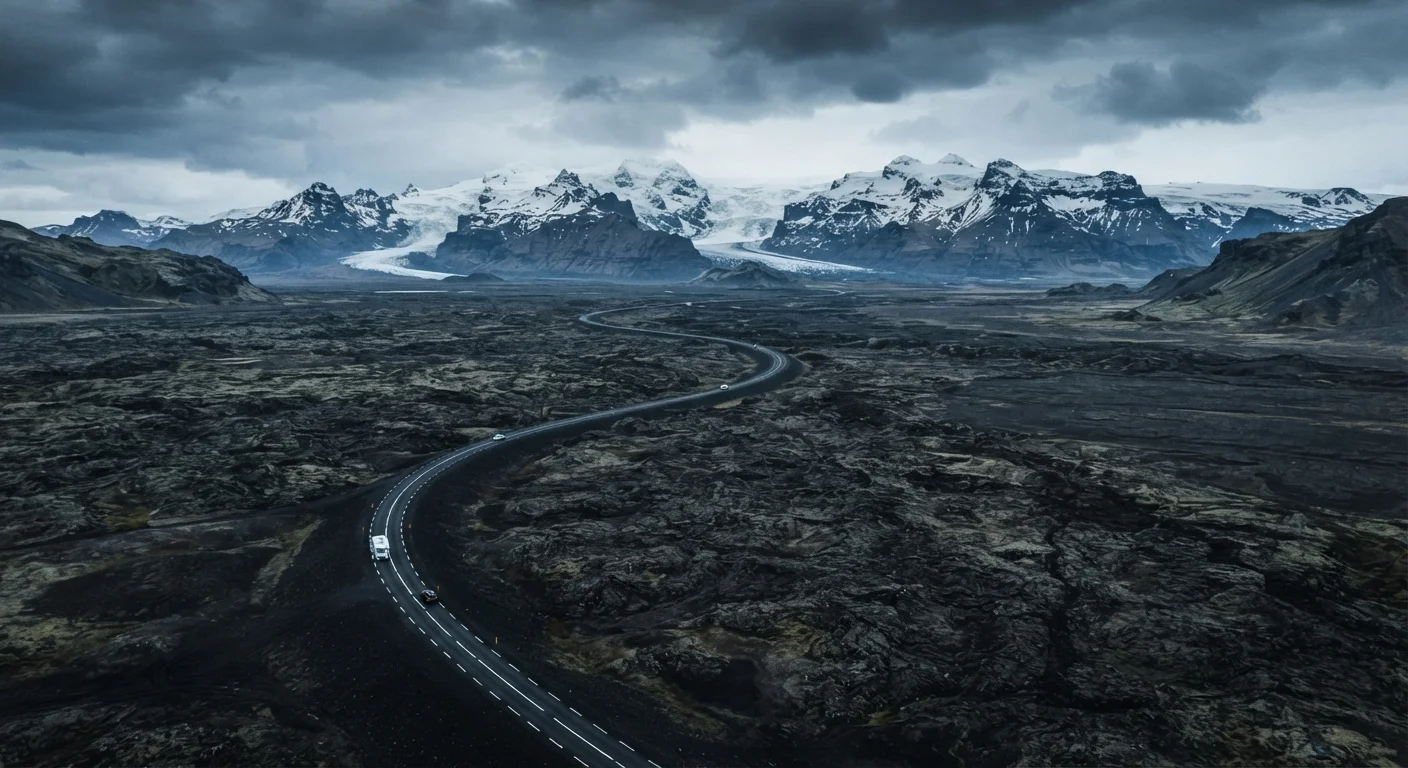
Iceland's Route 1 - universally called the Ring Road - is a paved national highway that loops around the entire country, covering roughly 1,332 kilometers (about 828 miles). It passes through coastal fishing towns, volcanic plateaus, glacier-carved valleys, and wide-open farmland that looks like it belongs in a different century. For independent travelers, it's one of the most logistically manageable self-drive adventures in the world - but only if you go in with accurate expectations.
The route is a single road, so navigation is genuinely simple: you follow Route 1 clockwise or counterclockwise, adding side roads as you go. That simplicity is deceptive, though. The Ring Road is not a motorway. It's a two-lane highway with occasional unpaved stretches, single-lane bridges, and sections that close without much warning in bad weather. Understanding that distinction before you fly in saves a lot of frustration. For practical travel orientation tips, it helps to treat Route 1 more like a rural scenic byway than an interstate.
Distances, Driving Times, and the Pace Problem
The most common mistake first-time Ring Road travelers make is underestimating how long each driving segment actually takes. Iceland's speed limit on most open rural roads is 90 km/h (about 56 mph), and that's the ceiling - not the realistic average. Wildlife crossings, single-lane bridges, photo stops, and unpredictable weather routinely drop effective driving speeds well below that.
A rough planning framework: most travelers who feel satisfied with their experience take between 7 and 10 days for the full loop. Seven days is possible but leaves little margin for detours, weather delays, or spontaneous exploration. Ten to fourteen days is more comfortable for people who want to spend meaningful time at sites rather than driving past them.
1,332 km
Total Ring Road circuit length
Route 1 circles Iceland's entire perimeter, making it one of the most complete national loop drives in the world.
7-10 days
Recommended minimum driving time
Most experienced Ring Road travelers advise against trying to complete the circuit in fewer than 7 full days.
90 km/h
Maximum rural road speed limit
Iceland's national speed limit on paved rural roads; lower limits apply in towns and on gravel surfaces.
When mapping daily segments, aim for no more than 200-250 km of driving per day. This gives you buffer time for stops and unexpected road conditions without arriving at accommodation after dark - which in winter means arriving in pitch black, and in summer can mean arriving well past a reasonable dinner hour despite the sun still being up.
If you're planning to add the Snæfellsnes Peninsula, the Westfjords, or highland roads like F35 (Kjölur), build those in as dedicated extra days - they are not Ring Road shortcuts.
Road Conditions and Seasonal Realities
Iceland's weather is legitimately unpredictable, and road conditions reflect that. The Icelandic Road and Coastal Administration maintains a real-time road status website at road.is - checking it every single morning before you drive is not optional, it's essential. Roads can be rated open, passable with caution, or closed, and those ratings change quickly.
Never Drive Off-Road in Iceland
Driving any vehicle off designated roads and tracks is illegal in Iceland and causes serious, long-lasting damage to fragile moss and lava field ecosystems that can take decades to recover. This applies even in remote areas where no one is watching. Fines are substantial, and rental agreements universally prohibit off-road use - meaning any damage incurred off-road is entirely uninsured.
In summer (roughly June through August), the Ring Road itself is fully paved and generally accessible to standard passenger vehicles. Daylight is extremely long, temperatures are mild, and most tourist infrastructure is open. This is when the road is busiest and accommodation books up well in advance.
In winter (November through March), conditions are a different category of challenge. Ice, snow, high winds, and reduced visibility are common. Some sections of Route 1 close temporarily during severe storms. Rental car agreements in Iceland typically restrict where and when you can drive certain vehicle classes - read yours carefully before you go.
Spring and autumn offer a middle ground: fewer crowds than summer, more dramatic light, but higher uncertainty around road access. The highland F-roads, which require 4WD vehicles and are never part of the Ring Road itself, typically close by early October and don't reopen until late May or June. Verify current status directly with road.is before assuming any F-road is accessible. Driving in adverse conditions requires a different mindset than fair-weather road trips - Iceland demands that mindset year-round.
Vehicle Choice and Fuel Planning
For the Ring Road in summer, a standard 2WD rental car is sufficient. Outside of summer - or if you're planning any side roads that transition to gravel - a 4WD (also labeled AWD in rental catalogs) is the practical choice. Some highland side roads legally require 4WD vehicles; driving a 2WD on them can void your insurance and leave you stranded.
Always opt for gravel protection insurance on your rental, even if you plan to stick to the Ring Road - unexpected detours onto unpaved surfaces are common, and standard policies often exclude stone chip damage.
Gravel roads kick up debris at highway speeds, and windshield replacements in Iceland are costly; the add-on coverage is typically far less expensive than the repair bill.
Fill up your tank every time you pass through a town with a petrol station, regardless of how full the tank already is - don't wait until you 'need' fuel in a remote region.
In the eastern and northern segments of the Ring Road, fuel stations can be separated by 50 km or more, and some smaller stations keep limited hours or may be temporarily closed.
Fuel is expensive in Iceland and, in the less populated eastern and interior regions, stations can be 50 km or more apart. Before leaving any town, check your tank level and the distance to the next confirmed open station. Many travelers use the National 112 App (Iceland's official safety app) and fuel station locator features to plan ahead.
Diesel vs. petrol matters too - confirm your vehicle type before pulling up to a pump, as an accidental misfuel in a remote location creates serious logistical problems. Run through the pre-long drive checklist before departing each major segment.
Essential Safety and Preparation Steps
Iceland has an official emergency number (112) and a free app by the same name that allows you to register your travel plan - essentially a voluntary trip log that emergency services can access if you don't check in. Using it is strongly encouraged for any traveler heading into low-population areas.
Mobile coverage is good in populated areas and along much of the Ring Road, but drops in remote stretches. Download offline maps before you go - navigating unfamiliar terrain with a reliable offline map is a basic safety habit that applies equally in Reykjavik and on the empty eastern coast.
Pack layers regardless of season. Conditions can shift from sunny to sleeting within an hour. Wind chill in coastal areas - particularly the Eastfjords and the Reykjanes Peninsula - can make temperatures feel significantly colder than forecasts suggest. Keep emergency supplies in the vehicle: water, food, a blanket, a charged power bank, and basic first aid kit.
Verify entry requirements, travel insurance terms, and any current travel advisories through official government and embassy channels before booking - these can change and no travel article can substitute for real-time official guidance.
Budgeting Realistically for the Drive
Iceland consistently ranks among the more expensive destinations for independent travelers, and the Ring Road trip amplifies that because of the distances involved. Fuel, car rental (including insurance upgrades for gravel coverage), and accommodation are the three largest cost centers.
Accommodation along the Ring Road ranges from guesthouses and farmstays to hostels and remote cabins. Popular stops like Vík, Jökulsárlón, and Akureyri book out months in advance in summer - planning late means either paying premium rates for last-minute availability or accepting significant detours. Building a realistic travel budget before you commit to dates is particularly important here because costs compound quickly over a 10-day circuit.
Camping is an option that significantly reduces accommodation costs. Iceland has an extensive network of designated campgrounds along the Ring Road, and wild camping outside designated areas is subject to restrictions - check the Environment Agency of Iceland's current guidelines before assuming any land is fair game for pitching a tent.
Food costs are high by North American standards. Self-catering using grocery stores in larger towns (Akureyri, Egilsstaðir, Selfoss) helps considerably versus eating every meal at restaurants or petrol station cafés.