

Key Takeaways
Summary
22 items · 20-45 minutes
Why Long Drives Demand a Dedicated Check
A short trip to the grocery store and a five-hour highway run place very different demands on your vehicle. Higher sustained speeds generate more tyre heat, the engine works harder for longer, and any minor issue that might have gone unnoticed around town can escalate quickly on the motorway. A tyre that's marginally underinflated, for instance, becomes a blowout risk after an hour at freeway speeds.
This checklist is designed specifically for pre-long-drive preparation - it goes deeper than the quick walk-around you might do before a daily commute. For a faster everyday version, see our pre-trip safety walkthrough covering the basics before every journey. If you want to understand seasonal factors that affect these checks, our guide on preparing your vehicle for every season adds valuable context.
Work through each group below methodically. Most items take seconds to verify; a few may take minutes. The entire checklist should require no more than 45 minutes, and running it the evening before you leave gives you time to address anything that needs attention.
What to Check and How to Do It
The groups below cover every major system that long-distance driving stresses. Use the tool cards to make sure you have the right equipment on hand before you start.
Tyre pressure gauge
Accurately measure tyre inflation against the manufacturer's recommended PSI.
Tread depth gauge
Measure remaining tyre tread to determine whether tyres are safe for highway driving.
Torch (flashlight)
Inspect dark areas under the hood and beneath the vehicle for leaks or wear.
Owner's manual
Reference correct fluid specifications, tyre pressures, and dashboard warning light meanings.
Jump starter or jumper cables
Provide a backup power source if the battery fails during or before the trip.
Reflective triangles or road flares
Alert other drivers if you need to stop on the roadside during the journey.
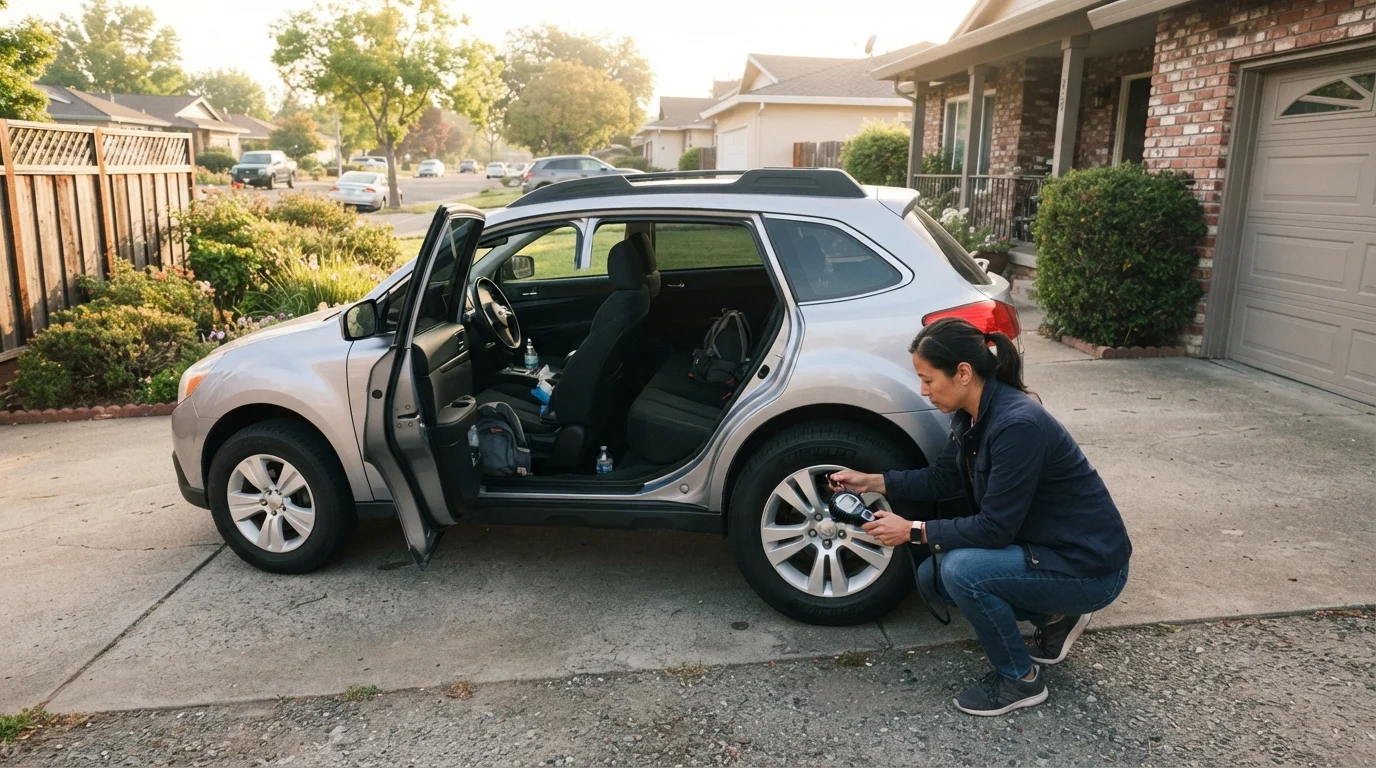
Tyres first, always. Tyre condition is the single most consequential factor in highway safety, and it's the area most drivers undercheck. Pressure should be measured cold - before the car has been driven - because driving even a few miles heats the air inside and gives a false high reading. Your target PSI is printed on a sticker inside the driver's door jamb or in the owner's manual; ignore the number moulded into the tyre sidewall, which is the maximum allowable pressure, not the recommended operating pressure.
Fluid checks are quick and genuinely useful. Many drivers assume fluids are fine if no warning light has appeared, but warning lights typically activate only after a significant drop. For a practical walkthrough of each fluid check, our fluid checks you can do at home explains exactly what to look for. Pay particular attention to brake fluid - a low or discoloured reservoir deserves professional attention before you load up the car.
Tyres
Fluids
Lights & Visibility
Under the Hood & Brakes
Emergency Preparedness
For drivers new to highway travel, reviewing the rules of the road before a long motorway run is worthwhile. Our guide to motorway driving for new licence holders covers merging, lane discipline, and managing heavy traffic - essential reading if you're less experienced on high-speed roads.
Never Check Coolant on a Hot Engine
Opening the coolant reservoir or radiator cap while the engine is warm can cause scalding fluid to spray under pressure. Always allow the engine to cool completely - at least 30 minutes after driving - before removing any cooling system caps or checking levels. If your temperature gauge is reading high, pull over safely and call for roadside assistance rather than investigating the cooling system yourself.
Low Brake Fluid May Signal a Serious Problem
Brake fluid level drops gradually as brake pads wear, but a sudden or significant drop can indicate a leak in the braking system. Do not top up and drive on - have the system inspected by a qualified mechanic before any long trip. Brake failure at highway speeds is extremely dangerous.
After the Checklist: Setting Yourself Up for the Drive
Once the mechanical checks are done, a few minutes of planning make the journey itself safer and less stressful. Programme your route before you leave rather than fiddling with navigation while moving. Identify rest stops at roughly two-hour intervals - fatigue is a genuine hazard on long drives and is best managed proactively rather than pushed through.
Run This Checklist the Day Before You Leave
Completing these checks the evening before your departure - rather than the morning you leave - gives you time to address any problems without stress or delay. Tyre shops, auto parts stores, and mechanics are far easier to reach on a weekday afternoon than at 6 a.m. on a Saturday. Build the buffer in; your future self will thank you.
Keep emergency documentation within easy reach. Your insurance card, vehicle registration, and the number for your roadside assistance provider should be in the glovebox, not buried in a bag in the back seat. If you're buying a vehicle specifically for road trips and haven't verified its condition yet, our used car inspection checklist is a useful starting point for understanding what a sound vehicle looks like before you own it.
Safe, uneventful driving is rarely accidental - it's the result of preparation that happens before you turn the key. Running through this checklist consistently means fewer surprises on the road and more confidence once you're on it.