

Key Takeaways
Start here
Getting Your Bearings: Airports and Arrival
Next
Navigating the City: Transit Made Simple
Then
Money, Language, and Daily Practicalities
When you're ready
Etiquette and Cultural Expectations
Plan your stay
Neighborhoods to Know Before You Go
Getting Your Bearings: Airports and Arrival
Tokyo is served by two major international airports: Narita International Airport (NRT), located about 60 kilometers east of the city, and Haneda Airport (HND), which sits much closer to central Tokyo. Which one you land at shapes your arrival experience considerably.
From Narita, the Narita Express (N'EX) train drops you at major city hubs in roughly 60-90 minutes. Limousine buses run to hotels in multiple districts and are a solid option if you have heavy luggage. From Haneda, the Tokyo Monorail and Keikyu Line make the city feel almost instantly accessible - you can reach central areas in under 30 minutes.
If this is your first international trip, our first-time international travel guide covers customs declarations, baggage claims, and arrival hall basics that apply here too.
Verify Entry Requirements Before You Travel
Japan's entry requirements - including visa policies, health documentation, and registration systems - can change. Always check the most current information through the official Japan Tourism Agency, your country's embassy, and your airline before you travel. Do not rely solely on third-party travel articles, including this one, for entry requirements.
Navigating the City: Transit Made Simple
Tokyo's train and subway network is famously extensive - and once you understand its logic, it's remarkably easy to use. The key tool every visitor needs is an IC card, a rechargeable transit card (Suica and Pasmo are the most common) that works across nearly all rail and subway lines, and even at many convenience stores and vending machines.
You can load an IC card at airport vending machines immediately upon arrival. Most machines offer an English interface. Tap in, tap out - that's genuinely all the daily navigation requires.
Load Your IC Card at the Airport
The moment you clear customs at Narita or Haneda, head to a train ticket machine and pick up a Suica or Pasmo card. Load it with enough yen for your first day of transit and a few small purchases. This one step eliminates the most common source of stress for first-time Tokyo arrivals - fumbling with cash or tickets at a busy station.
Google Maps and the Hyperdia app both offer reliable English-language transit directions in Tokyo. Simply enter your destination and they'll calculate which train to take, where to transfer, and how long it takes.
Money, Language, and Daily Practicalities
Japan remains a cash-forward society in many everyday contexts. While major hotels and department stores accept credit cards, plenty of local ramen shops, temples, and neighborhood markets are cash only. ATMs inside 7-Eleven stores and Japan Post locations are the most reliable options for withdrawing yen using a foreign card - they accept most international debit and credit cards and offer English-language menus.
On language: English signage is consistent throughout Tokyo's transit system and in tourist-heavy areas. Menus in popular tourist neighborhoods often include photos or English descriptions. Deeper into residential or working-class districts, you'll encounter less English - a translation app that can read text through your phone's camera is one of the most practical things you can have loaded before you arrive.
IC Card
A rechargeable contactless smart card used to pay for train, subway, and bus fares across Tokyo - and often at convenience stores. Suica and Pasmo are the two most common types.
Izakaya
A Japanese-style casual pub that serves food alongside drinks - a common and welcoming setting for relaxed evening meals.
Yen (JPY)
Japan's official currency. Bills and coins are widely used for everyday transactions, and having cash on hand is important even in a modern city like Tokyo.
Narita Express (N'EX)
A direct express train service connecting Narita International Airport to major central Tokyo stations, operated by JR East.
Konbini
The Japanese term for convenience store (like 7-Eleven, FamilyMart, or Lawson). Tokyo's konbini are genuinely useful - they offer ATMs, hot meals, transit card top-ups, and more.
Etiquette and Cultural Expectations
Tokyo has a clear, unwritten social contract - and visitors who follow it find the city extraordinarily pleasant. A few things that matter most:
- Quiet on transit: Trains are hushed spaces. Phone calls, loud conversations, and speaker audio are considered disruptive. Keep headphones in and voices low.
- No eating while walking: Eating and drinking in transit or while strolling through streets (outside festivals or designated areas) is generally frowned upon. Convenience store purchases are meant to be consumed near the store.
- Queuing matters: Lines form with precision - at train doors, escalators, and counters. Follow the marked queues and let people off trains before boarding.
- No tipping: Exceptional service is expected and delivered as standard practice. Leaving a tip can feel confusing or uncomfortable to staff; verbal appreciation is the appropriate response.
These aren't rigid rules enforced by anyone, but following them signals respect and tends to make interactions with locals noticeably warmer.
Neighborhoods to Know Before You Go
Tokyo isn't one city - it's closer to dozens of distinct towns layered together. Choosing where to stay and explore based on what you actually want from the trip matters more here than in most destinations.
- Shinjuku: The city's busiest rail hub, packed with neon, nightlife, and a remarkable mix of department stores and back-alley izakayas. Excellent for first-timers who want to feel the scale of Tokyo immediately.
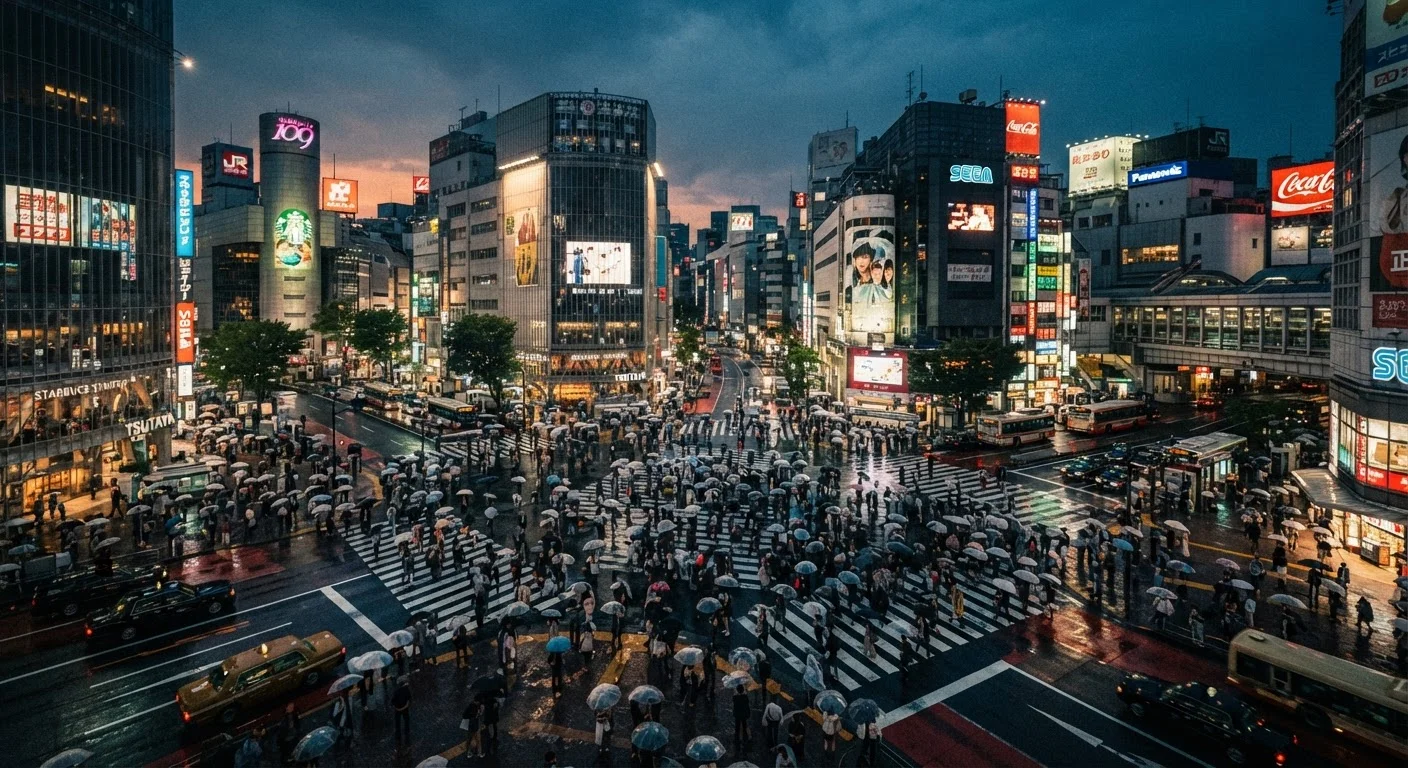
- Shibuya: Home to one of the world's most photographed intersections. Younger energy, fashion-forward, and densely packed with things to do within walking distance.
- Asakusa: Tokyo's most historically textured neighborhood. Senso-ji temple, traditional craft shops, and a slower pace make it a strong choice for travelers who want contrast alongside the modern city.
- Yanaka: A quiet, largely unchanged old Tokyo neighborhood that gives a sense of what pre-modern urban life felt like - a welcome exhale from the city's intensity.
If you're curious how Tokyo compares to other iconic destinations in terms of planning style, it's worth reading about who Kyoto suits best - many visitors do both cities on a single trip, and understanding the difference helps you pace your itinerary well.