

Key Takeaways
Why Long-Haul Flights Are Hard on Your Body
Sitting in a pressurized metal tube for 10, 14, or even 18 hours puts genuine physiological stress on the body - and most of it is invisible. Cabin pressure is typically equivalent to an altitude of 6,000-8,000 feet, which means lower oxygen levels and significantly drier air than you'd experience on the ground. Humidity in the cabin can drop below 20%, compared to a typical indoor environment of 30-50%. The result: dehydration sets in faster than you'd expect, even without physical exertion.
Add to that prolonged immobility, disrupted circadian rhythms, and irregular eating schedules, and it's easy to understand why many travelers arrive feeling foggy, stiff, or just plain off. Understanding what's actually happening to your body is the first step toward doing something useful about it. For a deeper look at the physiological and logistical effects of long-distance air travel, see how time zones and long-haul travel affect your body.
Core Practices That Actually Make a Difference
Not every wellness tip you'll read about long-haul flights is equally supported by evidence. The following practices are grounded in widely accepted general health principles - though individual results vary, and anyone with a medical condition should speak with their doctor before a lengthy flight.
Drink water consistently throughout the flight - don't wait until you feel thirsty.
Thirst is a lagging indicator of dehydration, not an early warning. Low cabin humidity accelerates fluid loss even when you're sedentary. Staying ahead of this is one of the most straightforward ways to reduce fatigue and headache on arrival.
Get up and move at least once every two hours.
Prolonged sitting slows circulation in the legs and, for some individuals - particularly those with elevated risk factors - can contribute to deep vein thrombosis (DVT). Even short walks to the galley or restroom help. General movement guidance consistently supports circulation as a core principle of active health.
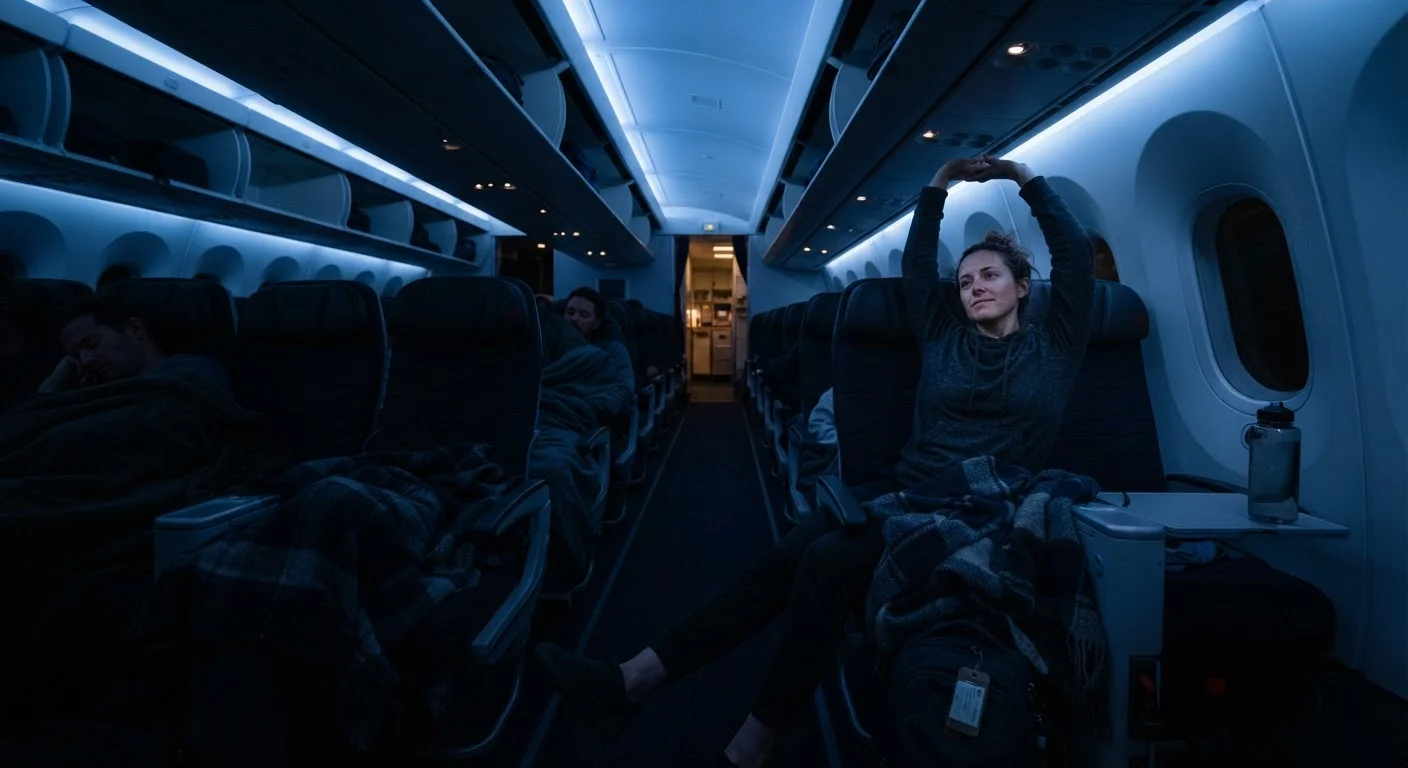
Do seated stretches targeting your calves, ankles, and lower back.
Leg muscles rarely engage meaningfully during flight, and lower back stiffness is nearly universal on long hauls. Simple ankle circles, calf raises, and seated spinal twists can be done without leaving your seat and take under two minutes.
Limit or avoid alcohol during the flight.
Alcohol has a more pronounced dehydrating effect at altitude and can disrupt sleep quality even when it initially induces drowsiness. It also interacts poorly with the general fatigue most long-haul travelers experience, often leaving passengers feeling worse on arrival than if they'd skipped it.
Align your sleep schedule on the plane with your destination's night hours.
Actively managing when you sleep on the flight - rather than just sleeping whenever you feel tired - helps your body begin adjusting to the new time zone before you land. This is especially valuable on eastbound routes, where jet lag tends to be more disruptive.
Eat lightly and avoid heavy, salty, or processed in-flight meals when possible.
High-sodium foods accelerate water retention and bloating, both already more likely in a pressurized cabin. Heavy meals can also disrupt sleep and make the overall flight experience more uncomfortable.
Quick Actions You Can Take Right Now
Before your next long flight, a handful of simple, zero-cost moves can pay dividends in how you land. Most require nothing more than a bit of planning and awareness.
For a broader pre-departure checklist that covers health prep alongside documents and logistics, run through this pre-trip checklist before you leave home.
Sleep, Light, and Managing the Time Shift
One of the biggest challenges on a long-haul flight is managing sleep - getting enough of it when your destination time zone calls for it, and staying awake when it doesn't. Light is your most powerful tool here. Exposure to bright light signals wakefulness; darkness signals sleep. Bringing a quality eye mask and limiting screen brightness during the hours you want to sleep can make a genuine difference.
Seat selection also matters more than people realize. Window seats give you control over the shade and a surface to lean against, while aisle seats make it easier to get up and move without disturbing others. Neither is universally better - it depends on your priorities. Neck pillows vary widely in design and support; try a few styles before committing to one for a 15-hour flight.
A Note on DVT Risk and Long-Haul Flying
Deep vein thrombosis (DVT) - blood clots that form in the deep veins of the legs - is a real, if relatively uncommon, concern on very long flights, particularly for individuals with elevated risk factors such as recent surgery, pregnancy, or a history of clotting disorders. General movement habits (walking, calf exercises) are broadly recommended for all travelers. However, if you have known risk factors, speak with your doctor before a long-haul flight; they may recommend specific precautions. This article does not constitute medical advice, and no general guidance replaces an individual clinical assessment.
If you're managing jet lag before you even board, this explainer on jet lag and layovers walks through what to expect and why it happens. And if you want to arrive already ahead of the game, our pre-board safety checklist covers everything worth confirming before you step onto the plane.
This article provides general travel wellness information for educational purposes only and is not a substitute for personalized medical advice. Travelers with cardiovascular conditions, blood clotting disorders, respiratory issues, or other health concerns should consult a qualified healthcare professional before undertaking long-haul flights.