

Key Takeaways
Understanding What's Happening to Your Vehicle
Traction loss happens when the friction between your tyres and the road surface drops below what's needed to maintain control. It can occur in a split second - through a patch of standing water, a frost pocket, loose gravel, or even a sudden evasive manoeuvre. Understanding the three main scenarios helps you respond correctly rather than instinctively (and often incorrectly).
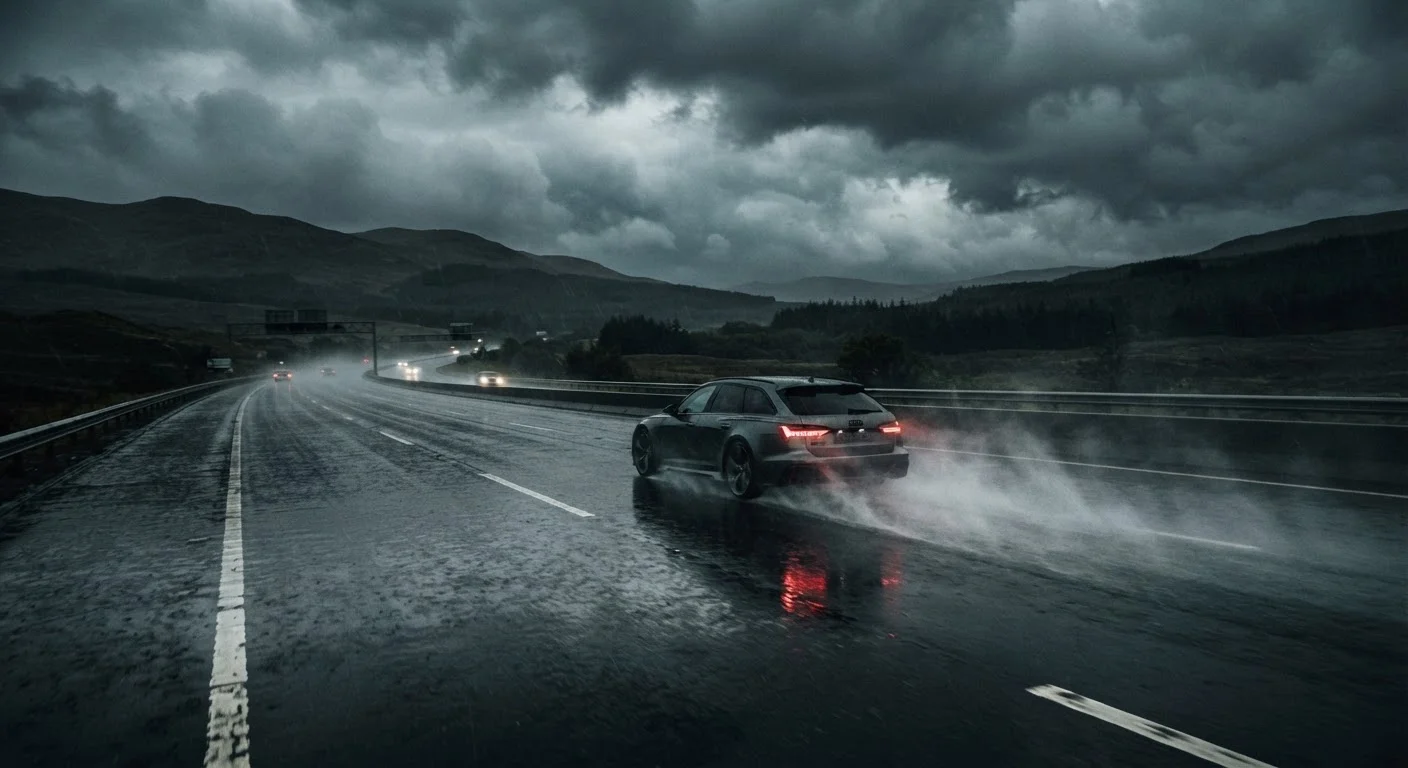
Oversteer occurs when the rear of the vehicle slides outward, causing the car to rotate more than intended. It's common in rear-wheel-drive vehicles and during heavy acceleration on slippery roads. Understeer - more typical in front-wheel-drive cars - is when the front tyres lose grip and the car ploughs straight ahead despite steering input. Aquaplaning (also called hydroplaning) happens when a film of water builds up between the tyre and the road faster than the tyre tread can disperse it, effectively lifting the tyre off the surface entirely.
In all three cases, your car's safety systems - Electronic Stability Control (ESC), traction control, and ABS - may intervene automatically. But knowing how to respond yourself remains critical, especially in the fraction of a second before those systems fully engage. See our guide to how ABS, ESC, and traction control work for a deeper explanation of when each activates.
Panic Is the Biggest Risk Factor
The most dangerous response to traction loss is a sharp, panicked input - wrenching the steering wheel, stamping the brake, or overcorrecting. These reactions amplify instability rather than reducing it. Mental preparation and understanding what to do before an event occurs is the single most effective way to override panic reflex.
Before You're in the Situation: Prevention Matters
The most effective traction loss response is reducing the likelihood of it happening. Speed is the dominant factor - the faster you travel on a compromised surface, the narrower your margin for error. Adjust your speed well before entering bends, wet stretches, or known problem areas rather than reacting to them mid-corner.
Tyre condition is equally critical. Tread depth directly affects a tyre's ability to channel water away from the contact patch - the small area of rubber actually touching the road. The legal minimum tread depth in the US varies by state, but many safety experts recommend replacing tyres well before they reach the legal limit. Our tyre care guide covers what to check and when to act. Tyre pressure also matters: under-inflated tyres flex excessively and overheat, reducing grip; over-inflated tyres shrink the contact patch.
Smooth, deliberate inputs - gradual acceleration, progressive braking, gentle steering - keep weight transfer predictable and tyres working within their grip limits. Abrupt changes destabilise the vehicle before any safety system can compensate.
Increase Following Distance in Wet Conditions
The standard two-second following distance recommended for dry roads is generally considered insufficient in rain, ice, or snow. Many driving safety organisations suggest at least four seconds of following distance on wet roads - and significantly more on ice or packed snow. Greater distance gives you more time to respond and reduces the likelihood of needing an emergency manoeuvre in the first place.
Step-by-Step: How to Respond When Traction Slips
The steps below cover the three most common traction loss events. Practising these responses mentally - so they feel familiar before an emergency - is one of the most effective things a driver can do. A broader foundation in safe driving technique supports all of the guidance here.
Recognize the loss of control early
The earliest sign of traction loss is a change in how the steering feels - a sudden lightness, an unexpected pull, or the sensation that the car is moving in a direction you didn't choose. Trust these signals immediately. Delayed recognition leads to delayed response, and those fractions of a second matter.
Release the accelerator smoothly
In virtually every traction loss scenario, your first action should be to ease off the accelerator - not stamp on the brake. Sudden braking shifts weight violently to the front axle and can lock wheels or trigger further instability. A smooth, controlled lift transfers weight progressively and helps restore tyre contact with the road.
Steer in the direction of the skid (oversteer)
If the rear of your car is sliding to the right, steer to the right. This counter-intuitive technique - often called 'steering into the skid' - realigns the front wheels with the direction of travel and allows the rear to recover. Apply steering inputs gently and progressively; overcorrection causes the car to snap to the opposite side, which can be harder to catch than the original skid.
Hold your lane and reduce steering input (understeer)
If the front tyres are ploughing straight on despite turning the wheel, do not increase steering angle - the tyres are already beyond their grip limit and more lock will not help. Ease off the accelerator and allow speed to reduce. As the tyres regain grip, gentle steering will begin to work again. On a bend, this may mean accepting a wider line through the corner while the car stabilises.
Respond to aquaplaning without braking
If your steering suddenly feels light and engine revs rise slightly, you may be aquaplaning. Hold the wheel straight, lift off the accelerator gently, and allow the car to slow on its own until you feel the tyres reconnect with the road surface. Avoid any steering corrections until grip returns - small inputs on a floating tyre can send the car sideways when contact is restored.
Regain control and stabilise
Once the vehicle straightens and grip is restored, apply brakes gently and progressively if you need to reduce speed further. Signal and move to a safe position. Keep your speed reduced - if you experienced traction loss once in a given area, conditions that caused it likely persist nearby.
After the Skid: What to Do Next
Once the vehicle is back under control, safely increase the distance between yourself and other traffic and, when safe to do so, pull off the road. Traction loss events - even minor ones - are worth treating seriously. Check that your tyres are undamaged and that the vehicle is handling normally before continuing. If the skid involved contact with a kerb or verge, have the alignment and suspension checked; impacts can shift components even when there's no visible damage.
Consider what conditions or driving behaviours contributed to the event. Wet roads, high speed, overloaded vehicles, and distracted driving all raise risk. A pre-trip check of your tyres and lights takes only minutes and can surface problems before they become emergencies - see our pre-trip safety walkthrough for a practical routine.
This article is for general driver education purposes only. Responses to vehicle traction loss depend on many variables including vehicle type, road conditions, and speed. Always follow applicable traffic laws and consider professional advanced driving training for hands-on practice in a controlled environment.