

Key Takeaways
Rural Road Risk
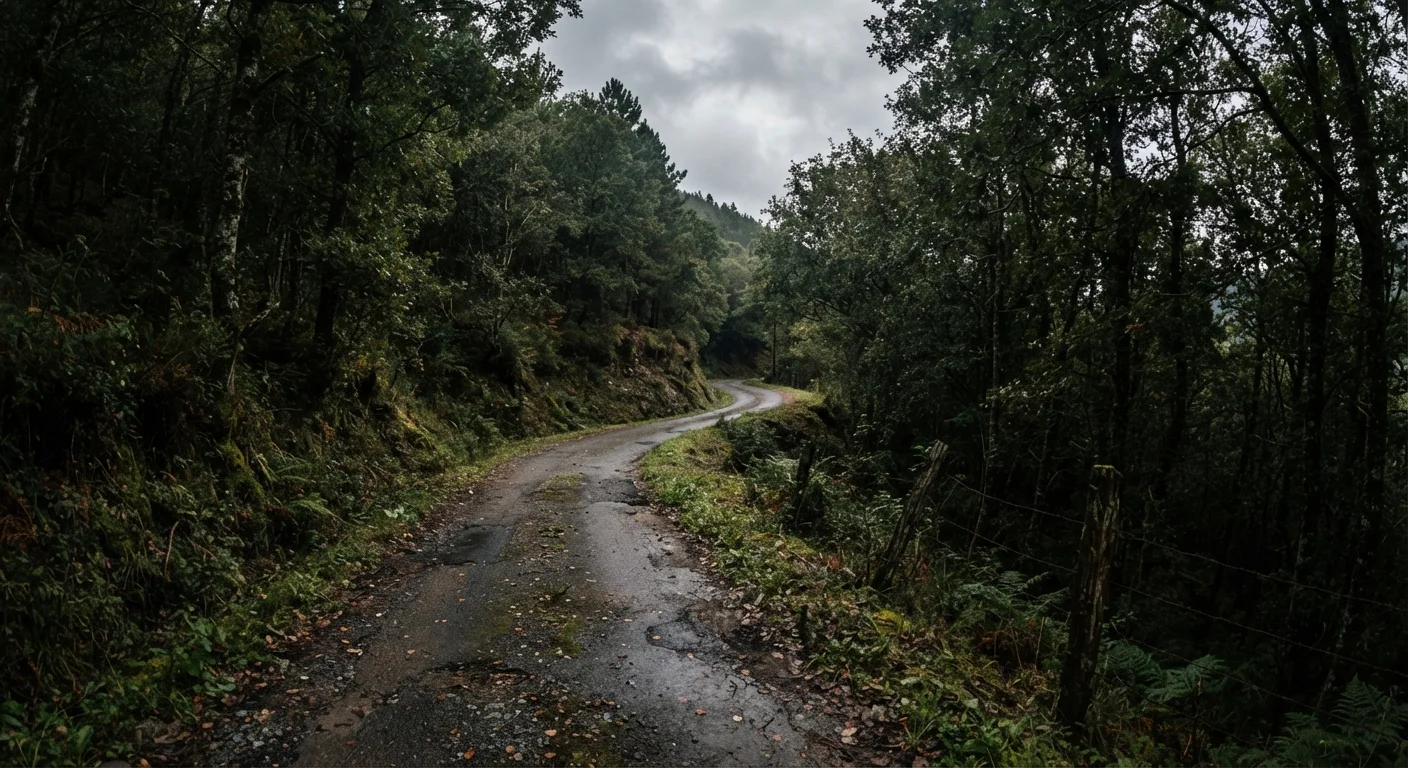
Rural roads are two-lane highways, county routes, and unclassified roads that pass through low-density areas outside towns and cities. Despite typically having lower posted speed limits than motorways (freeways), they account for a significantly higher share of traffic fatalities. This is because the physical design, traffic mix, and emergency response conditions on rural roads create a uniquely dangerous environment.
The Federal Highway Administration classifies rural roads by functional category; fatality rates are typically expressed per 100 million vehicle miles traveled (VMT) to allow fair comparisons between road types.
The Numbers Behind the Danger
Most drivers instinctively associate danger with speed - and assume that means motorways. The data tells a different story. According to the NHTSA, rural roads consistently account for around half of all traffic fatalities in the United States while carrying a much smaller proportion of total vehicle miles traveled. On a per-mile basis, the fatality rate on rural roads is more than twice that of urban roads.
~50%
Share of U.S. traffic fatalities on rural roads
According to NHTSA, rural roads account for approximately half of all traffic deaths despite representing a far smaller share of total vehicle miles traveled.
2×+
Rural vs. urban fatality rate per mile driven
NHTSA data consistently shows the fatality rate per 100 million vehicle miles traveled is more than double on rural roads compared to urban roads.
45%
Rural crash fatalities involving unrestrained occupants
NHTSA reporting has found that unrestrained occupants are involved in a substantially higher proportion of rural fatal crashes than urban ones.
The contrast with freeways and motorways is striking. Interstate highways - designed with controlled access, wide shoulders, median barriers, and gentle curves - have among the lowest fatality rates of any road category. Rural two-lane roads have among the highest. Speed alone doesn't explain it. The gap comes from how those roads are designed, who uses them, and what happens when something goes wrong.
It's also worth reading alongside our piece on motorway driving for new licence holders - understanding why motorways are actually safer is the flip side of understanding why rural roads are not.
What Makes Rural Roads Structurally Hazardous
Rural roads were often built incrementally over decades - sometimes following old agricultural tracks - rather than engineered from scratch for modern vehicle speeds. The result is a catalogue of physical hazards that are largely absent on purpose-built highways.
- Narrow lanes and minimal shoulders: Many rural roads have lane widths of 10-11 feet, compared to the 12-foot standard on interstates. When two vehicles pass at combined speeds of 100 mph or more, the margin for error is measured in inches.
- Blind bends and crests: Elevation changes and tight curves limit sightlines, so a hazard - a slow tractor, a deer, a car stopped mid-lane - may not be visible until it's too late to stop at rural approach speeds.
- Unmarked or poorly marked junctions: Side roads may join without signals, clear sight triangles, or even consistent signage. Farm access points and private tracks can appear with almost no warning.
- Soft or absent shoulders: When a driver needs to make a small correction, the roadside on a rural road may be a gravel verge, a drainage ditch, or a drop-off. Recovery that would be straightforward on a freeway can become a rollover.
Match Speed to What You Can See
A useful rule of thumb: you should always be able to stop within the distance of clear road visible ahead of you. On a rural road with a tight bend 150 feet ahead, that may mean 35 mph is your practical safe maximum - regardless of the posted 55 mph limit. Adjust before the curve, not during it.
Roadside obstacles such as trees, fence posts, and utility poles also sit much closer to the travel lane on rural roads than on engineered highways, dramatically increasing the severity of run-off-road crashes. Understanding advisory speeds and what they mean legally is one practical step toward matching your speed to actual road geometry.
Driver Behavior and Emergency Response
Infrastructure alone doesn't account for the full fatality gap. Driver behavior on rural roads tends to compound the structural hazards in several measurable ways.
Seatbelt use is consistently lower on rural roads than on urban roads or interstates. NHTSA data has shown that rural crash fatalities involve unrestrained occupants at significantly higher rates than urban crashes. Part of this reflects cultural familiarity with roads driven daily - a sense that local knowledge replaces the need for caution - and part reflects less visible enforcement presence.
Speeding relative to conditions is also prevalent. A driver accustomed to a straight, open rural road may carry that speed onto a section with a sharp hidden bend. This differs from freeway speeding in an important way: on a two-lane rural road, excess speed doesn't just risk a single-vehicle incident; it also increases the probability of crossing the centerline into oncoming traffic.
Impaired driving disproportionately affects rural crash statistics. Rural communities may have fewer ride-share options and longer distances between destinations, factors that correlate with higher rates of driving after drinking.
Then there's what happens after a crash. Rural emergency response times - ambulance, fire, and extrication - are often two to three times longer than in urban areas. Injuries that are survivable with rapid trauma care can become fatalities when the nearest Level I trauma center is 45 minutes away. This makes crash prevention on rural roads not merely preferable but critical in a way that urban crashes, for all their frequency, are not.
Overconfidence is another underappreciated factor. Common driving myths - such as the belief that local familiarity equals safety - are especially persistent on roads driven routinely. Familiar routes invite reduced attention, and reduced attention on a road with no margin for error is genuinely dangerous.
Habits That Reduce Rural Road Risk
The good news is that the behaviors most likely to prevent rural road crashes are well understood and consistently effective.
Adjust speed to sightlines, not signs. If you can't see far enough ahead to stop in the available distance, you're traveling too fast regardless of what the posted limit says. Approach bends and crests with this in mind rather than maintaining speed and hoping the road ahead is clear.
Use your headlights during the day. Daytime running lights significantly improve your visibility to oncoming drivers on roads where road geometry may push vehicles toward the centerline. After dark, the risks multiply further - our guide on night driving safety is worth reviewing before any rural nighttime journey.
Anticipate the unexpected. Rural roads host tractors, cyclists, horse riders, pedestrians, and wildlife with little or no warning. Position your vehicle to maximize reaction time - moderate speed, central lane position on bends adjusted for sightlines, and sustained visual scanning ahead.
Always wear your seatbelt. On a road where a run-off-road crash may deposit a vehicle in a ditch with a 45-minute wait for emergency services, restraint is not optional. It is the most important variable you personally control.
This article is for general informational purposes. Always observe posted speed limits, local traffic laws, and exercise your own judgment for the conditions present.