

Key Takeaways
Summary
22 items · 5-15 minutes
Why a Pre-Trip Check Matters Every Time
Most drivers run through some version of a vehicle check before a long road trip - but the same hazards that strand you 200 miles from home can just as easily catch you two miles away. A quick inspection before any journey, whether it's a cross-state drive or a school run, gives you a chance to catch problems on your own terms rather than in traffic.
This checklist is designed to be fast, repeatable, and thorough enough to cover the items most likely to cause a safety issue or a breakdown. For a deeper look at the broader habits that keep you safer at the wheel, see our complete safe driving guide. And if you're heading out on a longer journey, the pre-long drive checklist covers additional checks worth doing before highway miles.
Run through the groups below in order. With practice, the whole process takes under ten minutes.
Tyre pressure gauge
Measures tyre inflation accurately so you can match the manufacturer's recommended PSI.
Tread depth gauge
Gives a precise reading of remaining tread depth across all four tyres.
Windshield washer fluid
Keeps the reservoir topped up so you can clear road grime and maintain forward visibility.
Ice scraper / snow brush
Clears windows, mirrors, and sensors of frost and snow in cold weather before driving.
Flashlight or headlamp
Allows you to inspect under the hood and around the vehicle in low-light conditions.
The Pre-Trip Safety Checklist
Work through each group before pulling out of the driveway. Items marked must are non-negotiable safety checks. Should items are strongly recommended. Nice to have items add an extra layer of readiness.
Tyres
Lights and Visibility
Mirrors and Seating
Under the Hood
Dashboard and Controls
Cargo and the Exterior
Never Drive With an Active Warning Light
Dashboard warning lights - especially those for brakes, oil pressure, engine temperature, or the check-engine system - are not suggestions. Continuing to drive without addressing a warning light can turn a minor fault into a major mechanical failure or a safety emergency. If a new warning light appears before or during your trip, pull over safely, consult your owner's manual, and seek qualified mechanical assistance before continuing.
Building the Habit
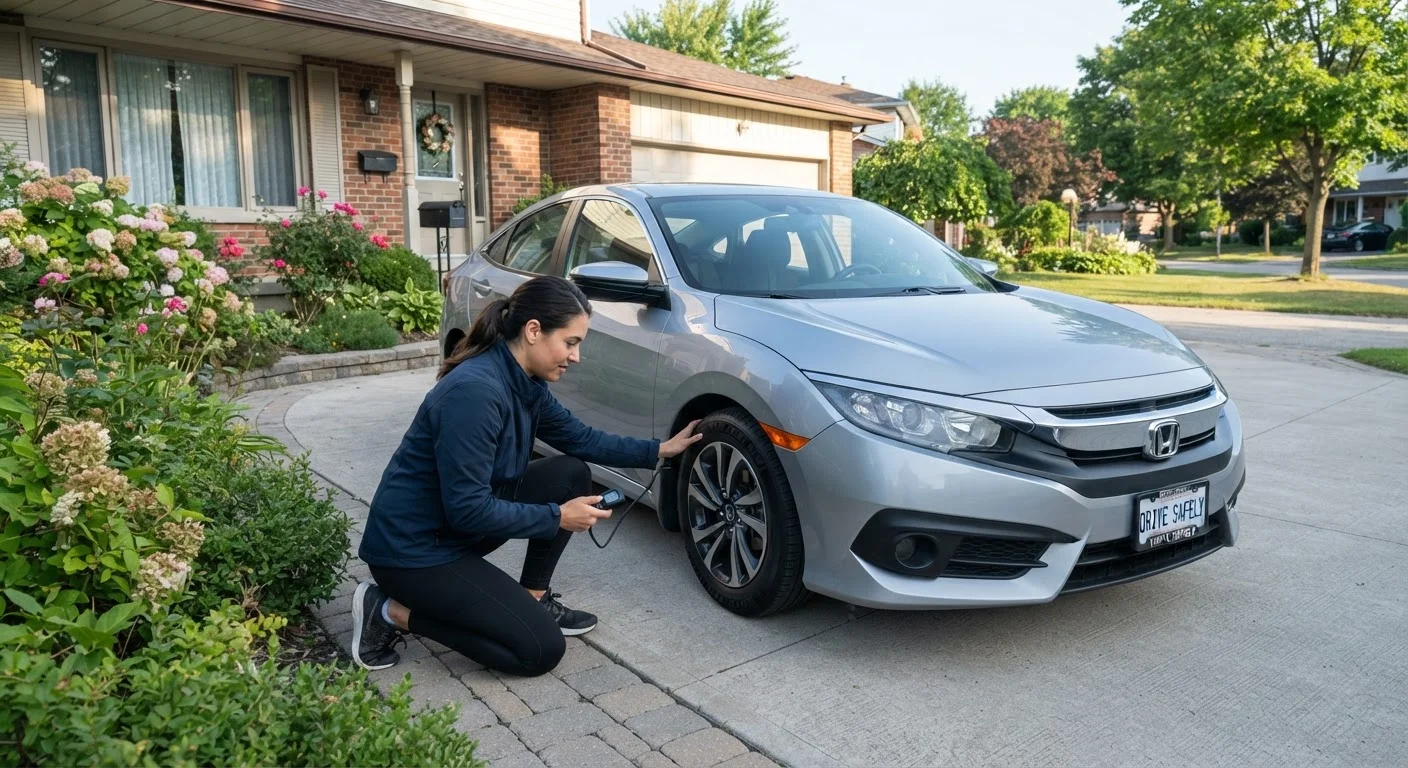
The biggest obstacle to pre-trip checks isn't knowledge - it's consistency. A useful trick is to tie the walkaround to something you already do automatically, such as unlocking the car. Walk around the vehicle once before getting in: glance at each tyre, check the lights are clear of obstructions, and look under the car for any fresh fluid spots on the driveway.
Your car maintenance routine forms the foundation that makes daily checks quicker - when you're on top of fluid levels and tyre pressures week to week, the morning glance is usually a confirmation rather than a discovery. For guidance on keeping fluid levels right at home, the fluid checks you can do without special tools article is a practical starting point.
If you notice a warning light you haven't seen before, or one that was already on when you last parked, don't dismiss it. Battery warning signs in particular are easy to overlook until you're stranded. When in doubt, consult your owner's manual or a qualified mechanic before driving.
This article provides general vehicle safety information for educational purposes. Always follow your vehicle manufacturer's guidance and consult a qualified mechanic for diagnosis or repair of any fault.