

Key Takeaways
Soil pH
Soil pH is a measure of how acidic or alkaline your soil is, expressed on a scale from 0 to 14. A reading of 7.0 is neutral; anything below that is acidic, and anything above is alkaline (also called basic). Most garden plants perform best in slightly acidic to neutral soil, roughly between 6.0 and 7.0.
pH stands for 'potential of hydrogen' and reflects the concentration of hydrogen ions in the soil solution. This chemical balance directly controls whether nutrients dissolved in soil water are in a form plant roots can absorb.
The Scale That Runs Your Garden
The pH scale runs from 0 (highly acidic) to 14 (highly alkaline), with 7.0 as the neutral midpoint. In garden terms, a one-point shift on this scale is not trivial - it represents a tenfold change in hydrogen ion concentration. That means soil at pH 5.0 is ten times more acidic than soil at pH 6.0, and a hundred times more acidic than neutral soil at pH 7.0.
For most homeowners, the relevant window is narrow: roughly pH 5.5 to 7.5 covers the preferences of the vast majority of ornamental plants, vegetables, and lawn grasses grown across the United States. Outside that window, nutrient chemistry breaks down in ways that no amount of watering or fertilizing can fully fix.
6.0-7.0
Optimal pH range for most vegetables
This range is widely cited by US Cooperative Extension programs as the target for productive vegetable garden soil.
4.5-5.5
Preferred pH for blueberries
Blueberries require strongly acidic soil; outside this range, plants typically show iron chlorosis and reduced fruit production.
~6 months
Time for sulfur to fully lower pH
Elemental sulfur requires microbial activity to acidify soil, so effects are gradual and seasonal retest is recommended.
Why pH Controls Nutrient Availability
Nutrients in soil exist as charged particles dissolved in soil water. Whether plant roots can absorb those particles depends almost entirely on pH. At low pH (acidic conditions), minerals like iron, manganese, and aluminum become highly soluble - sometimes to toxic levels - while phosphorus, calcium, and magnesium become chemically locked in forms roots cannot use. At high pH (alkaline conditions), iron, zinc, and boron become nearly unavailable even in nutrient-rich soil.
This explains a frustrating but common garden problem: plants showing deficiency symptoms despite recent fertilization. If pH is wrong, nutrients pass right through the root zone unused. Correcting pH first is almost always more effective than adding more fertilizer.
Test Before You Amend
Never add lime or sulfur based on guesswork. Adding amendments without a baseline test can overshoot your target pH, creating a new problem in the opposite direction. A soil test takes the guesswork out and tells you exactly how much amendment your soil actually needs.
What Different Plants Actually Prefer
Plant pH preferences are real, not arbitrary. Blueberries, azaleas, and rhododendrons have evolved in naturally acidic soils and rely on soil microbes that thrive at low pH to process nutrients. Growing them in neutral or alkaline soil typically causes chlorosis - a yellowing of leaves caused by iron deficiency - even when iron is technically present.
Most vegetables, on the other hand, perform well across a moderate range. Tomatoes, peppers, and squash prefer pH 6.0-6.8. Brassicas like cabbage and broccoli tolerate slightly higher pH up to 7.5, which can actually help suppress clubroot disease. Understanding these differences lets you group plants strategically or manage separate beds at different pH levels.
For gardeners exploring how plant relationships affect soil and growth, see our companion planting guide for combinations that can also influence soil health over time.
Testing Your Soil and Making Adjustments
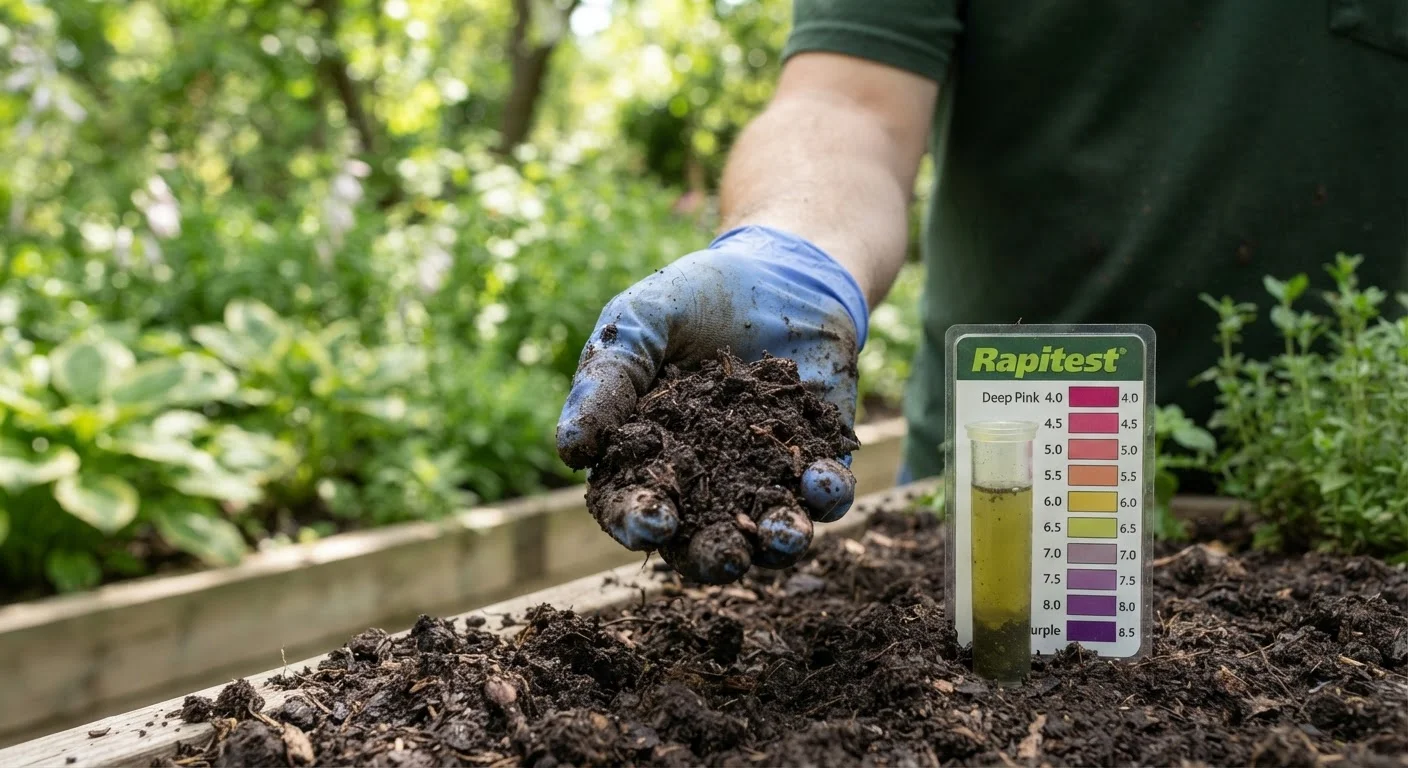
The only way to know your soil's pH is to test it. Home test kits and digital meters provide a useful starting point, but laboratory tests through your local Cooperative Extension Service give more precise readings alongside nutrient data - often for a modest fee. Collect samples from multiple spots at root depth (roughly 4-6 inches) and blend them before testing for an accurate picture.
To raise pH, ground agricultural limestone is the standard choice. To lower pH, elemental sulfur is most commonly recommended, though it acts slowly as soil bacteria convert it over weeks or months. Organic matter like compost has a modest buffering effect that gradually nudges pH toward a neutral range and improves overall soil structure - a benefit discussed in our organic gardening overview.
Gardeners who want greater control over starting pH from day one may find raised beds particularly useful. Our article on raised beds vs. in-ground planting covers how each setup handles soil management differently.