

Key Takeaways
Builds soil biology and structure over time
Organic matter and compost feed beneficial microorganisms that improve nutrient cycling, water retention, and soil aggregation - benefits that compound across growing seasons.
Supports pollinators and beneficial insects
Eliminating broad-spectrum insecticides allows predatory insects, ground beetles, and pollinators to thrive, creating a garden ecosystem that manages some pest pressure naturally.
Reduces synthetic chemical inputs in your yard
Keeping synthetic pesticides and fertilizers out of your garden reduces runoff risk into local waterways and limits exposure for children, pets, and wildlife who use the space.
Lower ongoing input costs once soil is established
A mature compost system and healthy soil can significantly reduce spending on purchased amendments over time, though the initial investment in organic matter can be substantial.
Encourages closer plant observation and garden knowledge
Organic gardening requires monitoring plants regularly for early pest and disease signs, which builds practical horticultural knowledge and deeper familiarity with your garden's rhythms.
Slower nutrient release can limit early growth
Organic nitrogen sources like compost and feather meal release nutrients gradually, which may result in slower establishment and less vigorous growth during cool spring conditions compared to synthetic fertilizers.
Pest and disease control is more labor-intensive
Organic-approved treatments typically require earlier intervention, more frequent application, and closer monitoring than conventional products - missing a window can mean losing a crop entirely.
Higher upfront time and learning investment
Building compost, amending soil organically, understanding beneficial insects, and diagnosing problems without synthetic shortcuts all demand consistent attention and a willingness to learn from failures.
Yield consistency can be less predictable
Organic gardens, especially in early years before soil health is established, may produce lower or more variable yields than conventionally managed plots with equivalent plant varieties.
Some organic inputs can be costly or hard to source
Certified organic amendments, beneficial nematodes, and organic-approved sprays can cost more than synthetic equivalents and may require sourcing from specialist suppliers rather than general hardware stores.
Our Verdict
Organic gardening offers genuine environmental and soil-health benefits that compound over time, making it a worthwhile long-term investment for committed gardeners. However, the trade-offs in yield consistency, pest management effort, and upfront learning are real and should not be underestimated. It is not a one-size-fits-all approach, and honest expectations matter more than ideology.
Best suited to gardeners who prioritize ecological impact and soil stewardship over maximum yield, and who can invest consistent time in learning and observation.
What Organic Gardening Actually Means
Organic gardening refers to growing plants without synthetic fertilizers, pesticides, or herbicides, relying instead on natural inputs - compost, cover crops, biological pest controls, and soil-building practices. It is less a rigid rulebook and more a philosophy centered on working with natural systems rather than overriding them.
For home gardeners, this usually means making compost, choosing organic-approved soil amendments, practicing crop rotation, and tolerating a degree of pest damage that conventional gardeners might address immediately with a spray. Understanding how soil chemistry works is foundational, since organic methods depend heavily on a biologically active, well-balanced growing medium.
The label "organic" is formally regulated for commercial food production, but in a home garden it simply reflects your chosen inputs and practices.
The Genuine Advantages
The strongest case for organic gardening is its long-term effect on soil health. Regular additions of compost and organic matter feed the microbial communities that make nutrients accessible to plants, improve water retention, and reduce compaction. These benefits accumulate year after year in ways that synthetic fertilizers do not replicate.
Builds soil biology and structure over time
Organic matter and compost feed beneficial microorganisms that improve nutrient cycling, water retention, and soil aggregation - benefits that compound across growing seasons.
Supports pollinators and beneficial insects
Eliminating broad-spectrum insecticides allows predatory insects, ground beetles, and pollinators to thrive, creating a garden ecosystem that manages some pest pressure naturally.
Reduces synthetic chemical inputs in your yard
Keeping synthetic pesticides and fertilizers out of your garden reduces runoff risk into local waterways and limits exposure for children, pets, and wildlife who use the space.
Lower ongoing input costs once soil is established
A mature compost system and healthy soil can significantly reduce spending on purchased amendments over time, though the initial investment in organic matter can be substantial.
Encourages closer plant observation and garden knowledge
Organic gardening requires monitoring plants regularly for early pest and disease signs, which builds practical horticultural knowledge and deeper familiarity with your garden's rhythms.
Ecological impact is another concrete advantage. Avoiding broad-spectrum insecticides protects pollinators and beneficial predatory insects - a garden that supports ground beetles, parasitic wasps, and lacewings is genuinely more resilient over time. Pairing this approach with companion planting strategies can further reduce pest pressure without chemical intervention.
For food gardeners, the appeal of harvesting vegetables grown without synthetic residues is understandable, though the health implications of trace residues from conventional home gardening are not as clear-cut as marketing sometimes implies.
The Real Trade-Offs
Honest assessment requires acknowledging where organic methods fall short. Yield is often the first friction point: organic nitrogen sources release more slowly than synthetic fertilizers, which can mean less vigorous early growth, particularly in cool soils. In a short growing season, this timing gap matters.
Slower nutrient release can limit early growth
Organic nitrogen sources like compost and feather meal release nutrients gradually, which may result in slower establishment and less vigorous growth during cool spring conditions compared to synthetic fertilizers.
Pest and disease control is more labor-intensive
Organic-approved treatments typically require earlier intervention, more frequent application, and closer monitoring than conventional products - missing a window can mean losing a crop entirely.
Higher upfront time and learning investment
Building compost, amending soil organically, understanding beneficial insects, and diagnosing problems without synthetic shortcuts all demand consistent attention and a willingness to learn from failures.
Yield consistency can be less predictable
Organic gardens, especially in early years before soil health is established, may produce lower or more variable yields than conventionally managed plots with equivalent plant varieties.
Some organic inputs can be costly or hard to source
Certified organic amendments, beneficial nematodes, and organic-approved sprays can cost more than synthetic equivalents and may require sourcing from specialist suppliers rather than general hardware stores.
Pest and disease management is the area where many gardeners struggle most. Organic-approved controls - neem oil, insecticidal soap, copper fungicides - are less immediately effective than synthetic alternatives, require more frequent application, and often depend on catching problems early. Our guide to common pest myths addresses some of the folklore that can give gardeners false confidence here.
Time investment is consistent and significant. Building compost, monitoring plants closely, hand-removing pests, and amending soil organically all take more hours than reaching for a quick-fix product. This is not a reason to avoid organic methods, but it is a reason to plan honestly.
Not All Organic Inputs Are Equally Safe
Some gardeners assume that "organic" automatically means safe or benign. In practice, organic-approved pesticides like copper fungicides can accumulate in soil at levels that are harmful to earthworms and soil microbes with repeated use. Neem-based products, while effective, can also affect non-target insects if applied during pollinator activity periods. Understanding what any input - organic or synthetic - actually does is more valuable than relying on a label category.
Setting Up for Organic Success
Gardeners who thrive organically tend to invest first in their soil. A robust composting system is arguably the single highest-leverage action - turning kitchen scraps and yard waste into a rich soil amendment that feeds plants, improves drainage, and suppresses some soil-borne diseases. Our complete composting guide covers the process from setup through finished product.
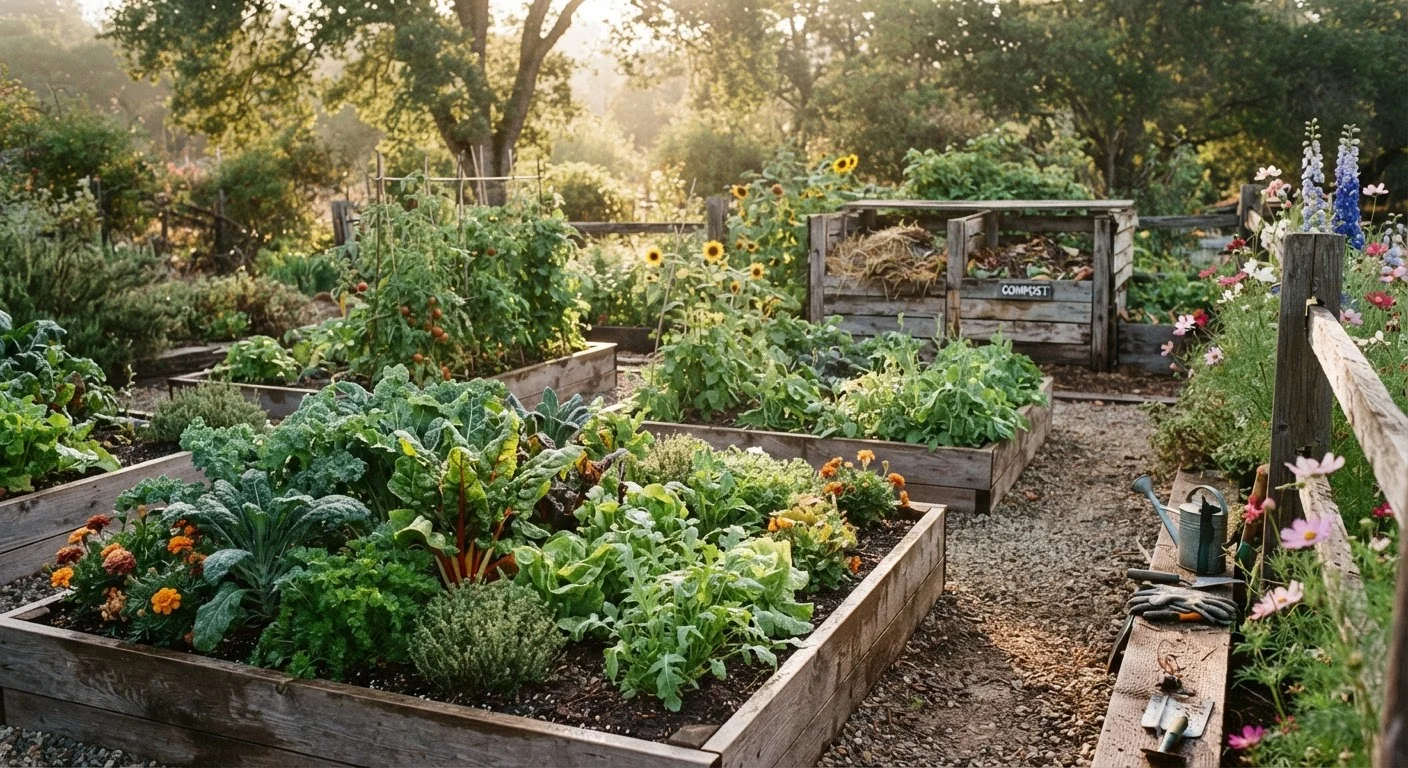
Choosing the right garden structure also matters. Raised beds offer particular advantages for organic growers: you control the growing medium entirely, drainage is consistent, and soil compaction from foot traffic is minimized - all conditions where organic soil-building works most efficiently.
Finally, tracking what works in your specific garden - soil type, climate, pest pressures - is more valuable than following generic organic prescriptions. Regional variation is significant, and local cooperative extension services are a reliable, free resource for regionally relevant guidance.
~30%
Potential yield gap vs. conventional methods
A meta-analysis published in Nature Plants found organic yields are on average around 19-25% lower than conventional, with variation depending on crop type and soil management maturity.
10-15 years
Time to peak organic soil health benefits
Research in long-term agricultural trials suggests soil organic matter and biological activity improvements from organic management compound most significantly after a decade or more of consistent practice.