

| R-value of fiberglass batts (per inch) | ~R-3.1 to R-3.4 (US Department of Energy) |
| R-value of closed-cell spray foam (per inch) | ~R-6 to R-7 (US Department of Energy) |
| R-value of rigid XPS board (per inch) | ~R-5 (US Department of Energy) |
| Recommended attic R-value (most US climate zones) | R-38 to R-60 (US DOE Energy Saver guidance) |
| Primary DIY-friendly options | Fiberglass batts, rigid foam board |
| Best for air-sealing and insulating simultaneously | Spray polyurethane foam (SPF) |
Why Insulation Material Choice Matters
Insulation isn't a one-size-fits-all purchase. Different materials resist heat flow in different ways, tolerate moisture differently, and suit specific locations - attics, walls, crawl spaces, and basements each have their own demands. Choosing the wrong type won't just underperform; it can trap moisture, compress over time, or simply be impractical to install in a confined cavity.
The key measurement for any insulation is its R-value - a rating for thermal resistance. Higher R-values mean greater resistance to heat transfer. But R-value alone doesn't determine the right material; installation location, air-sealing needs, and budget all factor in.
| R-value of fiberglass batts (per inch) | ~R-3.1 to R-3.4 (US Department of Energy) |
| R-value of closed-cell spray foam (per inch) | ~R-6 to R-7 (US Department of Energy) |
| R-value of rigid XPS board (per inch) | ~R-5 (US Department of Energy) |
| Recommended attic R-value (most US climate zones) | R-38 to R-60 (US DOE Energy Saver guidance) |
| Primary DIY-friendly options | Fiberglass batts, rigid foam board |
| Best for air-sealing and insulating simultaneously | Spray polyurethane foam (SPF) |
The Main Insulation Types and Where They Work Best
Batt and Roll Insulation
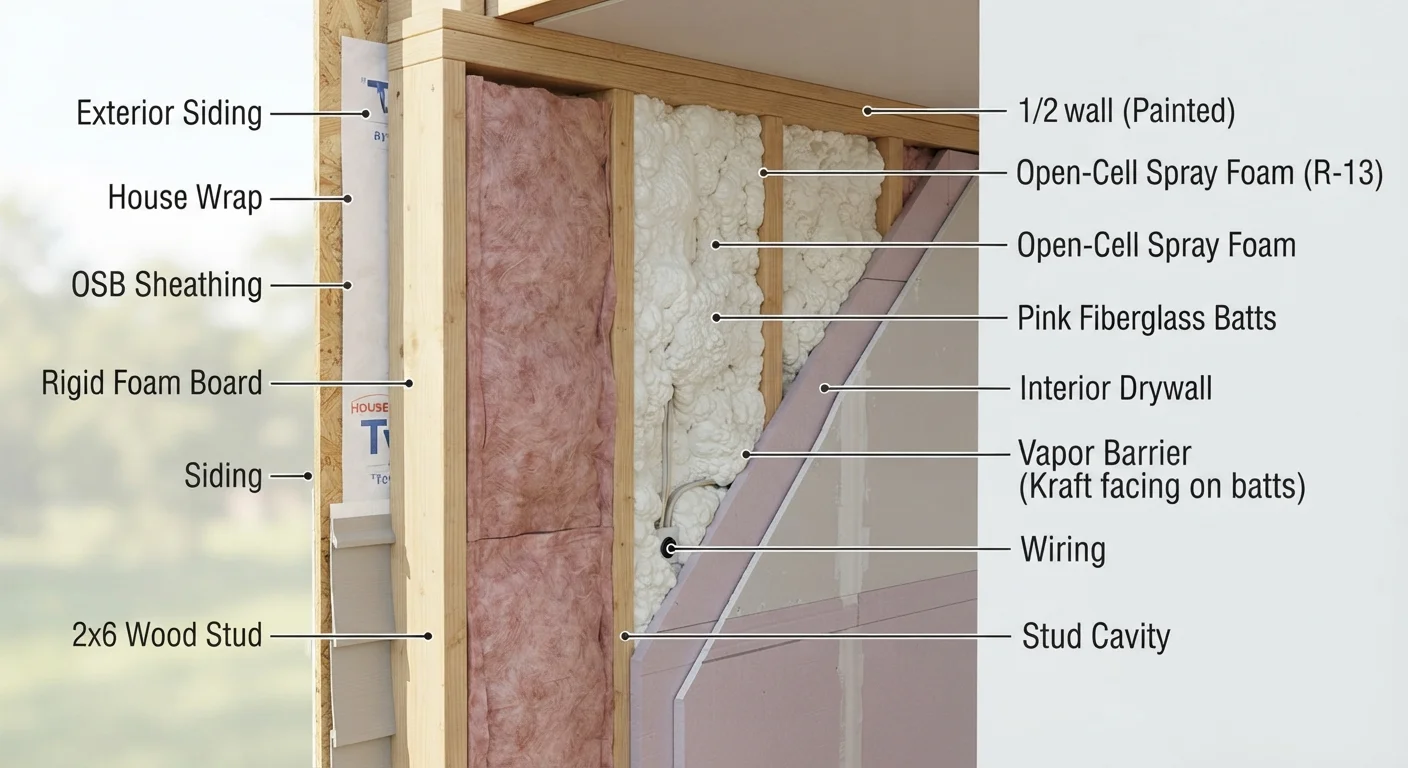
Typically made from fiberglass or mineral wool, batts come in pre-cut panels sized to fit standard stud and joist spacing. They're among the most accessible options for DIY installation in open wall cavities, floors, and attic floors. Mineral wool batts offer better fire resistance and moisture tolerance than fiberglass. Both must fit snugly - gaps, compression, or voids dramatically reduce performance.
Blown-In (Loose-Fill) Insulation
Cellulose or fiberglass is blown into place using a machine, making it well-suited for finished attic floors, hard-to-reach cavities, and areas with irregular framing. Cellulose - typically made from recycled paper treated with fire retardant - is a popular choice for attic blanket applications. Blown-in settles over time, so installers account for that in initial depth.
Spray Foam Insulation
Spray polyurethane foam (SPF) expands on contact, sealing gaps and providing both insulation and air-barrier function in one step. Open-cell foam is softer and vapor-permeable, typically used inside conditioned spaces. Closed-cell foam is denser, has a higher R-value per inch, and resists moisture - making it a common choice for crawl spaces, rim joists, and exterior-facing assemblies. Spray foam installation involves chemicals that require proper ventilation and protective equipment; professional installation is strongly recommended for most homeowners.
Rigid Foam Board
Rigid panels of EPS (expanded polystyrene), XPS (extruded polystyrene), or polyisocyanurate offer consistent R-values and work well on exterior walls, under slabs, or in basement walls where space is limited. They can also form a continuous thermal break, reducing heat loss through framing members. Cutting and fitting requires some care but is manageable as a DIY task in accessible areas.
R-value
A measure of thermal resistance - how well a material resists heat flow. Higher R-values indicate better insulating performance per unit of thickness.
Vapor retarder
A material that slows the movement of moisture (water vapor) through walls, floors, and ceilings. It helps prevent condensation inside building assemblies.
Thermal bridging
Heat transfer that bypasses insulation by moving through structural elements like wood studs or metal framing. Continuous insulation layers help minimize this effect.
Open-cell foam
A type of spray foam with a soft, spongy structure that allows some moisture vapor to pass through. It has a lower R-value per inch than closed-cell foam.
Closed-cell foam
A denser spray foam whose cells are sealed, giving it a higher R-value per inch and strong resistance to moisture and air infiltration.
Loose-fill (blown-in)
Small particles of insulation material - typically cellulose or fiberglass - blown into place with a machine. Useful for attics and enclosed cavities.
Matching Material to Location
Each area of a home has distinct conditions that point toward specific insulation types:
- Attic floors: Blown-in cellulose or fiberglass batts are practical and cost-effective. Aim for R-38 to R-60 in most US climate zones.
- Cathedral ceilings and unvented roofs: Closed-cell spray foam or rigid board above the deck helps avoid condensation issues in tight assemblies.
- Exterior walls (new construction): Fiberglass or mineral wool batts in the cavity, with optional rigid foam on the exterior for added thermal continuity.
- Existing walls (retrofit): Blown-in insulation injected through small holes is usually the least disruptive approach.
- Crawl spaces and rim joists: Closed-cell spray foam adheres to irregular surfaces and handles moisture exposure well.
- Basement walls: Rigid foam board (XPS or polyisocyanurate) is moisture-resistant and won't harbor mold if minor condensation occurs.
Moisture management is a recurring theme - pairing the right insulation with appropriate vapor retarders or air barriers is just as important as R-value. If your home already has moisture issues indoors, address those first. See our guide to diagnosing indoor moisture problems before adding insulation over a damp problem.
Similarly, if you're comparing home improvement projects for long-term value - much like comparing savings vehicles - the right material in the right place yields the best return. For more on evaluating home choices systematically, our article on matching flooring to your space uses a similar decision framework.
Note: Insulation work in some locations - particularly spray foam installation or when disturbing older materials that may contain asbestos - may require permits or professional contractors. Always check local building codes and consult a licensed insulation contractor for large-scale or complex projects.