

Key Takeaways
Our Verdict
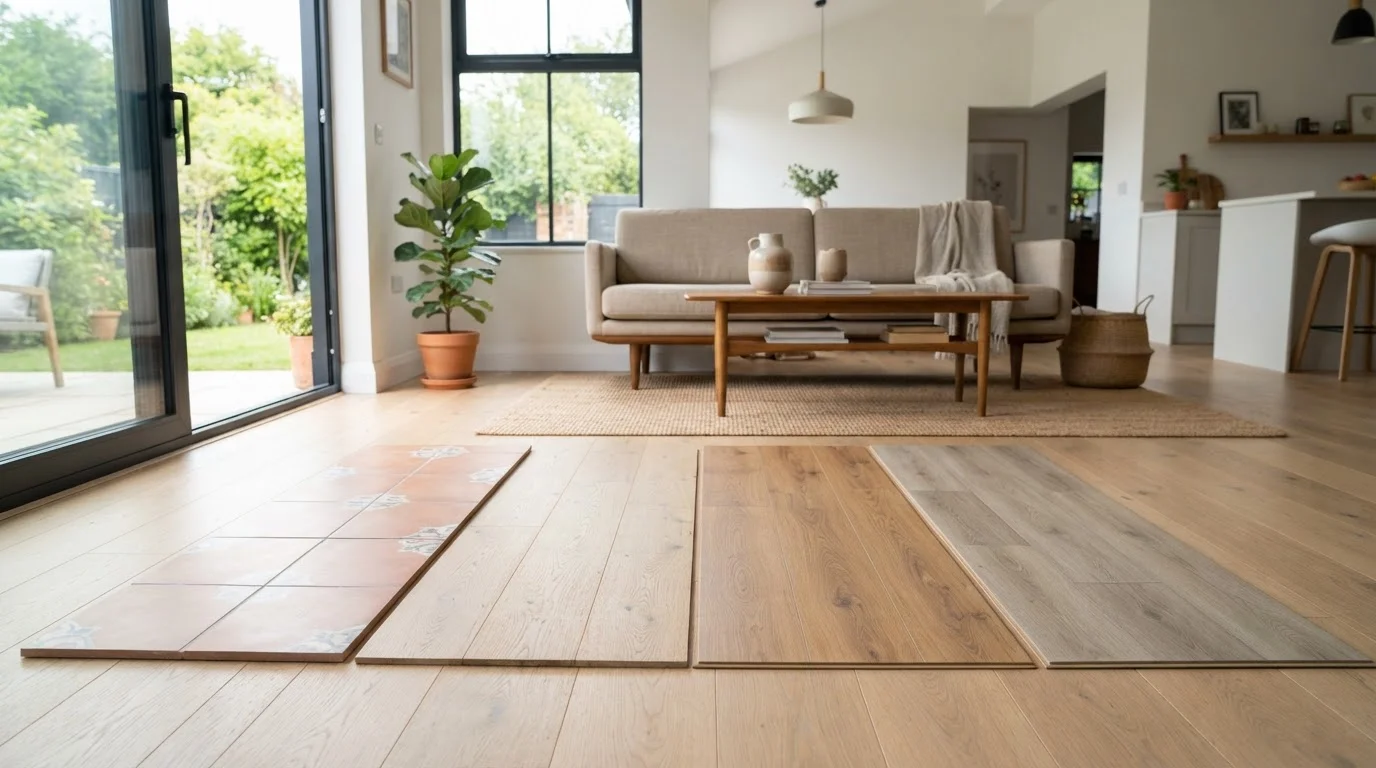
Each flooring material excels under different conditions. Tile wins wherever moisture and heavy use are constants. Hardwood delivers warmth and longevity in dry living spaces. Laminate and vinyl offer practical, moisture-resistant alternatives that work well across most rooms in a home - including areas where hardwood would struggle.
| Best for | Recommended |
|---|---|
| Bathrooms, laundry rooms, and wet areas | Tile |
| Dry living rooms, bedrooms, and dining areas | Hardwood |
| Kitchens and high-traffic family spaces on a budget | Luxury Vinyl Plank |
| Basements and below-grade spaces | Vinyl |
Why the Room Determines the Material
Flooring decisions feel overwhelming partly because the options look similar on a showroom floor but behave very differently once installed. The key is to stop asking "which flooring looks best?" and start asking "which flooring can handle what this room throws at it?"
Three factors should drive every flooring decision: moisture exposure, foot traffic level, and subfloor conditions. A basement slab, for example, is almost always slightly damp - which rules out solid hardwood entirely regardless of how appealing it looks. A formal dining room that rarely sees water and gets moderate use is an entirely different situation. If you're starting from scratch with a new home, this guide for new homeowners covers the order of decisions that helps prevent costly early mistakes.
| Tile | Hardwood | Laminate | Luxury Vinyl Plank | |
|---|---|---|---|---|
| Water/Moisture Resistance | Excellent - fully waterproof | Poor - avoid moisture | Low - core swells when wet | Excellent - fully waterproof |
| Durability / Scratch Resistance | Very high | Moderate - dents over time | High surface resistance | High - resists most scratches |
| Comfort Underfoot | Hard and cold | Warm and firm | Slightly cushioned | Softest of the four |
| Refinishable | No - replace if damaged | Yes - multiple times | No - replace when worn | No - replace when worn |
| Best Room Fit | Bath, kitchen, mudroom | Living room, bedroom | Bedroom, dry living areas | Kitchen, basement, bath |
| Installation Complexity | Moderate-high, needs flat base | Moderate, needs acclimation | DIY-friendly, click-lock | DIY-friendly, click-lock |
| Longevity (typical) | 20-50+ years | 25-100 years with care | 10-25 years | 15-25 years |
Tile: Hardworking and Moisture-Proof
Ceramic and porcelain tile are the most moisture-resistant flooring options available, which makes them the go-to choice for bathrooms, mudrooms, and kitchens. Porcelain, which is denser and less porous than standard ceramic, handles standing water and heavy use particularly well.
The tradeoff is comfort: tile stays cold underfoot, and its rigid surface is hard on legs during long periods of standing. Grout lines also require maintenance - they can absorb stains and harbor mildew if not sealed properly. If you're tiling a space, it's worth understanding how to finish joints correctly. Grout and caulk serve different purposes depending on where the joint sits, and using the wrong one causes real problems over time.
Installation requires a completely flat, stable subfloor. Any flex in the subfloor will eventually crack grout lines or even the tile itself.
Hardwood: Warmth With Requirements
Solid hardwood is prized for its natural warmth, long lifespan, and the ability to be sanded and refinished multiple times over decades. It performs beautifully in bedrooms, living rooms, and dining areas - spaces with stable humidity and low moisture risk.
What hardwood cannot tolerate is prolonged moisture exposure or wide swings in humidity. Wood expands and contracts seasonally, which is normal, but extreme conditions cause cupping, warping, and gaps. It is not suitable for below-grade spaces or bathrooms.
Let Hardwood Acclimate Before Installation
Solid and engineered hardwood should be stored in the room where it will be installed for at least 48-72 hours before laying it down. This allows the wood to adjust to the room's temperature and humidity, reducing the risk of post-installation expansion or contraction. Your installer should confirm this step before work begins.
Engineered hardwood - a plywood core topped with a real wood veneer - handles humidity fluctuations better than solid wood and can be installed in spaces where solid wood would be risky, including over radiant heat systems. It can generally be refinished once or twice, depending on veneer thickness. The look is nearly identical to solid hardwood at a distance.
Laminate and Vinyl: Practical Performers
Laminate flooring consists of a high-density fiberboard (HDF) core topped with a photographic image layer and a clear wear layer. Modern laminate convincingly mimics wood and stone. Its surface resists scratches well, but the HDF core is vulnerable to water - prolonged moisture exposure causes swelling and warping. Laminate suits dry to low-moisture rooms and works well under heavy furniture and pet traffic.
Luxury vinyl plank (LVP) and vinyl sheet flooring are genuinely waterproof throughout their entire thickness, not just at the surface. LVP is rigid or semi-rigid and installs as individual planks, making repairs straightforward. Sheet vinyl installs in large rolls with minimal seams, which is an advantage in wet areas like bathrooms. Both materials are softer underfoot than tile and feel warmer.
Vinyl is one of the most versatile flooring options for challenging spaces - basements, kitchens, and rooms that need a practical, durable solution. The visual range has expanded considerably, and high-quality LVP is difficult to distinguish from hardwood at a glance. Because the floor is such a foundational design element, it's worth considering how its tone interacts with your walls and furnishings - understanding warm versus cool undertones helps you make a cohesive choice.
A Room-by-Room Decision Framework
Use these guidelines to narrow down your options before visiting a showroom or requesting quotes from an installer:
- Bathroom or laundry room: Tile (porcelain preferred) or sheet vinyl. Avoid laminate and solid hardwood entirely.
- Kitchen: LVP, tile, or engineered hardwood. Solid hardwood is possible in low-splash areas but requires vigilance.
- Basement: LVP or sheet vinyl - both handle below-grade moisture. Laminate and hardwood are not recommended.
- Living room or dining room: Any option works, but hardwood and LVP offer the best combination of aesthetics and durability for typical use.
- Bedroom: Hardwood, LVP, or laminate all perform well. These are low-moisture, moderate-traffic spaces.
- Entryway or mudroom: Tile or LVP - these areas see grit, tracked-in water, and heavy shoe traffic.
Before finalizing any flooring choice, check your subfloor condition. Uneven, damaged, or damp subfloors need to be addressed before installation regardless of material. And if you're considering how your new floor will interact with existing furniture placement, reviewing traffic flow and rug placement is a practical next step.