

Key Takeaways
Why Senior Dogs Still Need Regular Movement
Inactivity is not the safe option for older dogs. Without regular movement, muscle mass declines faster, joints stiffen more readily, and weight can creep up - all of which compound the mobility challenges that come with age. Gentle, consistent exercise helps maintain healthy body weight, supports circulation, and has been linked by veterinary researchers to better cognitive function in ageing dogs.
That said, the type, intensity, and duration of exercise that suits a 3-year-old dog is rarely appropriate for a 10-year-old one. Whether your dog lives primarily indoors or outdoors also shapes their baseline activity level - something our guide on what the indoor vs outdoor distinction means for dog wellbeing explores in detail. The goal is to keep movement a consistent, enjoyable part of your senior dog's life - not to replicate what they did at their peak.
What you will need
How to Exercise Your Senior Dog Safely
The steps below walk you through building and maintaining a senior-appropriate exercise routine. They apply broadly to dogs aged 7 and older, but always defer to your veterinarian's guidance for your specific dog's breed, weight, and health history.
Supportive harness
Distributes leash pressure across the chest rather than the neck, reducing strain on an older dog's joints and spine.
Orthopedic or neoprene dog boots
Protects paws on rough or hot surfaces and provides traction on slippery floors for dogs with joint issues.
Portable water bowl
Keeps your dog hydrated during outdoor activity, which is especially important for older dogs who may overheat more easily.
Non-slip mat or yoga mat
Provides a stable, cushioned surface for indoor gentle exercise or post-walk stretching.
Schedule a veterinary check-up first
Before adjusting your senior dog's activity level, book a check-up with your veterinarian. Dogs are generally considered "senior" from around age 7, though this varies significantly by breed size - larger breeds age faster than smaller ones. Your vet can assess joint health, cardiovascular fitness, and any underlying conditions such as arthritis or hip dysplasia that should shape your exercise plan. Ask specifically about safe duration, terrain, and any activities to avoid.
Shorten sessions and increase frequency
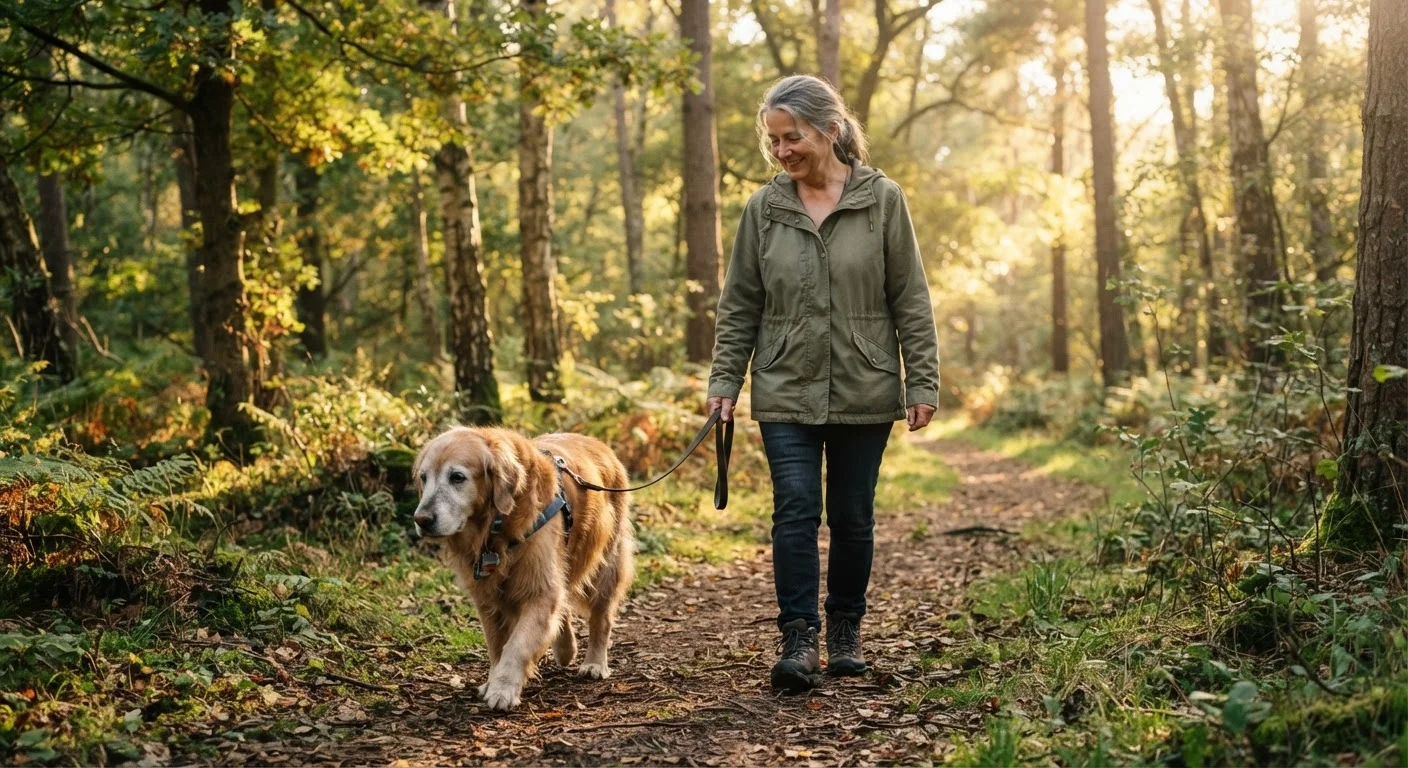
Rather than one long daily walk, aim for two or three shorter outings spread through the day. A 15-20 minute walk in the morning and another in the evening is often better tolerated than a single 45-minute effort. Shorter sessions reduce cumulative strain on joints while still delivering cardiovascular and mental benefits. Watch your dog's pace - let them set it, and never push through visible fatigue or reluctance to continue.
Choose joint-friendly surfaces and terrain
Grass, dirt trails, and soft sand are much easier on ageing joints than concrete or asphalt. Avoid steep hills, long staircases, and uneven rocky terrain that demands sharp turns or sudden stops. If your usual walking route is mostly pavement, look for parks or school fields nearby. Indoors, place non-slip rugs on hard floors to prevent slipping when your dog moves between rooms, which itself constitutes gentle daily activity.
Incorporate low-impact alternatives
Swimming and hydrotherapy are widely regarded by veterinary professionals as excellent low-impact exercise for dogs with arthritis or mobility challenges - water supports body weight while allowing natural movement. Even slow, off-leash exploration in a safely enclosed garden counts as beneficial activity. Gentle play with soft toys that doesn't involve jumping or twisting is another option. Sniff walks - where you let your dog follow their nose at their own pace - provide significant mental engagement with minimal physical stress.
Warm up and cool down deliberately
Start each session at a very slow pace for the first few minutes before allowing your dog to settle into their comfortable walking rhythm. End the same way - a gradual slow-down rather than an abrupt stop. This helps muscles and joints transition safely, reducing the risk of stiffness or soreness. After returning home, allow your dog to rest on a supportive, cushioned surface rather than a hard floor.
Monitor for signs of overexertion
After exercise, observe your dog over the next 12-24 hours. Normal post-walk behaviour includes resting contentedly and eating normally. Signs that you may have overdone it include: pronounced limping, whimpering when touched, reluctance to rise from lying down, loss of appetite, or unusual lethargy. These may also signal an underlying medical issue. If you notice any of these, reduce activity and consult your vet - sudden behavioural changes in older dogs always warrant professional attention. See what may be driving sudden behavioural changes for a broader guide to interpreting these signals.
Sniff Walks Are Genuinely Valuable
A slow 15-minute walk where your dog controls the pace and follows every interesting scent provides meaningful mental stimulation. Research in animal behavior suggests that sniffing can have a calming effect on dogs, and the cognitive engagement is real exercise for an older brain. Don't rush your senior dog past the things they want to investigate.
This article provides general information about senior dog care and is not a substitute for professional veterinary advice. Always consult a qualified veterinarian before changing your dog's exercise routine, especially if they have existing health conditions.
Keeping the Whole Picture in View
Exercise is just one pillar of senior dog health. Dental disease, often overlooked, affects a large proportion of adult dogs and can make eating - and by extension, maintaining a healthy weight for exercise - more difficult. Our guide to dental health in dogs covers what home care and professional cleaning actually involve. Nutrition, joint supplements (discussed with your vet), and regular health monitoring all interact with how well your dog tolerates and recovers from physical activity.
If you've noticed your senior dog becoming less engaged, slower to rise, or less interested in walks they used to love, don't dismiss it as inevitable aging. These shifts sometimes have treatable causes. A consistent, thoughtful exercise routine - adapted to where your dog is today, not where they were five years ago - gives them the best chance of comfortable, engaged later years.
Heat Is a Greater Risk for Senior Dogs
Older dogs are less efficient at regulating body temperature than younger ones. Avoid exercising during the hottest parts of the day in warm months, and never leave a senior dog in a parked vehicle. Early morning or evening walks are usually safer in summer. If your dog is panting heavily, seek shade and cool water immediately.