

Key Takeaways
Why Hamster Nutrition Is Easier to Get Wrong Than You'd Think
Hamsters look uncomplicated - small, contained, self-sufficient. That impression leads many new owners to underestimate how specific their dietary needs actually are. Unlike dogs or cats, hamsters have very little tolerance for dietary error; their compact bodies, fast metabolisms, and species-specific vulnerabilities mean that well-intentioned feeding habits can quietly cause serious problems over months.
The mistakes below are common precisely because they seem reasonable on the surface. Understanding why each one is problematic - not just that it is - gives you the foundation to feed your hamster with real confidence. If you're also curious about how these principles compare to other small rodents, our guide on choosing between gerbils, rats, and mice covers species-level differences in care needs.
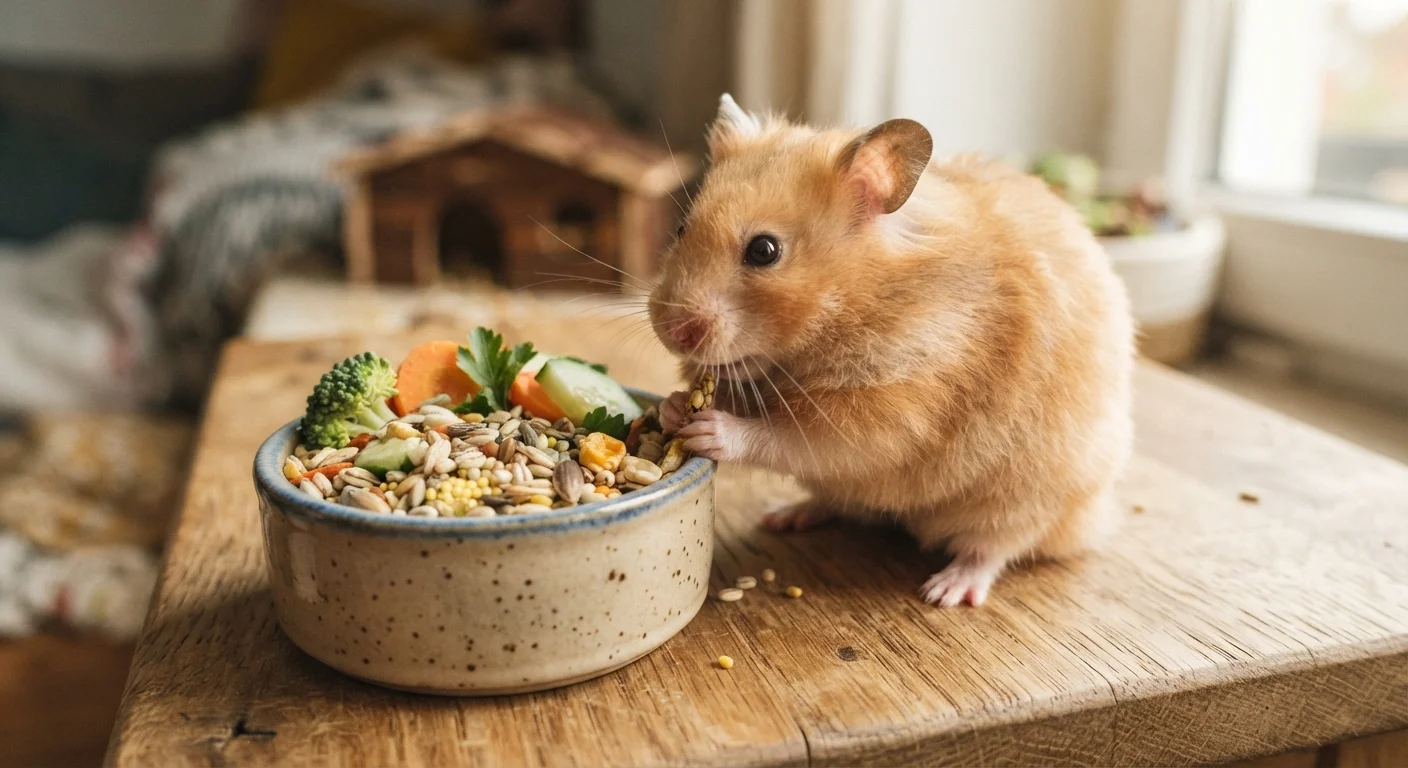
Feeding an all-seed mix as the sole diet.
Why it happens: Seed mixes are widely sold as complete hamster food and are visually appealing, but they are calorie-dense and nutritionally unbalanced on their own.
Offering unsafe or toxic human foods as treats.
Why it happens: Owners naturally want to share food with their pets and may assume that small quantities of anything edible to humans are safe for hamsters.
Providing sugary treats - including "natural" ones - too frequently.
Why it happens: Fruit is perceived as healthy and wholesome, so owners offer it generously without realizing hamsters are highly prone to diabetes, particularly Syrian and dwarf species.
Overestimating daily food portions.
Why it happens: Because hamsters hoard food instinctively, owners often interpret an empty bowl as evidence of complete consumption and refill it generously each day.
Neglecting fresh water or using an unsuitable delivery method.
Why it happens: Water bottles are standard in most enclosures, but owners may not check whether the sipper tube is functioning correctly or change the water often enough.
Feeding a one-size-fits-all diet across hamster species.
Why it happens: Pet stores often sell generic "hamster food" without distinguishing between Syrian hamsters and the smaller dwarf species, which have meaningfully different dietary sensitivities.
Building a Diet That Actually Works
Once you know what to avoid, constructing a sound hamster diet is straightforward. A quality pelleted diet forms the base. Fresh vegetables - offered in small quantities two to three times per week - add variety and micronutrients. Protein sources such as a small piece of plain cooked egg or mealworms can be offered occasionally, especially for pregnant or very young hamsters with higher protein demands.
Some Foods Can Be Acutely Dangerous
Certain foods commonly found in kitchens - including onions, garlic, grapes, raisins, citrus fruit, almonds, and apple seeds - are toxic or seriously harmful to hamsters. If your hamster has consumed any of these, contact a veterinarian experienced with small animals promptly. Never assume a small amount is safe.
Treats should be genuinely occasional and species-appropriate. The goal isn't deprivation - enrichment through food is valuable - but proportionality matters. A single small piece of carrot is enriching; a tablespoon of mixed dried fruit is a metabolic stressor for an animal that weighs under six ounces.
Hoarding Makes Overfeeding Easy to Miss
Hamsters instinctively carry food to a hidden cache in their enclosure. Because food disappears quickly from the bowl, owners often assume their hamster ate it and refill portions - when in fact the animal has stored several days' worth. Check the enclosure's corners and bedding regularly to audit actual intake and prevent mold from accumulating in the hoard.
Water quality and delivery deserve the same attention as food. Dehydration in small animals escalates quickly and is easy to miss until symptoms are visible. For a broader look at caring for small pets in ways that minimize stress - including during feeding and handling - see our practical guide on handling small pets without causing stress.
This article provides general educational information about hamster nutrition and is not a substitute for advice from a qualified veterinarian. If you have concerns about your hamster's health or diet, consult a vet experienced with small animals.