

Key Takeaways
Why Small Pets Experience Handling Differently
Dogs and cats have been domesticated alongside humans for thousands of years and generally tolerate - even seek - physical contact. Rabbits, guinea pigs, hamsters, rats, and mice come from a very different evolutionary background. As prey animals, they are neurologically primed to treat sudden capture as a predation event, which is essentially what an unskilled grab from above mimics.
This doesn't mean small pets can't enjoy or tolerate handling - many do, especially with patient conditioning. But it does mean that the approach matters enormously. Understanding your specific pet's baseline behavior is the first step. Guinea pig body language, for example, differs considerably from rat behavior, and treating them the same way often backfires.
Prey Animals Hide Stress Well
Rabbits, guinea pigs, and most rodents are prey species hardwired to conceal vulnerability. A small pet that appears still or passive may actually be in a fear-frozen state rather than relaxed. Learning the difference between calm stillness and stress-induced freezing is a foundational skill for any owner. If you're unsure whether a behavior signals illness or stress, our guide on signs of illness in small animals can help you read the signs more accurately.
If you're still deciding which small animal suits your household, see our comparison of rabbits vs guinea pigs as first small pets for a detailed look at temperament and handling ease.
Building Trust Before You Lift
Rushing to pick up a new pet before it has acclimated to your presence is the single most common handling mistake owners make. Trust-building is not optional - it directly determines whether your pet associates hands with safety or danger.
For most small animals, this pre-handling phase should last at least five to seven days after bringing the pet home. Resist the urge to skip it, especially with children in the household who are eager to interact. The preparation checklist for new small pets includes practical steps for structuring this acclimation period from day one.
Safe Lifting and Support Techniques by Species
Correct physical technique varies meaningfully by species. Here's what to know for the most common small pets:
- Rabbits: Never lift by the ears or scruff. Support the hindquarters fully - a rabbit that feels its back legs dangling may kick powerfully, causing spinal injury. Hold one hand under the chest and the other firmly cradling the rump, keeping the rabbit against your body.
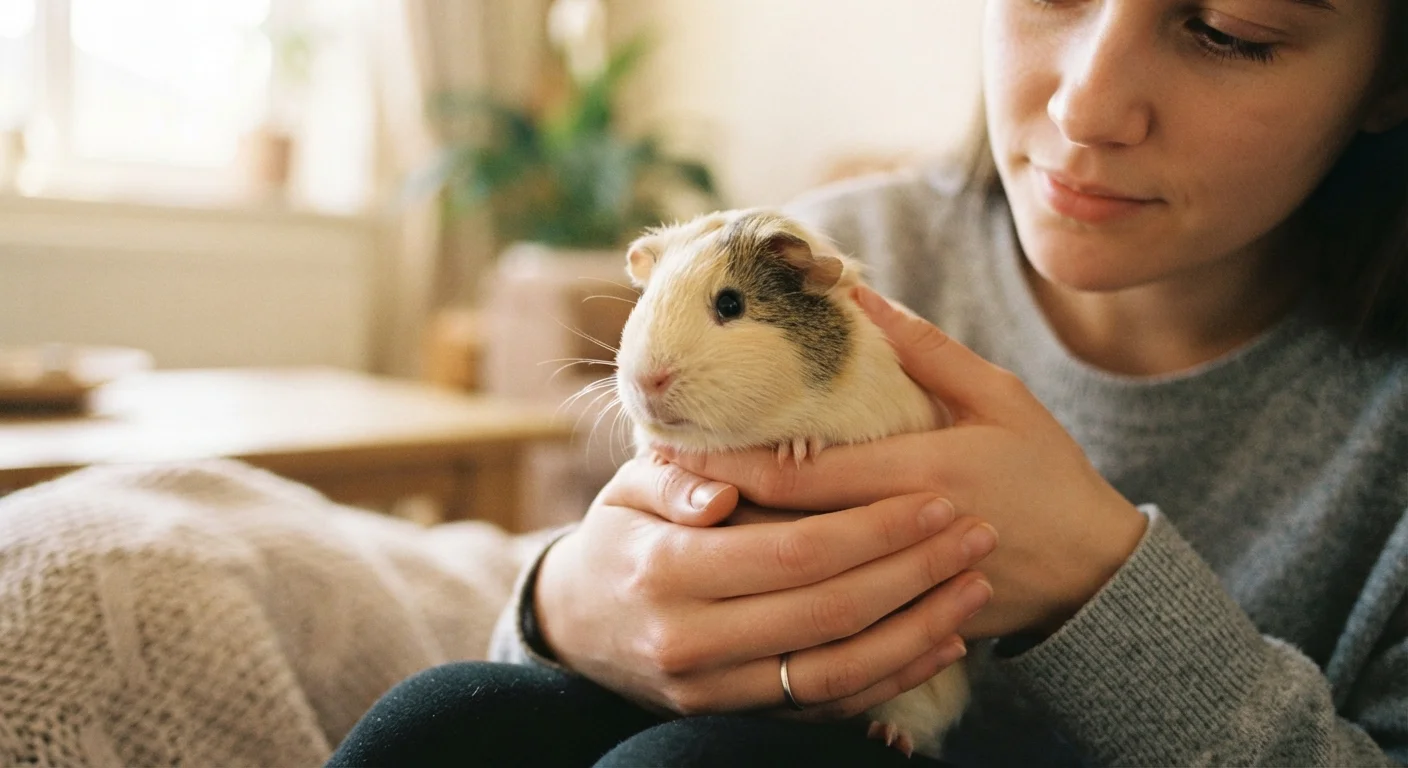
- Guinea pigs: Scoop from underneath with one hand supporting the chest and one supporting the back end. Guinea pigs are prone to anxiety when airborne, so keep them low and close to your body.
- Hamsters: Cup both hands together so the hamster sits in a closed but not constricting bowl. Hamsters are quick and can fall from surprisingly small heights; always sit or kneel while handling them.
- Rats and mice: Rats can be lifted gently by placing a hand around the body behind the shoulders. Never pick up rats or mice by the tail - this causes pain and damages trust. Mice are faster and more skittish; a cupped-hands technique works best.
For owners exploring the differences between rat, gerbil, and mouse temperaments, our guide on choosing between the smaller rodents covers handling ease as part of its comparison.
Recognizing and Responding to Stress Signals
Even with good technique, animals will occasionally signal that they've had enough. Recognizing these cues early - before they escalate to biting or injury - is essential for safe handling.
Common stress signals to watch for:
- Freezing or rigid posture - not relaxed stillness, but a tense, hunched position
- Rapid, shallow breathing or panting
- Teeth chattering (especially in guinea pigs - a warning sign, not contentment)
- Attempting to push away or escape repeatedly
- Vocalizing - squealing, hissing, or chattering
- Biting or nipping - almost always a last resort after earlier signals were missed
When you observe these signals, return the animal calmly to its enclosure. Do not punish or persist. End the session on as neutral a note as possible and try again another day with a shorter, lower-intensity interaction.
“The goal of handling is not just to move an animal from point A to point B - it's to build a relationship based on predictability. When animals learn that your hands mean safety, handling becomes a positive experience rather than a stressor.”
— Dr. Susan Brown, Exotic animal veterinarian and small mammal specialist
Consistent stress during handling can suppress immune function and contribute to chronic health issues in small animals. If an animal remains persistently fearful despite patient conditioning, a consultation with an exotic animal veterinarian is worthwhile. Our overview of small pet veterinary care explains when professional input is most valuable.
This article is for general informational purposes only and does not constitute veterinary advice. Always consult a qualified exotic animal veterinarian for concerns about your pet's health or behavior.