

Key Takeaways
Our Verdict
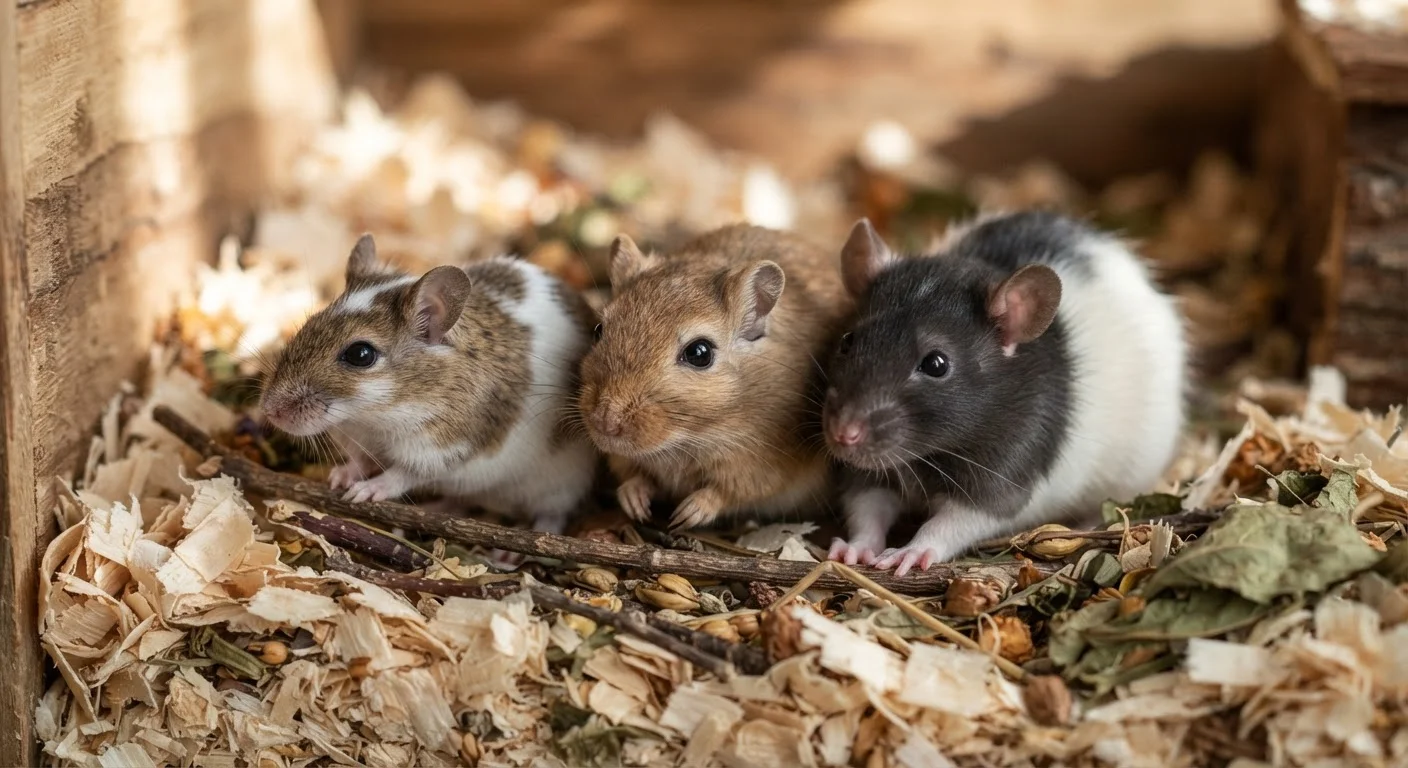
Each of these three rodents suits a different type of owner. Rats reward hands-on interaction and daily attention; gerbils offer active, entertaining companionship with moderate handling demands; mice are fascinating to observe but less inclined to seek human contact. None is a low-effort pet - all three require thoughtful housing, species-appropriate social arrangements, and regular veterinary access.
| Best for | Recommended |
|---|---|
| First-time small rodent owners wanting interactive companionship | Fancy Rats |
| Owners who enjoy observing natural rodent behaviour with moderate handling | Gerbils |
| Experienced owners comfortable with fast-moving, observation-oriented pets | Mice |
| Households with limited space but time for daily social interaction | Gerbils |
Why the Differences Between These Rodents Matter
Gerbils, fancy rats, and mice are all small, relatively inexpensive to house, and available through ethical breeders and rescue organisations across the US. But treating them as interchangeable is one of the most common mistakes prospective owners make. Their social structures, activity patterns, handling tolerances, and lifespan commitments differ enough that choosing the wrong species can mean a poor experience for both pet and owner.
Before deciding, it helps to understand each animal on its own terms - not just as a smaller or larger version of each other. If you're also weighing other small pets, our comparison of rabbits versus guinea pigs covers a different but equally nuanced set of trade-offs.
| Fancy Rats | Gerbils | Mice | |
|---|---|---|---|
| Typical Lifespan | 2-3 years | 3-5 years | 1-2 years |
| Social Needs | Pairs or small groups | Bonded pairs or groups | Female groups; males often solitary |
| Handling Ease | High - curious and calm | Moderate - quick-moving | Low to moderate - skittish |
| Minimum Housing | Large multi-level cage | Deep-substrate tank or bin | Secure tank or bin cage |
| Activity Pattern | Mostly crepuscular | Crepuscular and diurnal | Mostly nocturnal |
| Beginner Suitability | High | Moderate | Moderate to low |
| Space Required | Moderate to large | Moderate | Small to moderate |
Lifespan and Veterinary Commitment
Lifespan is one of the most emotionally significant factors in choosing a small pet, particularly for families with children. Fancy rats typically live two to three years - a short window that some owners find heartbreaking, though it also represents a more manageable commitment for those new to rodent keeping. Gerbils generally live three to five years, sometimes longer with excellent nutrition and enrichment. Mice have the shortest lifespans of the three, usually one to two years, which is worth acknowledging honestly before bringing them home.
All three species benefit from access to an exotic or small-animal veterinarian. Rodent medicine is a specialty area, and not every general practice sees rats, mice, or gerbils confidently. Locating a suitable vet before your animal arrives is strongly advisable - something our new small pet preparation checklist covers in detail.
3-5 years
Typical gerbil lifespan with good care
Gerbils consistently outlive both mice and rats when housed appropriately and fed a balanced diet, according to general small-mammal veterinary guidance.
~2 years
Average fancy rat lifespan
Fancy rats have a relatively short lifespan, which is an important emotional and practical consideration for prospective owners, particularly families with children.
Social Needs: Companionship Within the Species
All three of these rodents are social animals, but their social requirements differ in important ways. Gerbils are colony animals in the wild and form bonded pairs or small groups that are difficult to split once established. They should not be kept alone. Introducing unfamiliar gerbils in adulthood is risky and requires careful management; getting a bonded pair from the outset is the most reliable approach.
Fancy rats are similarly social and should ideally be kept in pairs or small same-sex groups. Solitary rats kept without sufficient human interaction frequently show signs of boredom and stress. Unlike gerbils, rats are generally more forgiving of introductions when done gradually using a neutral space.
Mice follow a similar pattern: females cohabit well in groups, while males are often highly territorial with one another and typically kept singly or in large, carefully structured setups. Female mice tend to be sociable and entertaining in groups, making same-sex female pairs a common recommendation.
Handling Ease and Human Interaction
If regular hands-on interaction is important to you, fancy rats have a clear edge. They are naturally curious, tend to habituate quickly to being held, and often actively seek out their owners. Rats can learn their names, recognise familiar people, and engage in rudimentary problem-solving tasks - a level of interactivity that surprises many first-time owners.
Gerbils can become comfortable with gentle handling, particularly when socialised consistently from a young age, but they are quick-moving and easily startled. They tend to prefer exploring over sitting still, which makes them more enjoyable to watch than to hold for extended periods. Children old enough to handle animals calmly can do well with gerbils, but supervision is essential.
Mice are the fastest and most skittish of the three. While individual mice vary considerably in temperament, most are better suited to experienced owners who respect their preference for observation over contact. That said, patient, consistent handling from a young age can yield mice that are surprisingly tolerant. For practical techniques that apply across all three species, see our guide on handling small pets without causing stress.
Start Handling Sessions Short and Calm
For all three species, the first few weeks of handling should involve brief, low-stress sessions - five minutes or less - rather than extended contact. Let the animal explore your hands at its own pace before attempting to lift or restrain it. Consistency matters more than duration: daily gentle exposure builds trust faster than occasional long sessions. Avoid handling any rodent immediately after waking it from sleep.
Housing, Enrichment, and Daily Care
Housing requirements reflect each species' natural behaviour. Gerbils are burrowers and need deep substrate - at least six inches - to exhibit natural digging behaviour. A glass tank or bin cage with good ventilation works well; wire bar spacing must be no more than half an inch to prevent escape. Rats are climbers and do best in tall, multi-level wire cages with solid flooring (wire floors cause foot injuries). They need daily out-of-cage time and mental stimulation. Mice also benefit from deep bedding for burrowing and are adept escape artists - any housing must be completely secure.
Enrichment is non-negotiable for all three. Running wheels, foraging opportunities, tunnels, and chewable materials are appropriate across species, though wheel diameter should be sized appropriately: smaller for mice (at least seven inches in diameter to avoid back curvature), larger for rats. All three produce ammonia-heavy waste that requires regular cage cleaning - at minimum partial cleans two to three times per week.
Diet across all three species centres on a commercially formulated block or pellet diet supplemented with fresh vegetables. Seed mixes alone are nutritionally incomplete and encourage selective feeding. If you're familiar with similar concerns in hamster nutrition, our article on common hamster diet mistakes covers comparable principles worth understanding.
This article is for general informational purposes only and is not a substitute for advice from a qualified exotic animal veterinarian. Always consult a professional regarding the specific health and care needs of your pet.