

Key Takeaways
Rabbit Housing & Enrichment
Rabbit housing refers to the full living environment a rabbit needs to stay physically healthy and mentally stimulated. This goes well beyond a basic cage - it includes usable floor space for running and jumping, hiding places, foraging opportunities, and daily social interaction. Good housing supports a rabbit's natural behaviours and prevents boredom-related health problems.
In ethological terms, rabbits are crepuscular prey animals with strong exploratory and territorial instincts; housing that constrains these drives can cause chronic stress and stereotypic behaviours such as bar-chewing or circling.
Why the Traditional Hutch Fails the Modern Rabbit
The small wooden hutch - a staple of pet store shelves for decades - was designed around convenience, not rabbit welfare. Most commercially sold hutches offer less than 6 square feet of floor space, which is insufficient for a rabbit to perform even a single uninterrupted binky (the full-body leap rabbits make when happy and healthy). Confining a rabbit to such a space for the majority of its life is now widely regarded as inadequate by veterinary and animal welfare professionals.
Rabbits are not sedentary animals. In the wild, European rabbits - the ancestors of all domestic breeds - roam territories spanning several acres, forage across multiple locations, and engage in complex social hierarchies. Domestic rabbits retain these instincts. When housing prevents them from expressing these behaviours, the consequences are measurable: muscle atrophy, spinal deformities, obesity, gut stasis, and chronic psychological stress.
The shift in thinking isn't about making rabbit keeping harder - it's about understanding what rabbits actually are. They are not starter pets that require minimal space. They are active, intelligent animals with specific environmental needs. If you're weighing whether a rabbit suits your household, our comparison of rabbits and guinea pigs as first small pets offers useful context.
Space: What Rabbits Actually Need
Current guidance from rabbit welfare organisations generally recommends a minimum continuous living space of 10-12 square feet for a single rabbit - and significantly more for a pair. The key word is continuous: a sleeping hutch and exercise run that cannot be accessed simultaneously don't meet this standard.
Practically, this means one of several approaches:
- A large hutch permanently connected to a run, giving the rabbit free choice between areas at all times.
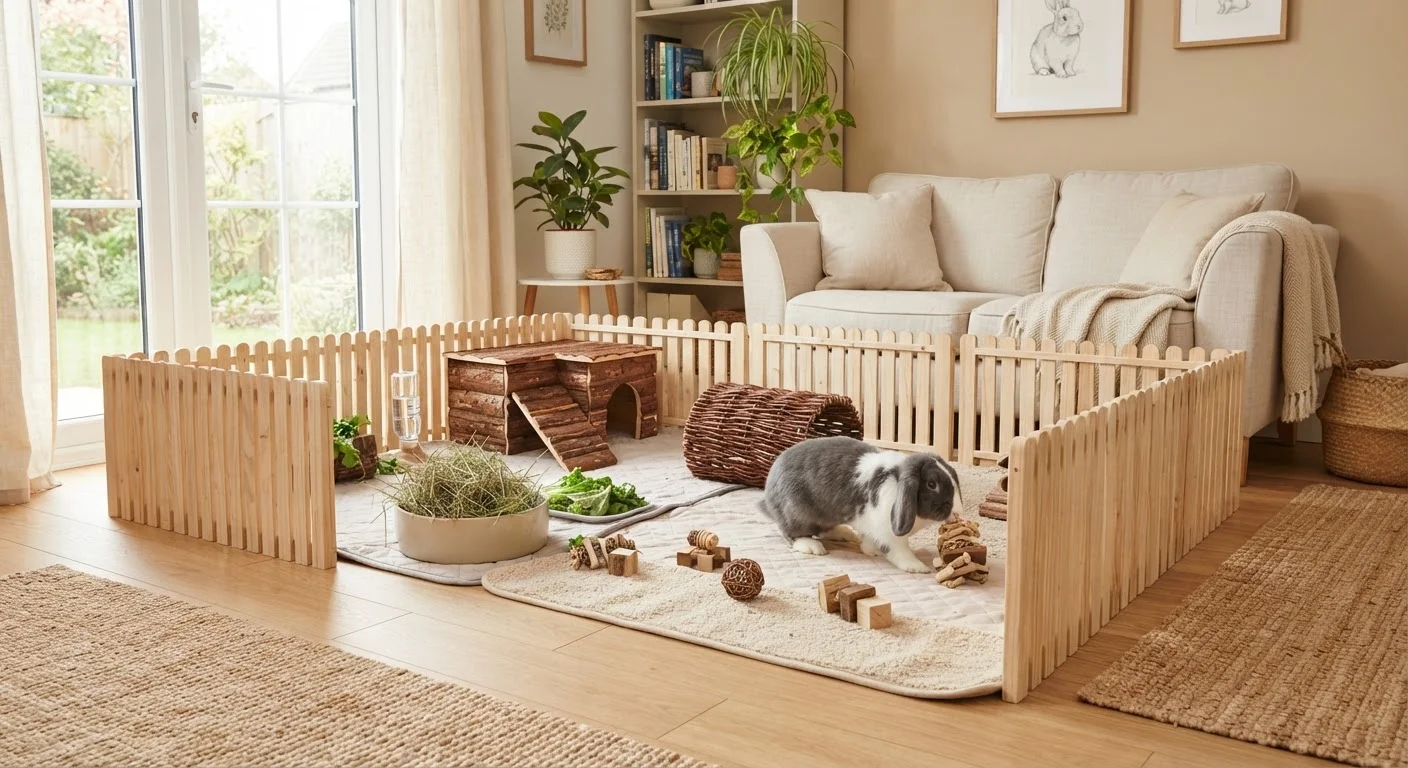
- A pen or enclosure inside the home that provides adequate square footage without restriction.
- Free-roaming access to a rabbit-proofed room or area, with a smaller sleeping enclosure as a home base.
Height matters too. Rabbits should be able to stand fully upright on their hind legs - a posture they use naturally for alert scanning. An enclosure that prevents this causes physical discomfort and stress. For questions about whether indoor or outdoor environments better meet these needs, our article on indoor vs outdoor rabbit keeping covers the trade-offs in detail.
10-12 sq ft
Minimum recommended continuous living space
Rabbit welfare organisations including the Rabbit Welfare Association and Fund recommend this as a baseline for a single rabbit's permanent housing.
3 hops
Minimum uninterrupted running distance
Welfare guidelines suggest a rabbit should be able to take at least three full consecutive hops within its living space without obstruction.
~10 years
Average domestic rabbit lifespan
Many pet rabbits live 8-12 years with appropriate care - a commitment that underscores why housing quality has lasting welfare implications.
Enrichment: Stimulating the Whole Rabbit
Space alone isn't enough. A large, empty room gives a rabbit room to move but not the variety of stimulation that keeps them psychologically healthy. Enrichment addresses this by creating an environment that invites natural behaviours.
Foraging is one of the most important. Rather than placing hay in a single rack, scatter it across the enclosure, stuff it into cardboard tubes, or pack it into safe foraging toys. This mimics the time and effort rabbits naturally spend seeking food and keeps them occupied for far longer than a bowl of pellets.
Chewing supports dental health and satisfies a biological drive. Safe options include untreated willow, apple wood, and dried herbs. Cardboard boxes and paper bags serve double duty as both chew material and hiding places.
Hiding spaces are critical for a prey species. Tunnels, enclosed cardboard boxes, and wooden hides let rabbits retreat and feel secure - reducing chronic low-level stress that might otherwise go unnoticed by their owners.
Digging is instinctive and deeply satisfying for rabbits. A digging box - a container filled with compressed paper bedding, soil, or shredded paper - gives them an appropriate outlet without sacrificing the living space.
Rotate Enrichment to Keep Things Fresh
Rabbits are naturally curious and will habituate quickly to the same environment. Swapping out a cardboard tunnel for a new one, rearranging hides, or introducing a new foraging challenge every week or two is enough to renew exploratory interest. This doesn't need to be expensive - paper bags, cereal boxes, and willow sticks are inexpensive and effective options.
Rotate enrichment items regularly. Rabbits are curious and will lose interest in the same setup if it never changes. Introducing a new cardboard box or rearranging tunnels can reignite exploratory behaviour at minimal cost.
Social Needs and Daily Interaction
Rabbits are social animals that, in the wild, live in groups with established social bonds. For pet rabbits, this translates into a genuine welfare need for companionship - either from a bonded rabbit partner or, for single rabbits, from consistent daily interaction with their human family.
A bonded pair of rabbits will groom each other, rest together, and communicate in ways that no amount of human interaction can replicate. If you are considering keeping two rabbits, ensure both are neutered before attempting to bond them - unneutered rabbits of any combination are likely to fight or breed. The bonding process itself takes time and should be done gradually under supervision.
For owners of single rabbits, daily handling, floor-level interaction, and free-roaming time in safe spaces are especially important. Our guidance on handling small pets without causing stress outlines safe ways to build trust without causing anxiety.
Before any rabbit arrives home, it's worth reviewing our preparation checklist on what to organise before bringing a small pet home, which covers habitat setup, vet selection, and early bonding steps in one place.