

Key Takeaways
Why Cage Setup Matters More Than Most New Owners Expect
A budgerigar's cage is not simply a container - it functions as its entire territory, sleep space, dining area, and primary source of enrichment for the majority of its day. Unlike dogs or cats that explore freely, a budgie spends a significant proportion of its life inside this environment, which means every element of the setup directly affects physical health, mental wellbeing, and how quickly the bird adjusts to its new home.
New owners are sometimes surprised to learn that common household items - non-stick cookware fumes, aerosol sprays, scented candles - pose acute respiratory hazards to birds, whose respiratory systems are far more sensitive than mammals'. Getting placement and environment right before the bird arrives is therefore not a preference but a genuine safety requirement.
Non-Stick Cookware Is Dangerous to Birds
Polytetrafluoroethylene (PTFE), found in many non-stick pans and appliances, releases odorless fumes when overheated that are lethal to birds - often within minutes. Never place a budgie cage in or near a kitchen, and avoid using non-stick cookware in any space your bird occupies. This is one of the most preventable causes of sudden bird death in household settings.
Compared to setting up housing for mammals, bird cage setup requires more attention to airborne hazards and less focus on physical escape-proofing. If you're also preparing for another new pet, the considerations differ considerably - for example, see how the process compares to bringing a kitten home for the first time.
What you will need
What You'll Need Before You Start
Gathering the right equipment before assembly saves significant time and prevents the common mistake of discovering missing components mid-setup. The tools and materials below cover the essentials for a safe, functional first cage.
Bar-spacing gauge or ruler
Verifies cage bar spacing is no wider than 1/2 inch to prevent head entrapment.
Cage liners or unbleached paper
Lines the cage tray to make daily spot-cleaning quick and hygienic.
Spray bottle with plain water
Used to mist natural wood perches, helping them maintain texture and reducing splintering.
Non-toxic cage cleaner or diluted white vinegar
Safe solution for weekly deep-cleaning all cage surfaces and accessories.
Bird-safe foraging toy or treat holder
Encourages natural foraging behavior and mental stimulation inside the cage.
Keep initial costs realistic - a well-configured modest-sized cage with quality perches and a handful of safe toys serves a single budgie better than an oversized cage with cheap, potentially hazardous accessories. For a broader pre-arrival planning framework, the small pet preparation checklist covers additional steps like locating an avian vet in your area before your bird arrives.
Set Up Before Your Budgie Arrives
Assembling and arranging the cage at least 24 hours before your bird comes home lets you identify any sharp edges, unstable perches, or unsafe fumes from new materials. It also gives you time to re-position elements without a stressed bird already inside. See our small pet preparation checklist for a broader pre-arrival to-do list.
Step-by-Step Cage Setup
Follow the steps below in order. The sequence is intentional - choosing and positioning the cage before adding perches and accessories helps you evaluate the space accurately and avoid having to rearrange components once the cage is in place.
Choose and inspect the cage
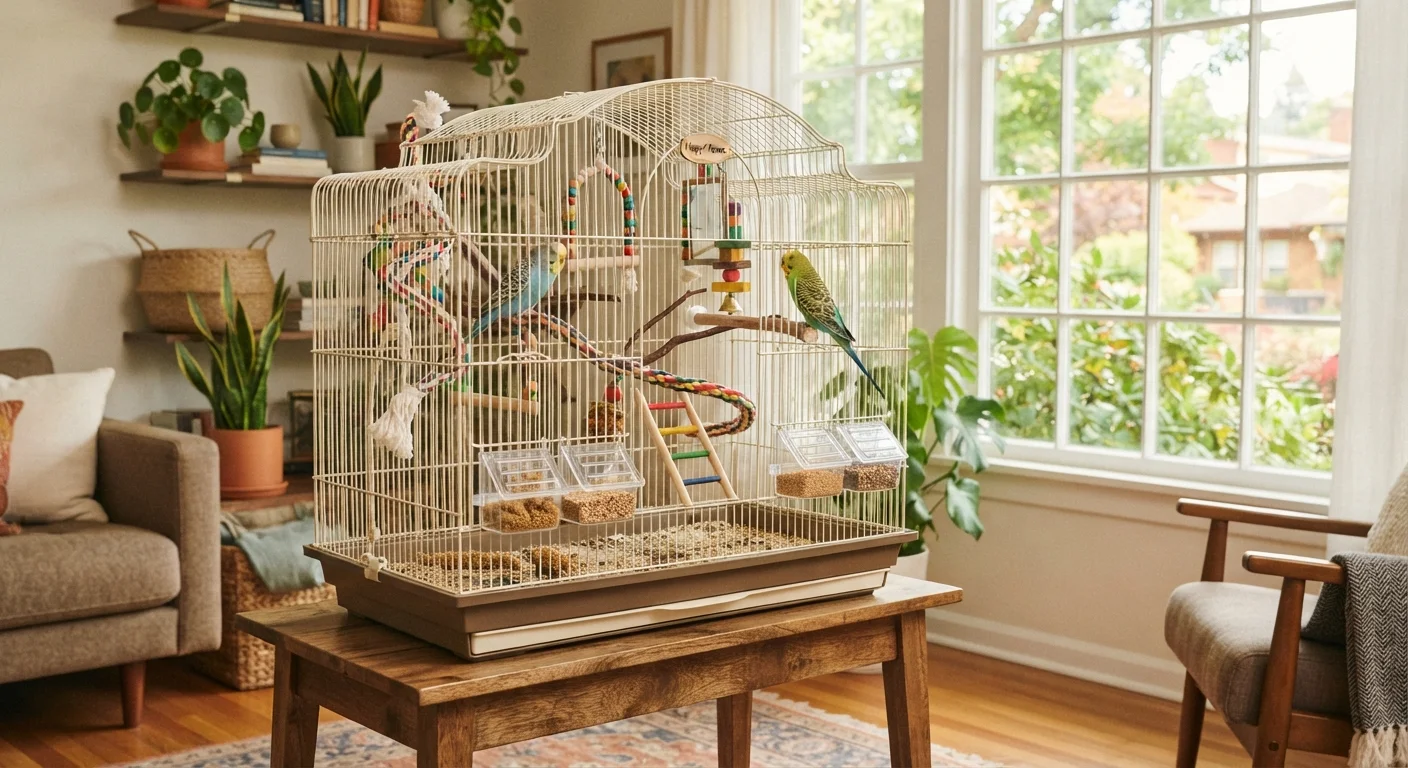
Select a cage with horizontal bar orientation - budgies climb sideways, not just vertically. Minimum usable interior dimensions are roughly 18 × 18 × 24 inches for a single bird, but a wider cage significantly improves quality of life. Confirm bar spacing is no greater than ½ inch to prevent a budgie from pushing its head through and becoming trapped.
Check all welds, latches, and tray slides for sharp edges or rust before assembly. Stainless steel or powder-coated cages are safer long-term than zinc-galvanized or painted wire that can flake.
Select the right location
Place the cage in a room where the family spends time - budgies are social and need ambient interaction - but avoid the kitchen entirely due to cooking fume risks. The ideal spot is:
- Against a wall or in a corner (provides a sense of security)
- At or slightly above eye level when you're seated
- Away from exterior doors, air vents, and drafty windows
- Out of prolonged direct sunlight, which can cause overheating
Consistent temperature between 65-85°F suits most budgies. Avoid rooms with strong aerosol use (hairspray, air fresheners, scented candles).
Install varied perches
Include at least three perches of different diameters (roughly ⅜ inch to ¾ inch) so your budgie's feet flex through multiple grip positions throughout the day. Uniform dowel perches - typically included with cages - should not be the only option.
Recommended perch types to rotate:
- Natural wood perches (manzanita, dragonwood, or willow) - irregular diameter promotes foot exercise
- Rope or cotton perches - softer texture; check regularly for loose threads that could catch a toenail
- Mineral or calcium perches - placed near a favorite resting spot doubles as a beak-conditioning surface
Position perches so droppings don't fall into food or water dishes, and leave open flight paths between them.
Set up food and water stations
Use at least two separate dishes: one for dry seed or pellet mix, one for fresh water. A third dish for fresh vegetables or fruits keeps wet food separate from dry, reducing spoilage. Stainless steel and ceramic dishes are easiest to sterilize and resist bacterial buildup better than plastic over time.
Mount dishes away from perches directly overhead to prevent contamination. Change water daily - budgies often dip food into their water dish, which accelerates bacterial growth.
Add safe toys and enrichment
Budgies are curious, intelligent birds that need cognitive stimulation to stay healthy. A minimum of two to three toys inside the cage is a reasonable starting point - but avoid overcrowding, which limits movement.
Safe toy categories include:
- Foraging toys that hide small pieces of food
- Shreddable toys made from palm frond, cork, or untreated balsa
- Mirrors (use sparingly - a budgie that bonds obsessively with its mirror may resist socializing with people)
- Bells and rattles made from stainless steel
Avoid toys containing zinc hardware (common on cheap chains and clasps), toxic dyes, or small parts that can be swallowed. Rotate toys weekly to maintain novelty.
Line the tray and establish a cleaning routine
Cover the cage tray with plain paper, newspaper print (soy-based ink is generally considered safer than petroleum-based), or commercial cage liners. Avoid wood shavings like cedar or pine, which release aromatic oils irritating to avian respiratory systems.
A basic cleaning schedule:
- Daily: Replace liner, wipe dish rims, refresh water
- Weekly: Scrub dishes, perches, and cage bars with a bird-safe cleaner or diluted white vinegar; rinse thoroughly and allow to dry completely before re-introducing toys
- Monthly: Full disassembly and deep clean of all components
Introduce your budgie and establish a daily routine
On arrival day, place your budgie directly into the cage and give it quiet time - resist the urge to handle or interact immediately. Allow at least 48 to 72 hours for initial settling before attempting to put your hand inside the cage.
From the beginning, maintain a consistent daily rhythm:
- Uncover the cage at the same time each morning
- Offer fresh food in the morning; remove uneaten perishables within two to four hours
- Schedule out-of-cage time in a bird-proofed room once your budgie is comfortable - ideally one to two hours daily
- Cover the cage with a breathable cloth at the same time each evening to signal sleep
Budgies need roughly 10-12 hours of sleep. A predictable schedule reduces stress and accelerates trust-building. For broader context on what the first months of bird ownership involve, see our guide on caring for a pet bird in the first year.
Common Setup Mistakes and How to Avoid Them
Even well-intentioned first-time budgie owners frequently repeat the same setup errors. The most consequential include:
- Using only dowel perches: All-uniform perches cause pressure sores on the feet over months. Variety in diameter and texture is not optional for long-term foot health.
- Placing the cage in an isolated room: Budgies are flock birds. Isolation increases stress and delays taming. A living room or home office where daily activity naturally occurs is preferable.
- Overcrowding with toys: A cage packed with accessories limits movement and can become a source of anxiety rather than stimulation. Start minimal and add gradually.
- Skipping the avian vet visit: A wellness check within the first few weeks of ownership establishes a baseline and catches any issues the bird arrived with. Find an avian-experienced vet before your budgie comes home - general practice veterinarians may have limited bird-specific expertise.
Healthy enrichment practices for budgies share some principles with other small pets - understanding what appropriate housing environments look like more broadly is explored in our piece on rabbit housing and enrichment.
This article provides general care information for educational purposes and is not a substitute for guidance from a qualified avian veterinarian. If you have concerns about your budgie's health or behavior, consult an avian vet directly.