

Key Takeaways
Why Diet Is the Foundation of Rabbit Health
Rabbits are obligate herbivores with a highly specialized digestive system designed to process fibrous plant material almost continuously. Unlike dogs or cats, a rabbit's gut must keep moving at all times - even a few hours of reduced motility can trigger gastrointestinal (GI) stasis, a potentially fatal condition in which digestion slows or stops entirely. Diet is the primary lever owners have to prevent this and to support dental wear, healthy weight, and immune function.
Many rabbit health problems seen by veterinarians - from molar spurs and obesity to chronic soft cecotropes - trace back directly to an inappropriate diet. Understanding what rabbits are built to eat, and why, makes every other aspect of their care more effective. For a broader picture of rabbit wellbeing, see our guide to rabbit housing and enrichment.
GI Stasis Is a Veterinary Emergency
If your rabbit stops eating, produces no droppings, or becomes lethargic, seek veterinary care immediately - do not wait to see if it resolves. GI stasis can become fatal within 24-48 hours. A diet consistently high in hay is the most effective preventive measure, but no dietary change substitutes for emergency veterinary treatment once stasis begins.
Hay: The Non-Negotiable Core
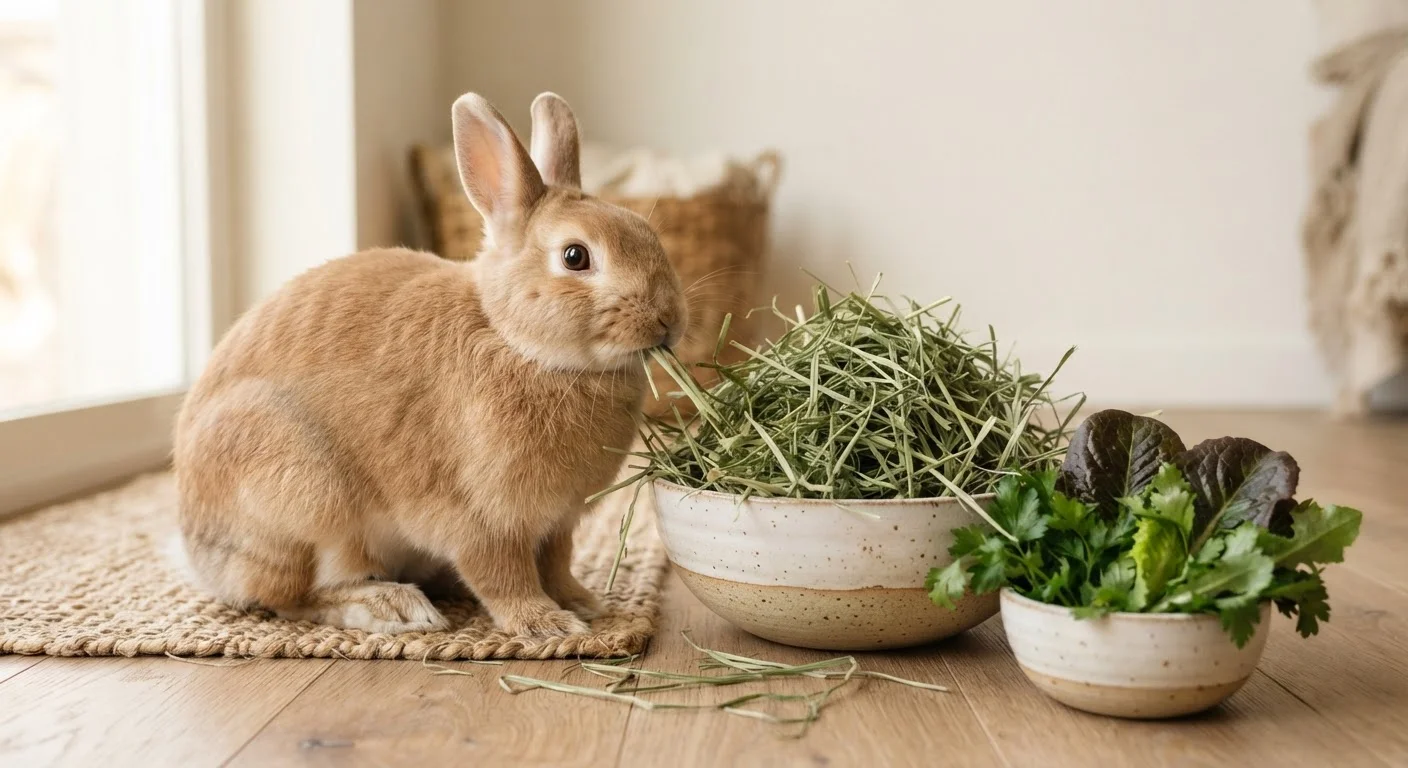
High-quality grass hay should constitute roughly 80-85% of a rabbit's diet by volume, and it should be available without restriction at all times. The long fiber strands in hay serve two essential functions simultaneously: they keep the gut moving and they mechanically grind down continuously growing molar teeth, preventing the painful dental overgrowth that is extremely common in rabbits fed low-fiber diets.
Timothy hay is the standard recommendation for adult rabbits - it has a balanced calcium-to-phosphorus ratio and an appropriate fiber content. Orchard grass and meadow hay are well-tolerated alternatives that some rabbits prefer by smell or texture. Alfalfa hay is high in calcium and protein, making it appropriate for young rabbits under six months and pregnant or nursing does, but it is too rich for healthy adult rabbits as a primary feed.
Offer hay from a rack positioned slightly above floor level - this encourages rabbits to pull strands out, mimicking natural foraging and keeping hay cleaner than placing it directly on the hutch floor.
Rabbits fed hay from racks consume more hay overall and show less selective eating, which supports consistent dental wear and gut motility.
When introducing a new leafy green, start with a single leaf and wait 48 hours before increasing the amount or adding another new variety.
A rabbit's cecal microbiome is sensitive to rapid dietary shifts; a slow introduction window gives the gut flora time to adjust without triggering loose cecotropes.
Hay quality matters. Look for hay that is green-tinged, fragrant, and free of dust, mold, or excessive seed heads. Store it in a cool, dry, well-ventilated space - never in sealed plastic, which traps moisture.
Fresh Leafy Greens and Vegetables
Fresh greens should make up the second-largest portion of the diet - roughly 10-15% of daily intake, or approximately one to two packed cups per five pounds of body weight per day for most adults. Greens supply water, vitamins (particularly vitamin A from dark leafy varieties), and dietary variety that promotes natural foraging behavior.
Safe, well-tolerated options include romaine lettuce, green and red leaf lettuce, bok choy, cilantro, flat-leaf parsley, basil, dill, arugula, and leafy tops from radishes and beets. Rotate through several varieties rather than feeding only one type, which reduces the risk of nutrient imbalance.
Introduce any new green slowly - add one new item at a time over several days and watch for loose cecotropes or digestive upset. Rabbits have sensitive gut flora, and abrupt dietary changes are a common trigger of soft stool and GI disruption. This principle applies equally when comparing species: rabbits and guinea pigs have overlapping but distinct dietary needs, so species-specific research always matters.
Pellets: Useful Supplement, Not Staple
High-quality plain pellets - those made primarily from compressed timothy grass with no added seeds, dried fruit, or colored pieces - have a role in a balanced rabbit diet, but it is a supporting one. For healthy adult rabbits, most rabbit-savvy veterinarians suggest no more than one-quarter cup of plain pellets per five pounds of body weight per day.
Pellets became the diet cornerstone in commercial rabbit farming settings, where they support rapid weight gain. For a companion rabbit expected to live ten or more years, unlimited pellets contribute to obesity, dental disease, and reduced hay intake - essentially the inverse of what long-term health requires. Pellets remain genuinely useful for young, growing rabbits, underweight individuals, or seniors who struggle to maintain body condition on hay and greens alone.
80-85%
Proportion of diet that should be hay
House Rabbit Society and rabbit veterinary guidelines consistently identify grass hay as the dominant dietary component for healthy adult rabbits.
10+ years
Expected lifespan of a well-cared-for rabbit
Domestic rabbits fed appropriate high-fiber diets and given veterinary care commonly live a decade or more, compared to shorter lifespans associated with pellet-heavy feeding.
1 in 4
Rabbit GI cases linked to poor diet
Rabbit-specialist veterinary practices commonly attribute a significant proportion of GI stasis and dental disease presentations to chronically low hay intake and high-carbohydrate diets.
Treats, Fruits, and Foods to Avoid
Fruit can be offered in small quantities - a thumbnail-sized piece of apple (without seeds), a few blueberries, or a small slice of strawberry - no more than a tablespoon or two per day. The sugar content in fruit, even natural fructose, can disrupt gut bacteria and contribute to obesity and dental decay when given freely.
Foods that must be avoided entirely include: onions, garlic, leeks, and chives (toxic to rabbits); iceberg lettuce (very low nutrition, high water content, associated with diarrhea); rhubarb (toxic); raw potatoes; avocado; chocolate; seeds and pits; and any processed human food. Muesli-style mixes and commercial treat sticks are also problematic - rabbits selectively eat the high-sugar pieces and leave the rest, producing an unbalanced intake.
The same instinct to avoid dietary shortcuts applies across small pet species. For comparison, see common diet errors in hamster care - many of the underlying principles around variety and sugar avoidance overlap.
Muesli Mixes Create Selective Feeding
Commercial muesli-style rabbit foods and seed-and-pellet blends are widely available but carry a documented welfare concern: rabbits preferentially eat the sweet, starchy components and leave the more fibrous portions. This produces a high-sugar, low-fiber intake that promotes dental disease and obesity. Plain, single-ingredient timothy pellets are a safer pellet choice.
Water, Weight, and Digestive Health
Rabbits must have access to clean, fresh water at all times. Dehydration rapidly worsens gut motility and can accelerate GI stasis. Both bowl and sipper-bottle delivery work, though many rabbits drink more from a heavy ceramic bowl at ground level - the natural drinking posture. Clean water containers daily to prevent bacterial buildup.
Body condition monitoring is an underused tool. Run both hands along your rabbit's spine and ribcage: ribs that are easily felt but not visually prominent indicate a healthy weight; ribs that are invisible under fat, or conversely, sharply prominent, both warrant attention. Weigh your rabbit monthly on a kitchen scale and log the result - gradual changes are far easier to catch and address early.
Finally, observe cecotropes (the soft, grape-cluster droppings that rabbits consume directly from their hindquarters). Finding large numbers of uneaten cecotropes is a sign of dietary imbalance - often too many pellets or rich greens relative to hay. Adjusting the diet ratio usually resolves this, but persistent changes warrant a veterinary visit.
This article is for general educational purposes only and does not constitute veterinary advice. Always consult a qualified rabbit-savvy veterinarian for guidance specific to your pet's health and dietary needs.