

Key Takeaways
Start here
Setting Honest Expectations
Next
Where to Spend Less (Without Sacrificing Much)
Important
Where Cutting Corners Gets Costly
Day-to-day
Day-to-Day Money Habits on the Road
Wrap up
Making It All Add Up
Setting Honest Expectations
Budget travel is genuinely achievable - but it requires honesty with yourself about what "budget" actually means for your chosen destination and travel style. A trip to Lisbon and a trip to Bangkok involve radically different baseline costs, even before personal preferences factor in.
Before anything else, build a real numbers-based plan. Our guide to building a realistic travel budget walks you through estimating true costs, including the ones most people forget. That foundation makes every decision that follows clearer.
Budget travel also isn't the same as miserable travel. It's about deliberate trade-offs - choosing where to redirect money toward experiences that genuinely matter to you, and trimming what doesn't.
Shoulder season
The period just before or after a destination's peak tourist season - typically offering lower prices and smaller crowds while still providing decent conditions.
Slow travel
A style of travel that prioritizes spending more time in fewer places, reducing transport costs and allowing deeper immersion in each destination.
Travel insurance
A policy that covers unexpected costs during a trip, such as medical emergencies, trip cancellations, or lost luggage. Coverage and cost vary widely by provider and plan.
Hostel
A budget accommodation type that typically offers shared dormitory rooms alongside common social spaces, though many now also offer private rooms at lower prices than hotels.
ATM withdrawal fee
A charge applied when you withdraw foreign currency from an ATM, which may come from your home bank, the local ATM operator, or both.
Where to Spend Less (Without Sacrificing Much)
Accommodation is typically the biggest lever. Hostels, guesthouses, homestays, and short-term apartment rentals often cost a fraction of hotels while giving you more local context. The full breakdown of accommodation options helps you match the right type to your destination and style.
Transport is the second big opportunity. Overnight buses or trains save both a night's accommodation and a day's travel time. City public transit almost always beats taxis. Walking between nearby neighborhoods is free and often the best way to actually see a place.
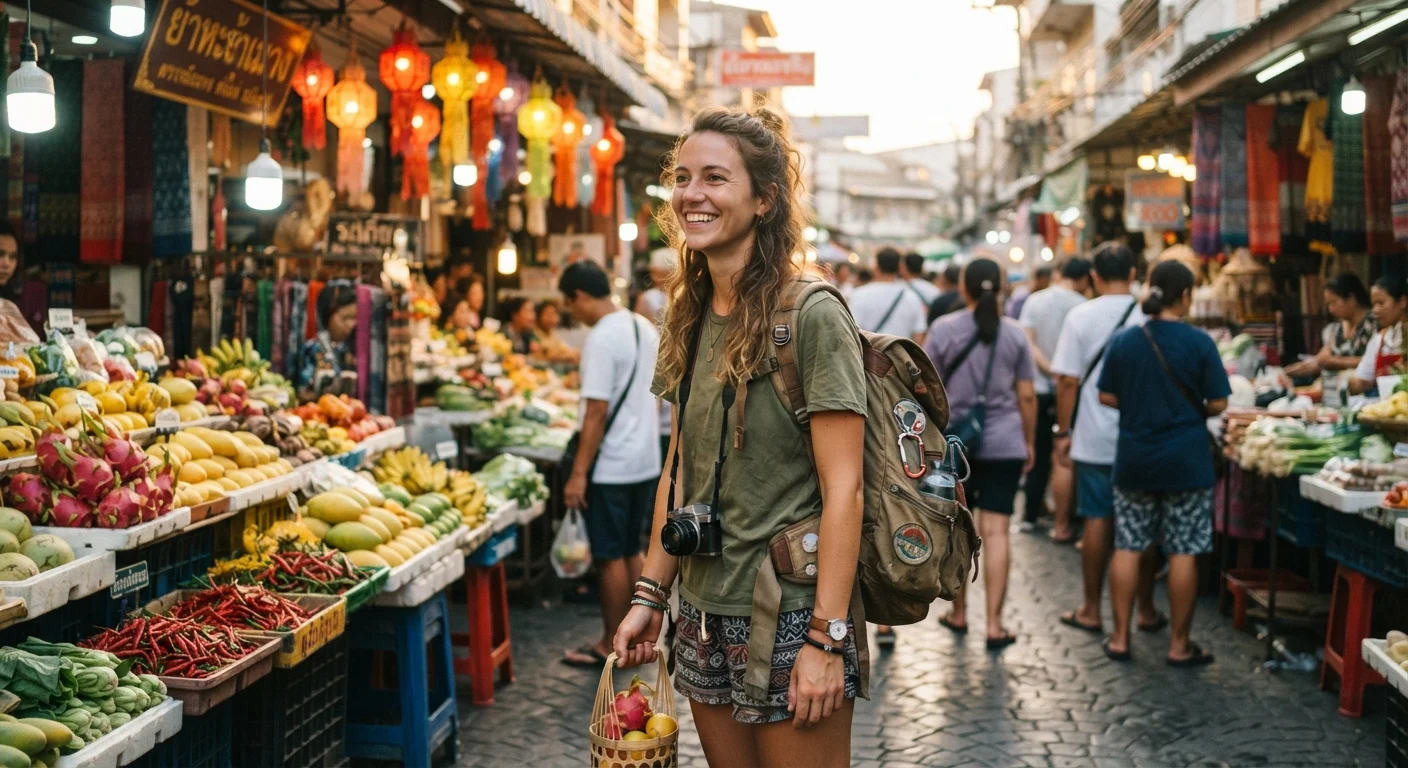
Food responds well to a simple rule: eat one tier down from the tourist strip. Local markets, lunch specials, and self-catering for breakfast can cut daily food costs significantly without eating (forgive the pun) into the experience.
Timing matters too. Traveling in shoulder season - just before or after peak - typically means lower accommodation prices, fewer crowds, and sometimes better weather than the high-season brochures suggest.
The Overnight Transit Trick
Booking overnight trains or buses between cities does double duty: you travel while you sleep, cutting both a night's accommodation cost and a full day's travel time. This works especially well on longer routes in Europe, Southeast Asia, and parts of Latin America - and it can add an adventure element to the trip rather than just being a budget hack.
Where Cutting Corners Gets Costly
Some budget decisions look smart upfront and prove expensive later. Travel insurance is the clearest example. A single medical evacuation, missed connection, or stolen laptop can cost many times more than a basic policy. This is one area where skimping is rarely worth it.
Similarly, very cheap accommodation in areas with known safety concerns, unlicensed transport at odd hours, and vague visa arrangements are risks that budget-conscious travelers should resist. Entry requirements, vaccinations, and border rules must be verified with official government and embassy sources before you travel - not assumed.
For a clear-eyed look at the logistical snags that catch travelers off guard, including customs rules and currency issues, see our article on hidden friction points of international travel. And for proportionate, practical security habits that don't turn travel into an anxious exercise, keeping your valuables safe is worth a read before you pack.
Don't Skip Travel Insurance to Save Money
It can feel like an easy line to cut from a tight budget - but travel insurance exists precisely for the situations you can't plan for. A medical emergency abroad, an emergency flight home, or a stolen bag can each cost far more than a whole year's worth of policies. Shop around for a policy that fits your trip length and activities, and read what is and isn't covered before you buy.
Day-to-Day Money Habits on the Road
Tracking your actual spending - even a rough daily tally in your phone's notes app - prevents the slow drift that derails travel budgets. You don't need a sophisticated system; you need enough awareness to catch a bad week before it becomes a bad trip.
Withdraw local cash in sensible amounts from reputable bank ATMs rather than exchange kiosks in airports or tourist zones, where rates are typically poor. Notify your bank before you travel to avoid card blocks.
If you're moving between multiple cities or countries, consider whether slow travel - staying longer in fewer places - saves you money overall. Frequent transport bookings and repeated orientation costs (sim cards, transit cards, laundry) add up. There's often genuine financial logic in staying put for a week rather than moving every two days.
For navigating unfamiliar cities affordably and confidently once you're there, our guide to navigating unfamiliar cities without getting lost covers the practical orientation strategies that save both money and stress.
Making It All Add Up
Tight-budget travel is a skill that compounds. Each trip teaches you where your own spending drifts, what trade-offs you actually regret, and which costs are genuinely non-negotiable for your comfort and safety. The travelers who do it well aren't the ones who spend the least - they're the ones who spend intentionally.
If you're weighing whether to travel solo (often cheaper, more flexible) or join a group tour (potentially better value for remote or complex destinations), our solo vs. group tour comparison lays out the honest trade-offs. And for destination-specific budget realities - like what travel in Mexico actually costs outside the resort zone - see traveling in Mexico: practical realities.
Start with a solid budget, protect the things that genuinely matter, trim everything else with intention, and you'll find that meaningful travel is far more accessible than the price tags of glossy travel media suggest.