

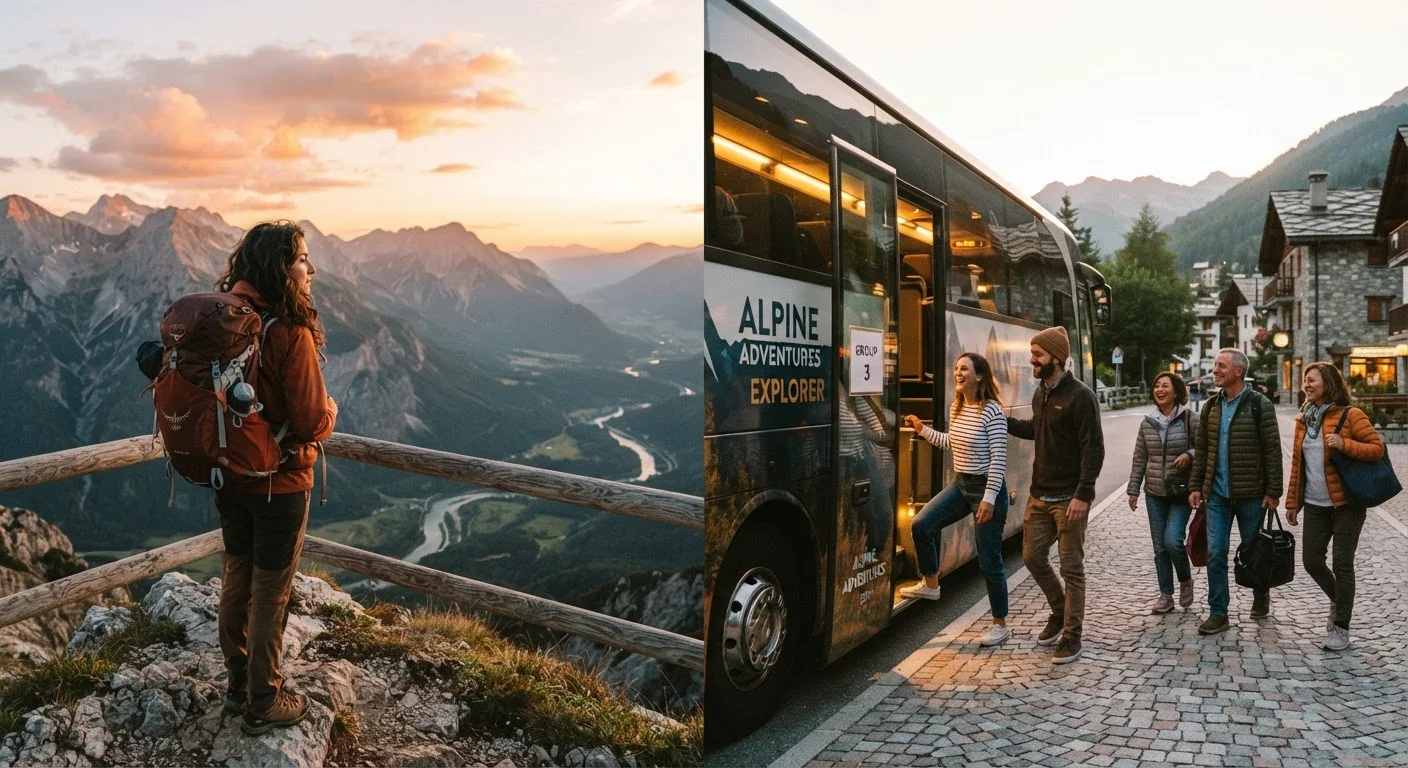
Key Takeaways
Option A
Solo Travel
The freedom-first, fully self-directed approach.
Best for: Independent travelers who want total flexibility, deep cultural immersion, and complete control over their itinerary.
Option B
Group Tours
The structured, socially rich, logistics-handled option.
Best for: Travelers who prefer built-in community, pre-arranged logistics, and guided access to destinations that can be tricky to navigate alone.
If you value spontaneity and crafting a unique itinerary
Solo Travel
Solo travel lets you pivot on a whim - linger longer in a village, skip a tourist trap, or change cities entirely without consulting anyone.
If you're visiting a complex or unfamiliar destination for the first time
Group Tours
A knowledgeable guide and pre-arranged logistics reduce the friction and guesswork that can overwhelm first-timers in challenging regions.
If meeting fellow travelers and shared social experiences matter to you
Group Tours
Built-in camaraderie is one of the strongest advantages of group travel - friendships formed on tours are a frequently cited highlight.
If budget control and flexibility are top priorities
Solo Travel
Going solo lets you allocate spending exactly where it matters most to you, whether that's accommodation, food, or experiences.
If safety in remote or unfamiliar terrain is a primary concern
Group Tours
Traveling with a group and a guide provides a meaningful safety net, especially in destinations with limited tourist infrastructure.
Freedom vs. Structure: The Core Trade-Off
The fundamental tension between solo travel and group tours comes down to one question: how much do you want to control your own experience? Solo travel puts every decision in your hands - where you eat, how long you stay, which detours you take. That's genuinely exciting, but it also means every missed bus or confusing transit system lands squarely on your shoulders.
Group tours flip that dynamic. Logistics - transport, accommodation, guided access to sites - are pre-arranged. You gain efficiency and ease, but the trade is that the group's pace becomes your pace. If your idea of a great afternoon is wandering off-map, a tightly scheduled tour may feel constraining. If you'd rather not puzzle through train schedules in an unfamiliar language, that structure is a genuine relief.
For a deeper look at how these two approaches reshape the planning process from the very start, see how planning shifts for solo vs. group trips.
| Criterion | Solo Travel | Group Tours |
|---|---|---|
| Flexibility | Total - change plans anytime | Limited - fixed itinerary |
| Cost predictability | Variable, self-controlled | Mostly fixed upfront |
| Logistics burden | High - you handle everything | Low - handled for you |
| Safety support | Self-managed, proactive needed | Built-in guide and group |
| Social experience | Organic, unpredictable | Built-in, but variable chemistry |
| Cultural immersion | Deeper, more spontaneous | Curated, guided |
| Ideal experience level | Comfortable travelers | Any level, especially beginners |
Cost: It's More Complicated Than You Think
Solo travel is often assumed to be cheaper, but that's not universally true. Single-occupancy hotel rooms frequently carry a premium over shared double rates, and you don't split transport costs or group discounts. In contrast, group tours buy in bulk - hotels, entry fees, and guides are negotiated at volume, sometimes passing real savings to travelers.
That said, solo travel gives you spending agency that group tours don't. You choose hostels over hotels, street food over set-menu dinners, and slow overnight trains over flights. If you're disciplined, the savings are real. Our guide to traveling on a tight budget covers practical strategies for keeping costs down when you're going it alone.
72%
Solo travelers who report overspending their budget
According to travel finance surveys, lack of pre-set spending structures leads many solo travelers to exceed initial estimates, particularly on accommodation.
16 or fewer
People in small-group tours linked to higher satisfaction
Travel industry research consistently finds that smaller group sizes correlate with better social dynamics and more personalised guide attention.
1 in 3
First-time international travelers who choose group tours
Survey data from major travel associations suggests group tours remain a popular entry point for travelers new to independent international travel.
Group tour pricing also varies widely by style - a basic overland trip differs enormously from a premium small-group experience. Before comparing sticker prices, check exactly what's included. Hidden extras like tips, optional excursions, and single supplements can shift the math considerably. Building a realistic travel budget before you commit helps you compare like-for-like.
Safety and Support: Real Differences Worth Knowing
Safety is one of the most honest reasons to choose a group tour - particularly for first-time international travelers, those visiting destinations with limited infrastructure, or anyone traveling solo as a woman in regions where that carries additional risk considerations. Having a guide who knows the terrain, local customs, and emergency contacts provides a safety net that's hard to replicate independently.
Solo travelers aren't without options, though. Sharing itineraries with trusted contacts, staying in well-reviewed accommodations, and researching local advisories through official government sources all reduce risk meaningfully. The key difference is that solo travelers must be proactive about safety planning; group tours build much of that in automatically.
Certain destinations tip the balance decisively. A safari through East Africa, for instance, involves access protocols, wildlife safety, and conservation-area logistics that are genuinely better handled with expert guidance - as explored in what makes safari travel in East Africa different. On the other hand, solo travel through well-developed tourist corridors - Western Europe, Japan, parts of Southeast Asia - is widely considered low-risk with basic preparation.
Social Dynamics: Solitude vs. Community
Loneliness is the honest shadow side of solo travel that doesn't always make it into the highlight reels. Extended solo trips, especially in places where language barriers limit casual conversation, can feel isolating. That said, solo travelers also report unexpectedly rich social lives - staying in hostels, joining day tours, or using traveler meetup platforms naturally creates connection without locking you into a fixed group dynamic.
Group tours deliver community by default, which is genuinely valuable - especially for travelers who find it hard to meet people organically. The downside is that group chemistry is unpredictable. A mismatch in pace, interests, or personality with fellow tour members can color the whole experience. Smaller group sizes (typically under 16 people) tend to produce better social dynamics than large coach tours.
Your accommodation choices also shape social exposure significantly - understanding what different accommodation types mean for your trip is a useful companion read for solo travelers weighing how social they want their base to be.